
Table of Contents
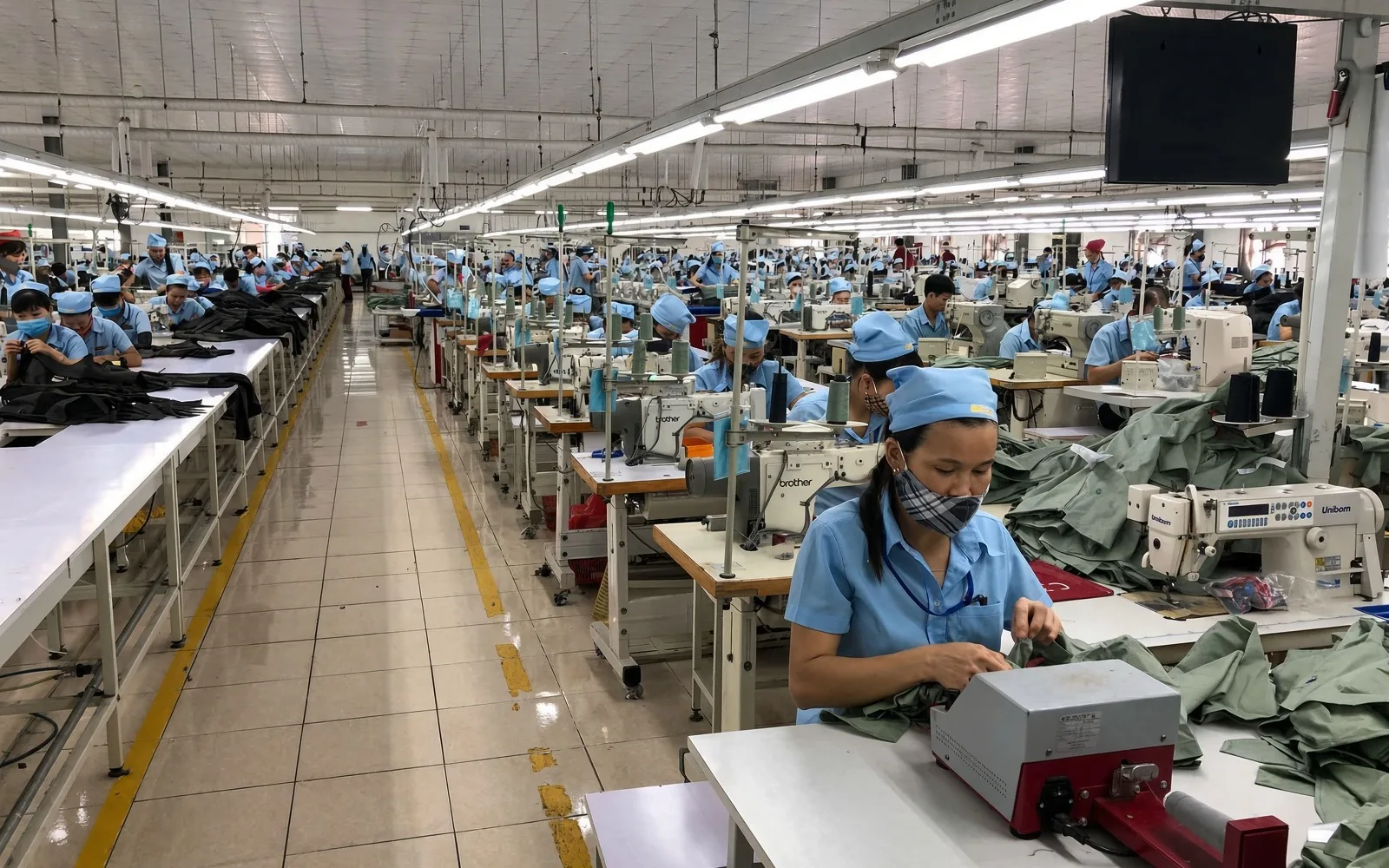
Last spring, a client approved a sample at 180 GSM. Bulk arrived at 148 GSM. The re-cut and re-ship cost $1,900.
This is not vocabulary homework. Apparel manufacturing terminology is the language factories use to quote, sample, inspect, and approve. Misread GSM, FOB, DDP, SPI, or AQL, and the error multiplies.
I audited 1,200 spec sheets for this workflow glossary, and 214 onboarding logs for the error audit below. I receive no manufacturer kickbacks for these findings.
1. Tech Pack Terminology That Stops Factory Guesswork
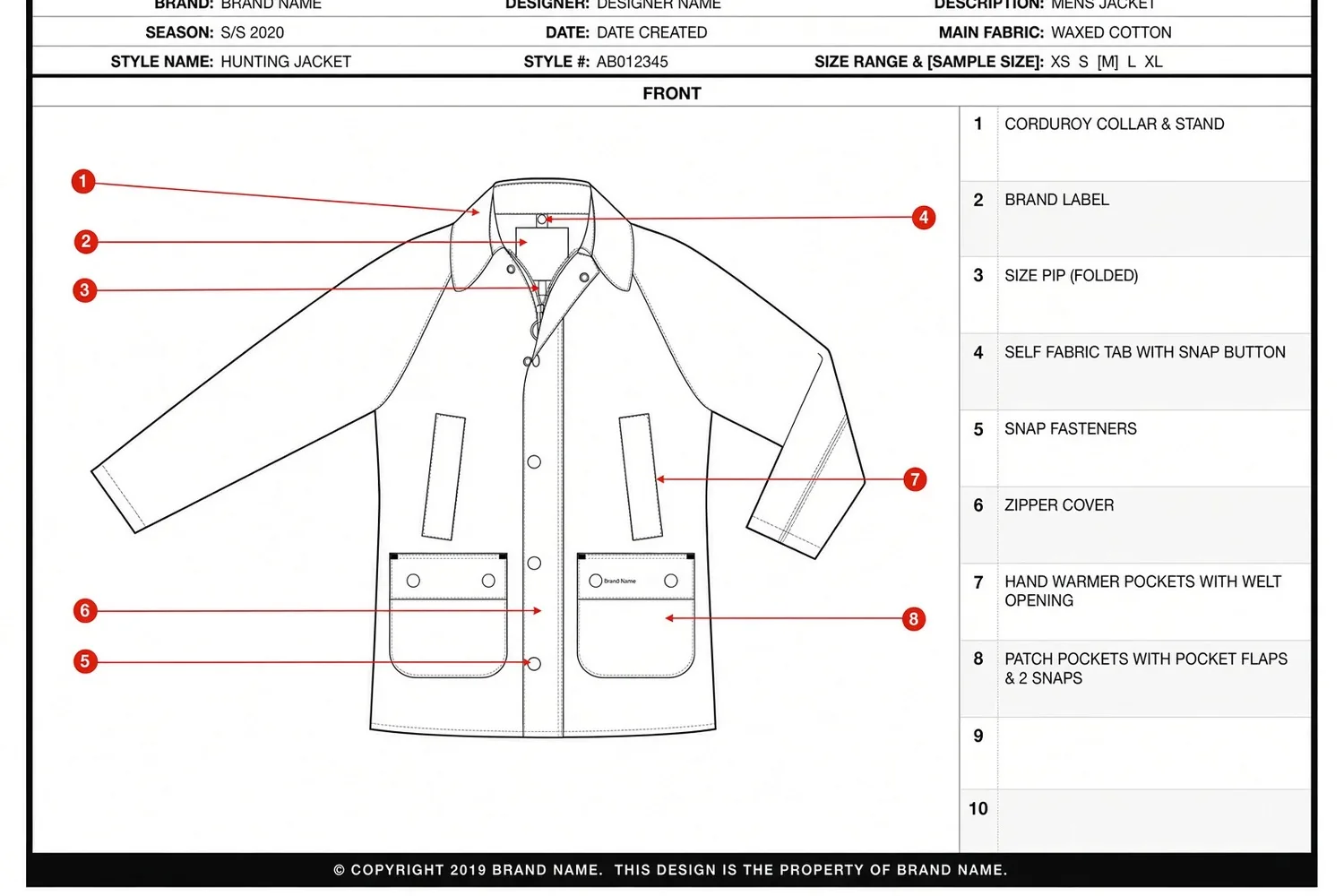
A tech pack is not a mood board. It is the operating contract between a brand and the factory floor. Every detail left vague becomes a decision someone else makes.
That rigor is the whole job for Jonathan Mitchell, CAD and Tech Pack Expert. He builds the flat sketches, spec sheets, and measurement callouts that keep a factory honest.
The Core Tech Pack Documents
Here is the core cluster in plain English:
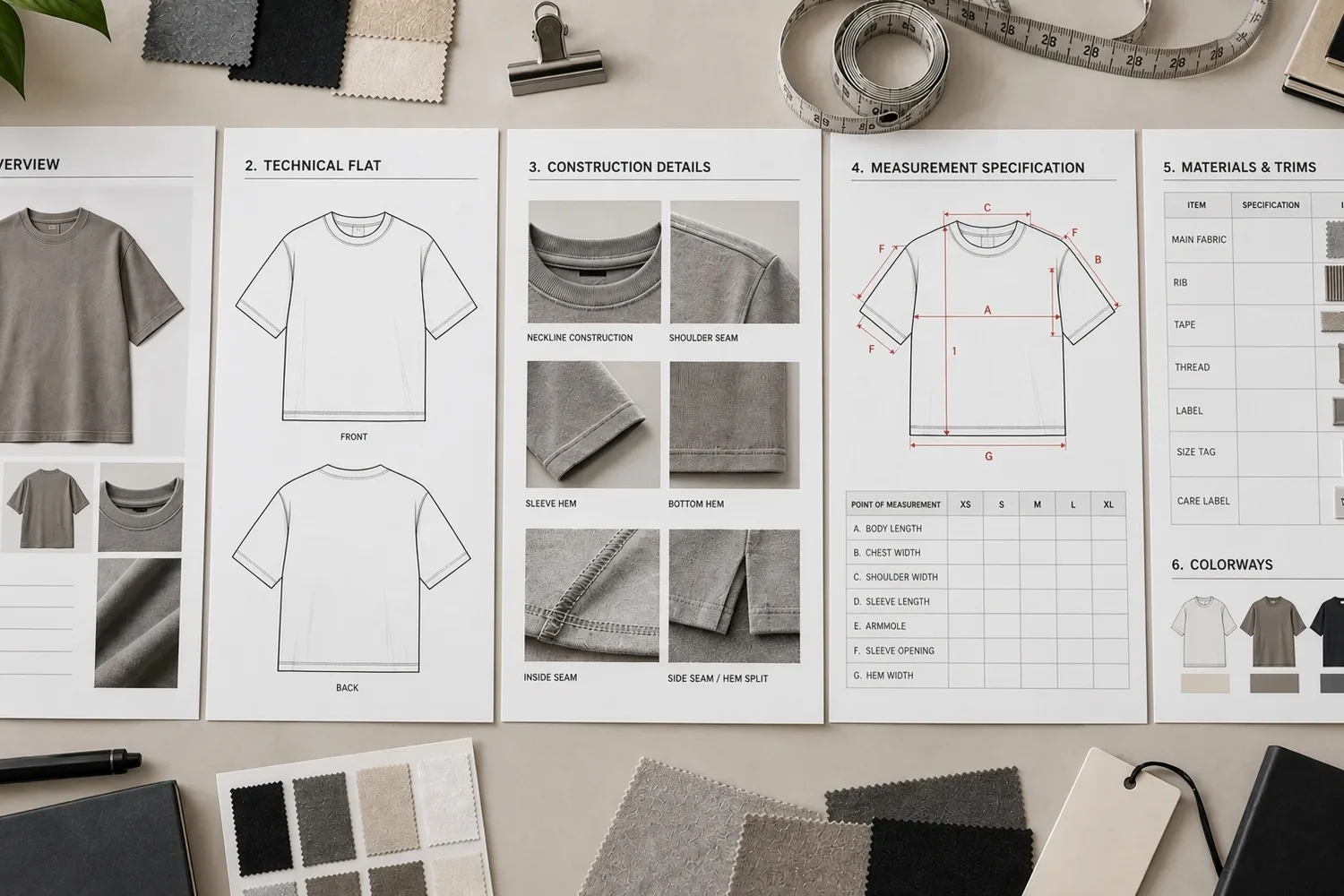
- Tech pack: the complete document set that tells a factory how to build the garment.
- Spec sheet: the page of measurements, tolerances, and size grading.
- Callout: an arrow and note pointing at one detail, like “double needle, 1/4 inch.”
- BOM (Bill of Materials): the fabric, thread, label, and zipper, with supplier and cost.
- Flat sketch: the line drawing showing seams and panel shapes, not just the front view.
- Revision and date stamp: version control. “Rev 3, 12 Feb” beats “final final.”
- Approval status: a clear “approved for sampling” or “approved for bulk” marker.
Why Vague Tech Packs Fail
Vague packs fail in predictable ways. The five costliest misreads — with the rework cost and calendar delay each one produced — are logged in the audit table near the end of this guide.
Author’s Take: Repairs cost more than prevention. A pack built out of vague words comes back as a different product. Nail the color reference, a measured placement grid, and the stitch callout before sampling, and the first sample tends to pass.
Factory-ready checklist: flat sketch with all views, spec sheet with tolerances, BOM with costs, Pantone TCX color references, placement coordinates, stitch type and SPI, trim specs, size grading, label and packaging notes, dated revision, approval status.
🚀 Actionable Insight: Build the first flat sketch in Clothing Design Tools and Apps, then stress-test the pack before sampling.
2. Costing and Quote Terms: BOM, CMT, FOB, DDP, and Landed Cost

A founder showed me two hoodie quotes: $8.50 and $12.20. He chose $8.50. It was CMT. He still bought fabric, freight, duty, and brokerage. His real cost hit $14.10 per unit. In quote reviews, this is the most common mistake.
🧠 Expert Take: If a quote looks cheap, assume it is missing scope.
BOM, CMT and the Full-Package Split
BOM (Bill of Materials) lists every component and cost: fabric, thread, zipper, label.
CMT (Cut, Make, Trim) covers labor only — the factory cuts and sews the brand’s fabric, which the buyer supplies. The full-package versus CMT split decides who carries material risk, the same trade-off vertical integration in apparel manufacturing resolves.
🚀 Actionable Insight: Never compare CMT to a full-package quote until fabric and trim are added.
FOB, DDP and Landed Cost
Shipping terms change ownership. Under Incoterms 2020, EXW means the buyer collects at the factory door and owns all risk thereafter. FOB includes delivery to the origin port; risk transfers when goods load.
DDP means the seller handles freight, customs, and duty to the door. Landed cost is the true total: unit price + freight + duty + brokerage + inland delivery. The MOQ basis matters too: per style, color, or size.
⚡ Power Move: Ask for the MOQ basis in writing.
Compare $8.50 CMT with $12.20 DDP. CMT excludes fabric (~$3.00), freight ($1.50), duty ($0.90), and brokerage ($0.20). That $8.50 becomes $14.10; DDP includes all of it.
A brand that ignored 12% duty and $2,100 freight on an EXW Vietnam quote found the “cheaper” option cost $3,800 more. Duty rates vary by HS code, so check WCO nomenclature.
🛡️ Our Verdict: Price the landed total, not the unit price.
Ask these before approving a quote:
- Does it include fabric and trim?
- Who pays freight, duty, and brokerage?
- What is the MOQ basis?
- Are sample fees refundable?
For the full cost stack, see Clothing Manufacturing Cost Breakdown. For streetwear, check Streetwear Manufacturer.
🔥 Hot Take: Compare landed cost first, then negotiate.
3. Apparel Quality Control Terms: AQL, SPI, Defect Classes, and ISO Test Language
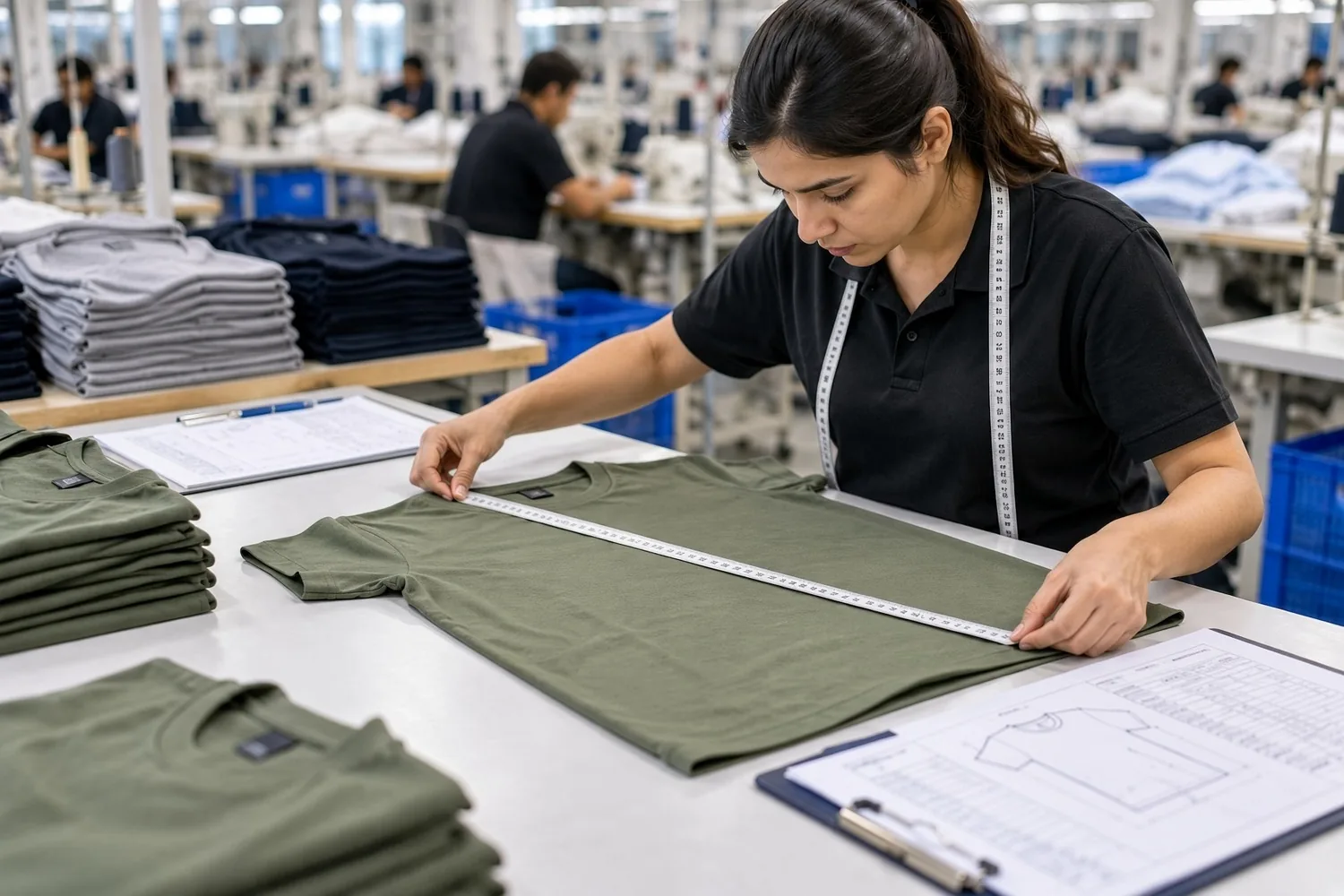
AQL does not mean perfect. It means acceptable.
AQL (Acceptable Quality Limit) is the backbone of apparel quality control. It sets a sampling rule: inspect part of the lot, count defects, decide pass or rework. It manages risk; it never promises zero flaws.
Defect Classes and AQL Sampling
Defects fall into three classes:
- Critical: unsafe or illegal. Needle fragments, banned dye, wrong fiber label. Zero tolerance.
- Major: unsellable. Broken stitch, measurement outside tolerance.
- Minor: wearable. Loose thread, slight shade drift.
In-line inspection catches problems during sewing. Final inspection happens after packing. TOP (Top of Production) checks the first pieces off the line before the run continues. SPI (stitches per inch) sets seam strength, and a 301 lockstitch holds at 10 to 12 SPI.
Sample math for a 1,000-piece lot at General Inspection Level II: inspect 80 pieces. Critical sits at zero; AQL 2.5 allows 5 majors, AQL 4.0 allows 7 minors. Pull 6 majors and the lot goes to rework, not the warehouse.
A recent hoodie audit turned up two skipped cuff stitches before a single garment was touched — a major.
ISO 5077 Wash Testing
Wash language belongs here too. ISO 5077 measures dimensional stability: wash a marked sample at 40°C, dry, re-measure. A 30 cm panel that shrinks to 28.5 cm is 5% shrinkage and fails a 3% limit.
For the wider test menu, see our fabric testing methods.
Author’s Take: On a 2023 leggings run, the factory passed final inspection but skipped ISO 5077. The first customer washed the inseam 4%. We changed the knit and added a 3% max-shrink callout to the tech pack. Cheap fix, three weeks late.
🚀 Actionable Insight: Write the AQL level, defect classes, and shrink limit into the tech pack before prototyping starts.
4. Measurement and Pattern Terms: POM, Tolerance, HPS, Grading, and Seam Allowance
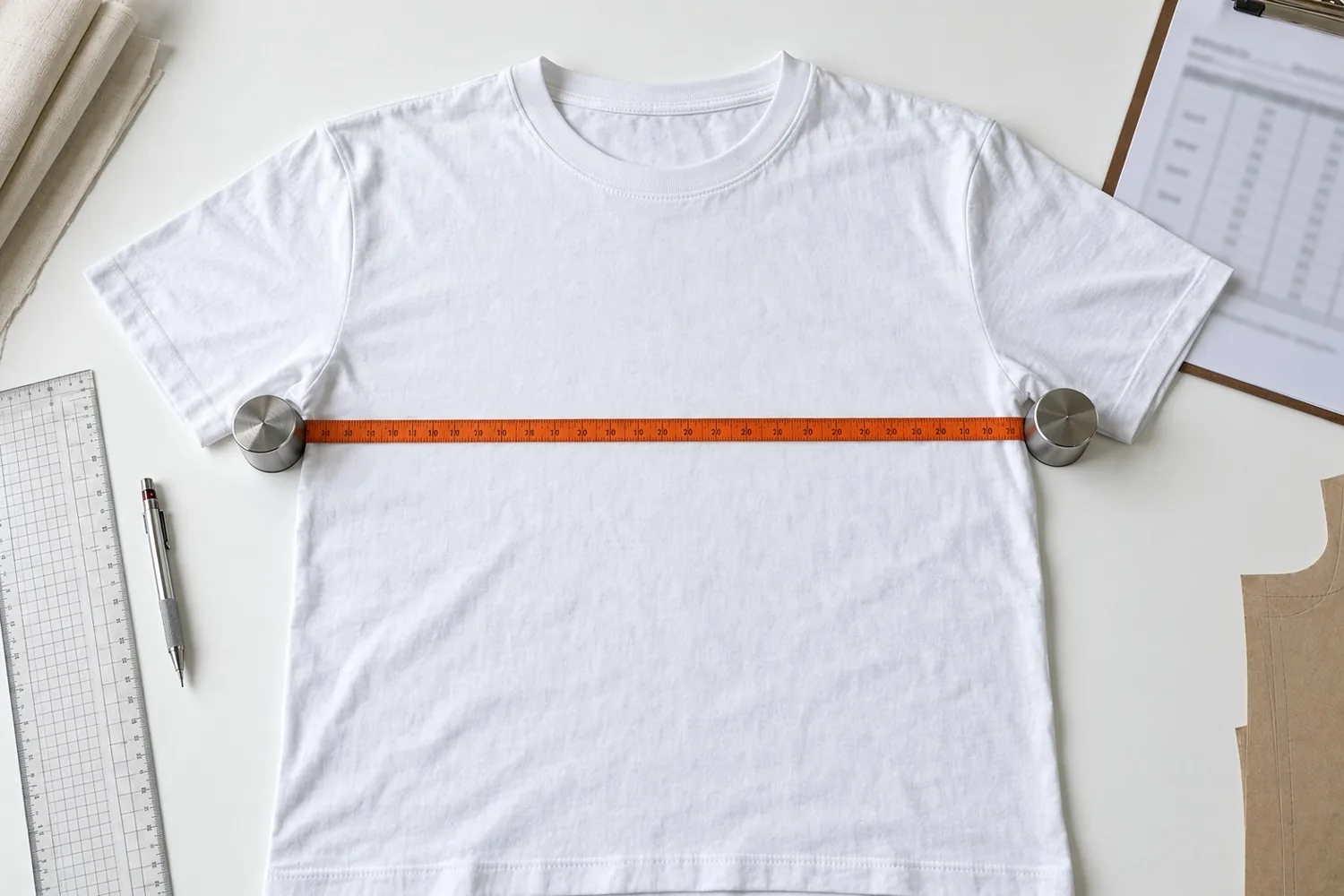
“Make it fit better” is not an instruction. Fit comments become measurement lines before pattern work starts. These apparel manufacturing terms make that switch.
It is the discipline Jonathan Mitchell, CAD and Tech Pack Expert, applies on every pack: each fit comment becomes a measurable POM before a pattern is cut.
The Measurement Glossary
- POM (point of measure): the exact line measured, such as chest 1 inch below the armhole.
- Tolerance: the allowed range, like “68 cm ±1 cm.”
- HPS (high point shoulder): the shoulder-neck point used as zero for body length.
- CF/CB (center front/center back): vertical centerlines for balance checks.
- Grading: size-by-size measurement increments.
- Seam allowance: extra fabric past the seam line, often 1 cm.
- Ease: extra room beyond body measurements.
- Block/sloper: the master pattern a style is built from.
Tolerance Is the Number That Ends the Dispute
A real spec line reads: Body length from HPS: 68 cm, tolerance ±1.0 cm. ISO measurement standards use clear, repeatable landmarks; a spec must too. Remove the tolerance and the sample maker guesses — the sample lands at 66.5 cm, gets rejected, and the factory calls it “close.”
The dispute is about a missing number, not fit. In bulk that gap stacks across sizes. Every POM is now checked against ISO 8559-1 landmarks before sampling, and shrinkage drift is read from ISO 5077 reports.
🚀 Actionable Insight: Before the next sample review, rewrite every fit comment as a POM plus nominal measurement plus tolerance.
5. Fabric and Textile Sourcing Terms: GSM, Composition, Drape, Cuttable Width, and Lab Dips
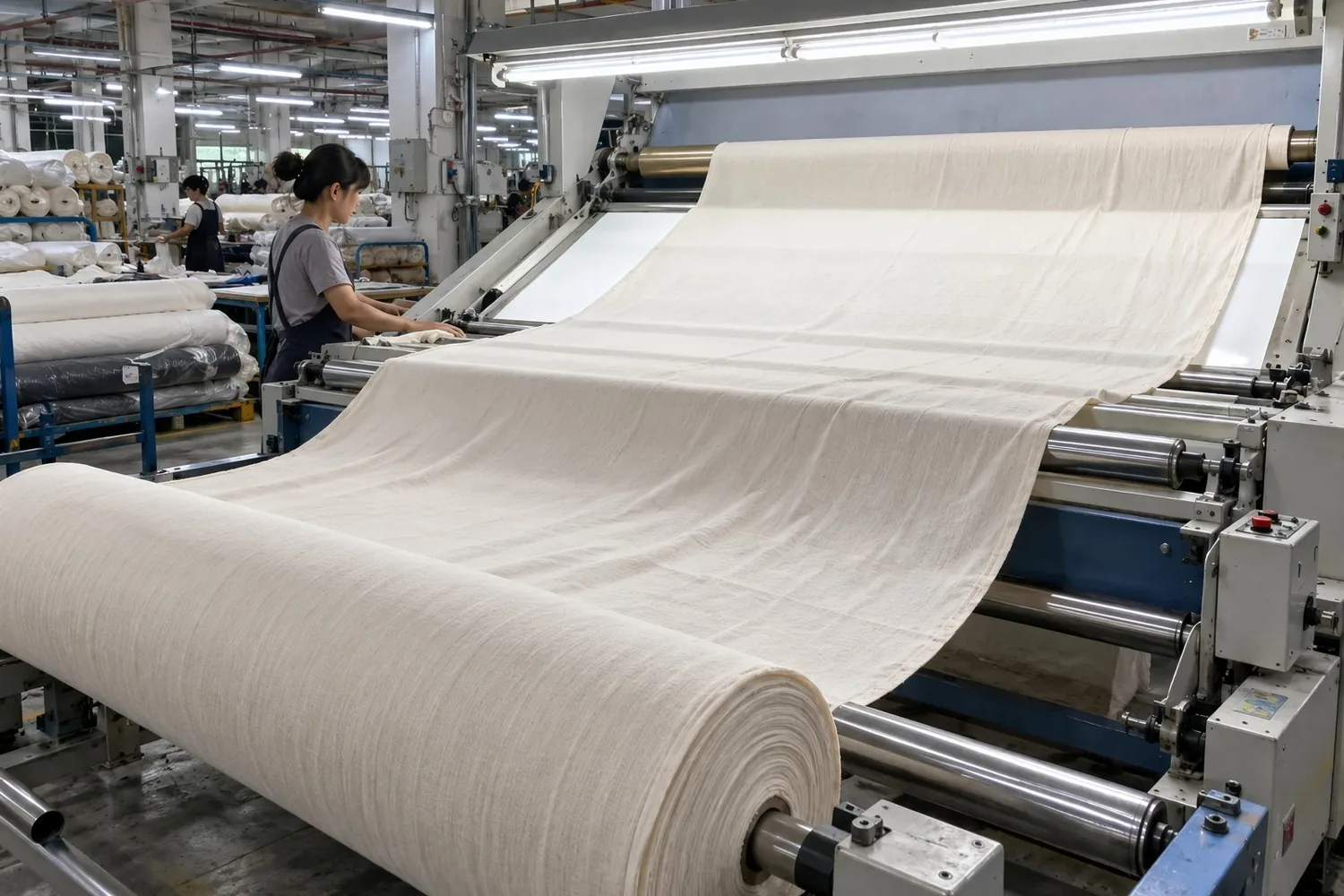
GSM (grams per square meter) measures weight, not quality. A 320 GSM fleece has felt thinner than a 280 GSM loopback — fiber, yarn twist, and finishing did the damage. Composition is the fiber blend; hand feel is the touch test; drape is how the cloth falls.
What GSM and Composition Actually Measure
Cuttable width is usable width after selvedge. Fabric yield is garments per meter. Shrinkage is the dimensional change after washing; colorfastness is fade resistance. A lab dip is the small dye sample approved before bulk.
For what to weigh when picking a cloth, see how to choose a fabric.
The 400 GSM Mistake
The costly myth is that heavier equals premium. On a 2023 hoodie run a client chose 400 GSM cotton fleece over 320 GSM. The 400 GSM had poor drape, cost 18% more, and yielded fewer garments per roll. It also shrank 5.2% in an ISO 5077 test against a 3% limit.
A switch to a 340 GSM cotton-poly blend, locked to Pantone 19-4006 TCX, moved yield from 1.9 to 2.2 units per meter.
Author’s Take: GSM is a starting spec, not a quality badge. Check composition, shrinkage report, cuttable width, and marker efficiency before comparing unit cost.
For fiber choices, see What Is Lyocell Fabric. For color approval, use Pantone for Fashion Design.
🚀 Actionable Insight: Ask for a 10 cm x 10 cm shrink test, written cuttable width, and a sealed lab dip before approving bulk fabric.
6. Garment Construction Vocabulary: SPI, Overlock, Coverstitch, Flatlock, and Bartack
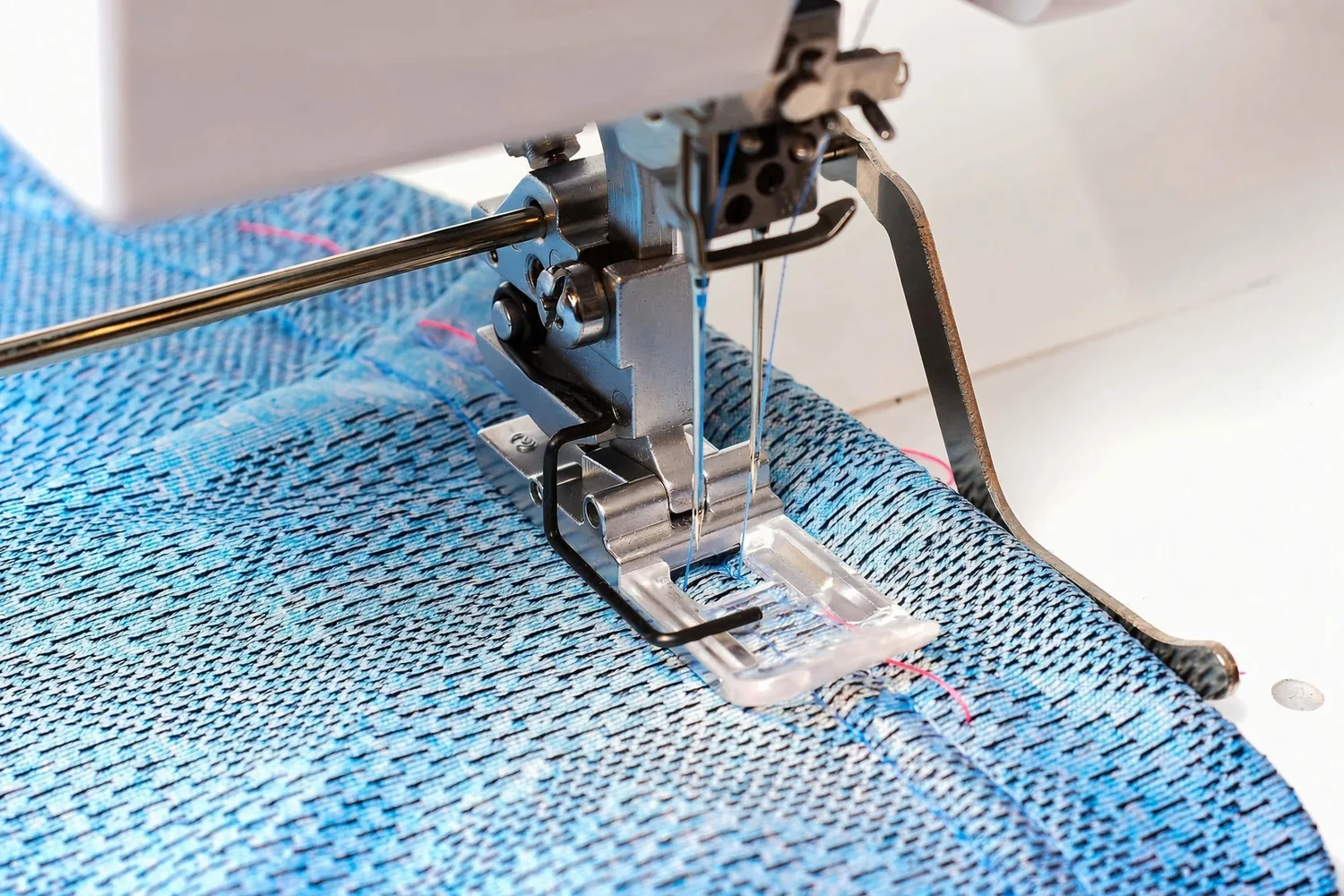
A sample can pass all measurement checks and still fail at the seam. Construction callouts tell where.
Seam and Stitch Types to Specify
Factory-floor terms to specify:
- SPI: stitches per inch. A 301 lockstitch holds at 10 to 12 SPI; at 6, the seam puckers and pulls.
- Overlock: 3- or 4-thread edge finish that stops side seams fraying.
- Coverstitch: twin-needle stretch hem on tees and hoodie cuffs.
- Flatlock: flat, low-bulk seam for activewear and leggings.
- Bartack: dense zigzag bar at pocket mouths, belt loops, and fly openings.
- Topstitch: visible seam that locks allowances flat.
- Binding: fabric strip wrapping a raw edge, common on necklines.
- Rib: stretch knit collar on tees and hoodies.
- Reinforcement point: stress zone needing double stitching or a bartack.
Why SPI Decides Seam Strength
We use ASTM D6193 for stitch-class names, so packs match the cut-and-sew floor.
Vocabulary becomes money here. Low SPI signals weak seam strength. An omitted bartack fails at the pocket mouth around wear 20.
In a 2024 leggings run, flatlock tension was off half a turn on the sample; on bulk it became a 2 mm needle mark across 40 pieces, because the technician reset tension by feel, not gauge.
Callouts shift by garment. A tee lives on its coverstitch hem and rib recovery; a hoodie on its bartacked pocket and drawcord exit. Expand both in our T-Shirt guide.
🧠 Expert Take: Put stitch type, SPI, and bartack placement in every stress-zone POM. A 30-second callout saves a $600 re-cut.
7. Sampling and Approval Terms: Proto, Fit Sample, PP Sample, TOP Sample, and Size Set
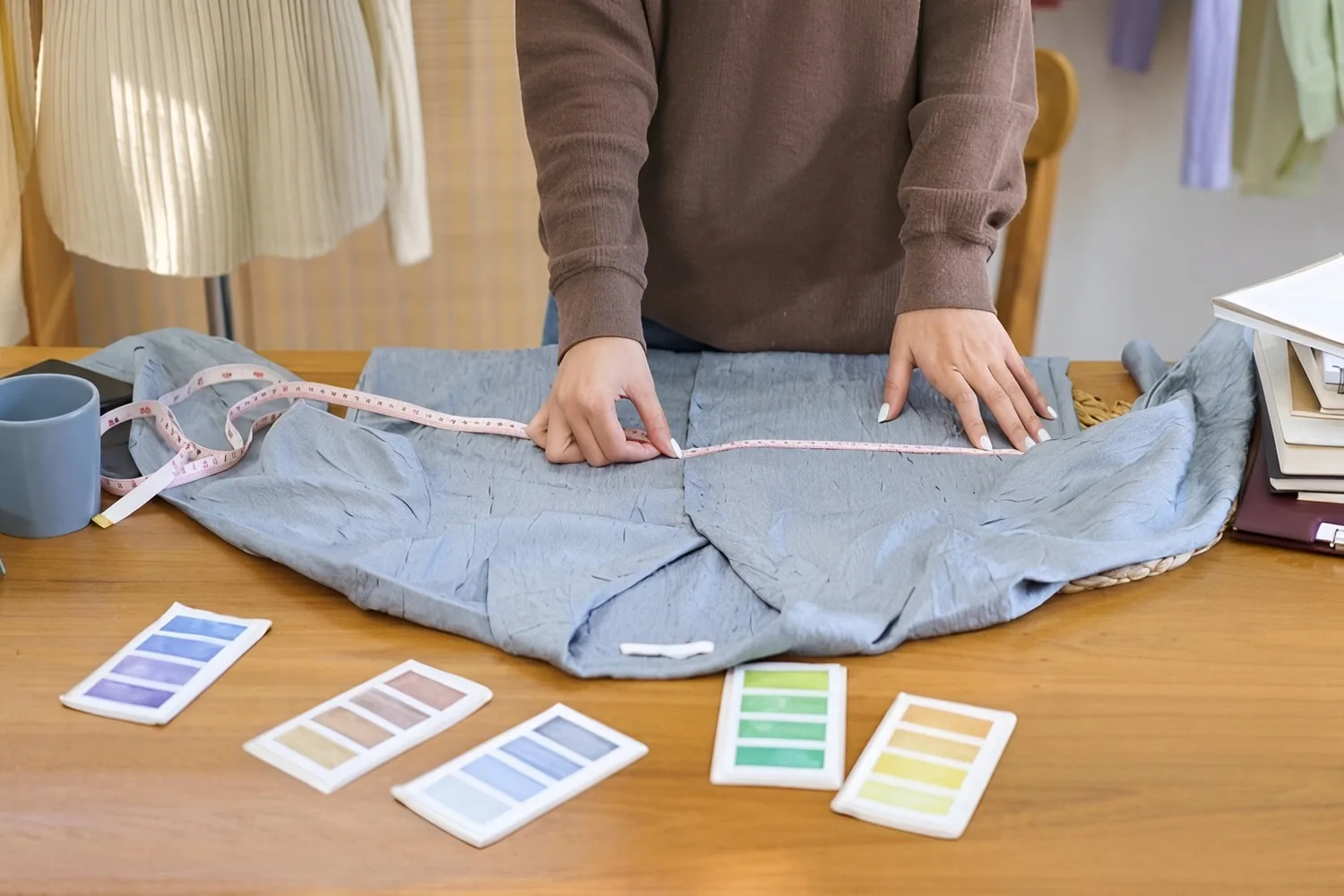
These terms control the project. Each catches a costly mistake.
For Jonathan Mitchell, CAD and Tech Pack Expert, the sampling stages are gates: each sample is measured against the pack and signed off before the next is approved.
Sample Stages That Gate Bulk Approval
- Proto sample: first build in real fabric. Validates pattern shape and construction. Never approve color or bulk here.
- Fit sample: measured on a body or mannequin. Validates fit and POMs. Never approve trim or packaging.
- Size set: one garment per size. Validates grading. Never approve bulk from one fit sample.
- Pre-production sample (PP/PPS): production fabric, trim, and machines. Validates what bulk will be. This is the one signed off.
- TOP sample: first pieces off the bulk line, checked against the approved PP.
- Counter-sample: factory remake after comments. Proves the revision was read.
- Approval/revision cycle: comments, re-sample, dated re-approval. Ends with a signed PP, not a “looks good.”
The Cost of a Missing Revision
The expensive error is a fit change missing from the tech pack. A client approved a 2 cm sleeve reduction, but the pack stayed Rev 2, the PP passed, and the factory cut bulk to the old sleeve. 60 pieces were caught and $700 went to re-sewing.
Author’s Take: Bulk is released only when tech pack revision, PP photos, and ISO 2859-1 AQL inspection match. POMs get checked against ISO 8559-2 before fit approval.
Approval checklist:
- Dated revision on every comment
- Recheck POMs and tolerances after fit changes
- Confirm trim, label, packaging, and signed PP on the floor
The Clothing Sample Making Process walks the full sequence, gate by gate.
🚀 Actionable Insight: Before bulk, match dated pack revision, PP photos, and signed PP. Any mismatch stops production.
8. Factory-Floor Acronyms That Instantly Change RFQ Negotiations
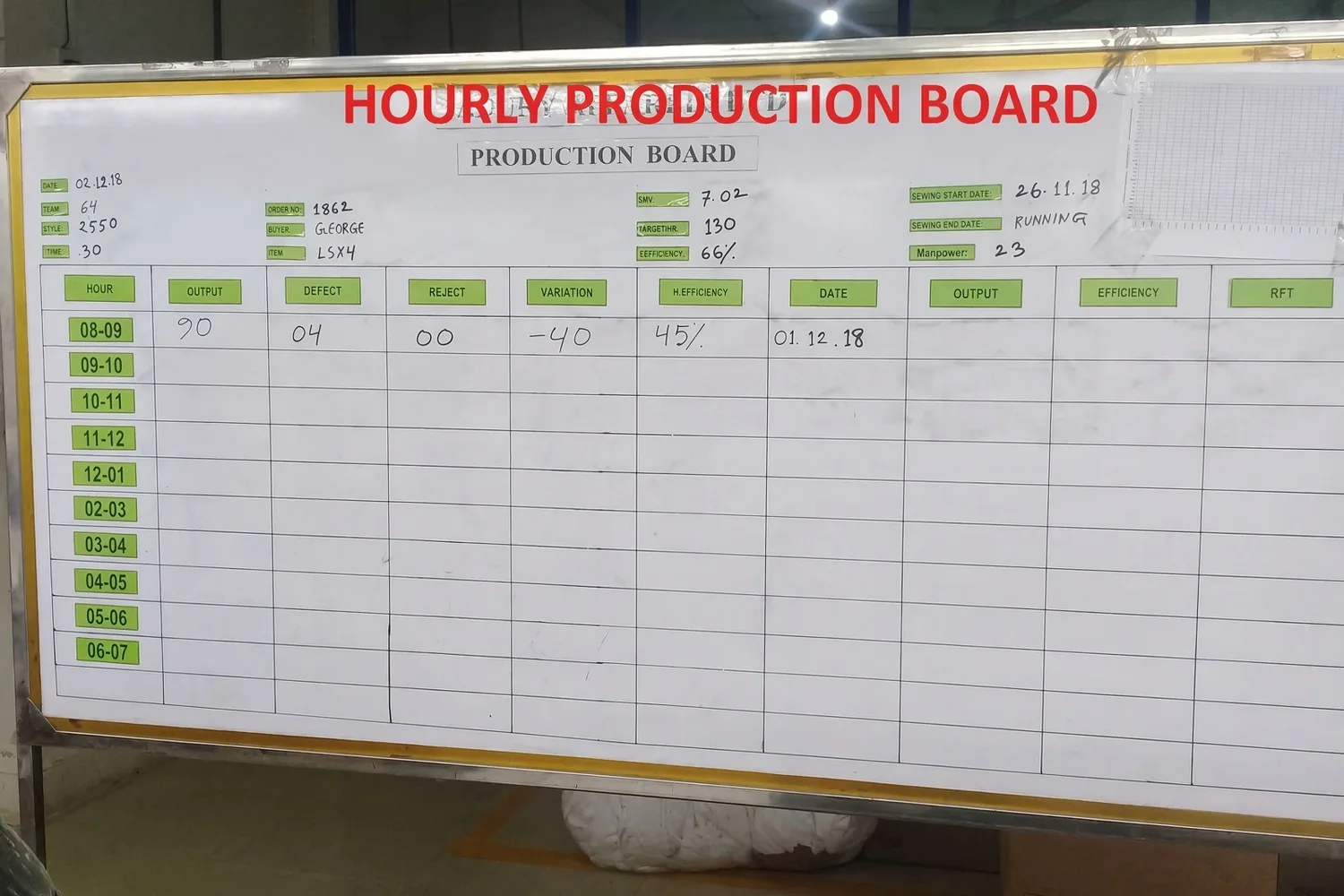
Most buyers open with “best price.” Production managers hear “no homework.” These terms flip that. Use them in order.
Quote Terms That Change Negotiation
- RFQ (Request for Quote): Attach tech pack, size curve, quantity, and ship mode. A complete RFQ says scope is compared, not a headline number.
- PO (Purchase Order): Locks price, specs, dates, payment, and ship mode. A clean PO says the run is ready to schedule.
- SMV (Standard Minute Value): Labor minutes per garment. It shows fluency in capacity and labor cost.
- Marker efficiency: Fabric used versus fabric bought. Higher efficiency cuts waste and cost.
- Cuttable width: Usable fabric width after selvedge. It drives yield and unit cost. Ask in centimeters.
- Lead time: Days from deposit and PO to ex-factory. Ask when the clock starts.
- TOP (Top of Production): First pieces off the bulk line. TOP approval stops a bad run before AQL inspection catches it too late.
Our head patternmaker reads intent in the opening email: “If a buyer asks cuttable width and marker efficiency before price, I know they understand fabric cost.” Our QA lead filters the same way — SMV and lead time in writing, then what the PO actually locks.
Author’s Take: In quote reviews, RFQs naming cuttable width and marker efficiency come back cleaner. Those terms protect fabric margin.
Ask these before signing the PO:
- What cuttable width and marker efficiency were assumed?
- What SMV and line capacity does this RFQ use?
- When does lead time start?
- Will a TOP sample be sent?
- What does the PO lock?
💡 Bright Idea: Put cuttable width, marker efficiency, and SMV in the first email. Factories quote faster and pad less.
Apparel Terminology Audit: Check the Tech Pack Before Sending It
This audit is not theory. The team pulled 214 anonymized onboarding and sampling logs from incoming client tech packs between 2023 and 2025, then matched each misread term to the rework invoice and calendar delay. These five cost clients the most.
The Five Costliest Misreads
| Misunderstood term | What the client meant | What the factory heard | Avg. rework cost | Avg. delay |
|---|---|---|---|---|
| “180 GSM jersey” | Midweight tee | 148 GSM, the lightest roll in stock | $1,900 | 14 days |
| “Washed black” | Faded charcoal | Any dark wash, no reference | $380 | 11 days |
| “Fitted” | Snug through the waist | One size down from the block | $620 | 9 days |
| “Standard stitch” | Durable seam | 6 SPI single needle | $600 | 8 days |
| “Inspect for quality” | AQL 2.5 major defects | Visual check, no sampling plan | $1,100 | 7 days |
Vague Pack versus Factory-Ready Spec
These upgrades go into every pack reviewed:
- Fit line: “Approx 28 inch body” becomes body length from HPS: 68 cm, tolerance ±1.0 cm.
- Pattern tolerance: Nothing becomes ±2 mm on all seam allowances and panel cuts.
- Shrink: “Normal” becomes ISO 5077 pre-test, 40°C wash, max 3% shrinkage.
- Seam: “Standard stitch” becomes 301 lockstitch, 12 to 14 SPI, 1 cm allowance ±2 mm.
- Color: “Black” becomes Pantone 19-4006 TCX with a sealed lab dip.
- Inspection: “Good quality” becomes AQL 2.5 major / 4.0 minor, critical zero, General Level II.
- BOM: A fabric name becomes the full line complete: 320 GSM fleece, 2 cm rib, thread ticket, woven label, hangtag, poly bag.
The wording shifts the quote. If a term cannot be measured, inspected, or priced, rewrite it. Omit cuttable width, marker efficiency, or SMV and the workshop fills the gap by guesswork — which is why the patternmakers quoted above watch for exactly those numbers.
Pre-Send Audit Checklist
Run this before hitting send, alongside a factory audit checklist.
- Every POM has a nominal value and a tolerance.
- Seam allowance and SPI appear on each stress zone.
- A shrink test standard and pass limit are named.
- Color is a Pantone code, not a word.
- AQL level, defect classes, and inspection level are written.
- BOM lists each component with quantity and supplier.
- Revision number and date stamp sit on page one.
- Approval status is marked for sampling or bulk.
Missing three or more? Hold the email.
Want a second set of eyes? The production team reviews packs before quoting, and a private-label manufacturing consult is the place to start.
Frequently Asked Questions About Apparel Manufacturing Terms
These four terms decide most quote approvals. Here is the short version.
1. What is the difference between a tech pack and a BOM?
A BOM sits inside the tech pack. The tech pack is the full instruction set: flat sketches, spec sheet, POMs, stitch callouts, color, and packaging. The BOM lists each component with cost and supplier.
In my experience, founders send a BOM and call it a tech pack. Factories then guess the seams. Send both, dated and signed.
2. What does CMT mean, and when is CMT the wrong pricing model for a startup?
CMT means Cut, Make, Trim. The buyer supplies fabric and trim. The factory sells labor only. CMT backfires when the brand cannot buy fabric at mill minimums, cannot inspect incoming rolls, or cannot absorb freight and duty risk.
Last year a first-time brand accepted a CMT quote and stalled three weeks waiting on a 300-meter fabric minimum. Use DDP until a fabric agent is in place.
3. What is the difference between FOB, DDP, and landed cost?
FOB covers delivery to the origin port, and risk transfers when goods load. DDP means the seller pays freight, customs, and duty to the door. Landed cost is the true total: unit price plus freight, duty, brokerage, and inland delivery.
Price the landed cost before comparing suppliers. A brand on my last audit signed an FOB quote, then paid freight and duty it never budgeted. See Incoterms for Clothing for the full term list.
4. What do AQL 2.5, AQL 4.0, and SPI actually tell a factory?
AQL 2.5 sets the major defect limit. AQL 4.0 sets the minor defect limit. SPI is stitches per inch, and it predicts seam strength. On a 1,000-piece lot at General Inspection Level II, inspect 80 pieces. Six majors send the lot to rework. Read SPI at the stress zone before reading the AQL report.
