
Table of Contents
A factory quote is not a budget. If you base retail pricing solely on the production fee, hidden expenses will destroy your margins.
This guide provides a line-by-line clothing manufacturing cost breakdown. We will calculate true landed costs, account for trade tariffs, and set a wholesale price that sustains profit.
Looking for specific SKU examples?
Ready to validate your numbers? Request a quote for an exact audit.

- Clothing Manufacturing Cost Breakdown
- 1. Your Cost Sheet “Spine”: BOM + Routing
- 2. Fabric Cost: Consumption and Wastage
- 3. Trims, Labels, and Packaging-in-the-Garment
- 4. Labor & ‘Cost of Making’: CMT vs Fully-Factored Pricing
- 5. Factory Overhead & ‘Invisible’ Production Costs
- 6. Development Costs: Sampling, Patterns, Tech Packs, and Revisions
- 7. Quality Costs: AQL Inspections and Compliance
- 8. Logistics, Shipping, and Customs Duties
- 9. Pricing Strategy: Wholesale Markup and Margin
- 10. The Execution Plan: Calculate Your True Landed Cost
- FAQs About Clothing Manufacturing Cost Breakdown
Clothing Manufacturing Cost Breakdown
1. Your Cost Sheet “Spine”: BOM + Routing
Your cost sheet has one job: translate a design into line items you can validate. If a factory quote looks like a single lump sum, you cannot negotiate.
You need a standardized layout to perform a precise clothing manufacturing cost breakdown. This structure forces completeness and makes every supplier quote comparable.
The Minimum Viable Cost Sheet
Create a spreadsheet with these specific columns to catch hidden costs:
- Component: The item name (e.g., Fabric A, Care Label, Sewing Thread).
- UOM: How you buy it (meters, yards, pieces).
- Consumption: Exact usage per unit.
- Wastage %: The loss factor (Standard is 3-5% for fabric).
- Unit Price: The cost per UOM plus currency.
- Extended Cost: The actual cost per garment (Consumption × Unit Price).
- Notes: Critical details like MOQ or specific Incoterms (e.g., FOB vs. EXW).
BOM vs. Routing
Most beginners mix these up. Split your sheet into two sections:
- BOM (Bill of Materials): Everything physical. If you shake the garment, these parts shouldn’t fall off.
- Routing: Every process step that adds cost. This includes cutting, sewing, washing, printing, QC, and packing.
This prevents the “apples to oranges” trap. If one supplier quotes “fully factored” (materials included) and another quotes “CMT” (Cut, Make, Trim only), your spine highlights the missing rows immediately.
2. Fabric Cost: Consumption and Wastage
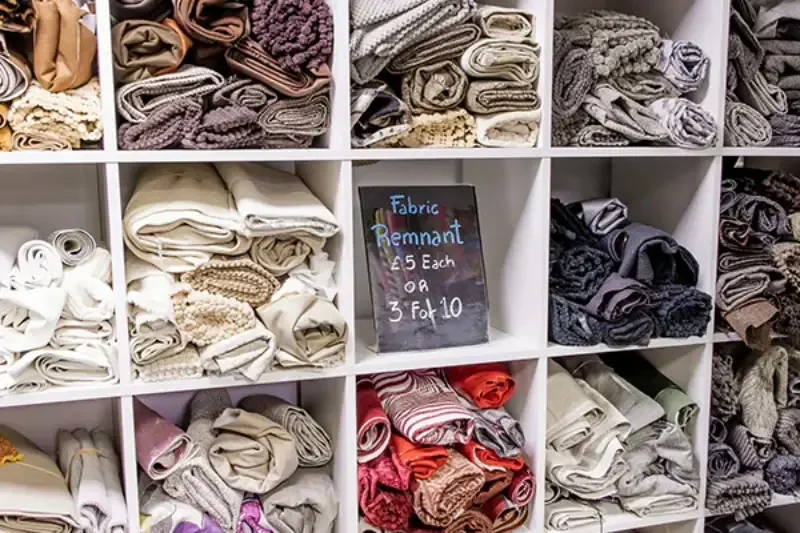
Fabric is the single largest line item in a clothing manufacturing cost breakdown, often hitting 60–70% of the FOB price for basics. To audit a quote, you must calculate three variables:
- Unit Price: The cost per meter, yard, or kilogram.
- Consumption: The exact amount of fabric required to make one garment (Marker Yield).
- Wastage: Fabric lost to cutting scraps, shade variation, and defects (typically 10–15%).
Negotiation Levers
You can lower costs without using cheaper material. Ask the factory if adjusting the fabric width improves the marker yield for your specific pattern. Additionally, consolidate colors across styles. Dyeing one large lot is cheaper than three small ones.
We detail exact cost percentages in the full breakdown chart later in this guide.
🚀 Actionable Insight: If a factory’s consumption quote looks surprisingly low, demand to see the marker plan. Suppliers sometimes squeeze patterns too tightly to win a bid, which causes twisted seams and severe shrinkage after the first wash.
3. Trims, Labels, and Packaging-in-the-Garment
A $0.15 button looks cheap. But if a supplier demands a 1,000-piece minimum for a custom color and you only order 50 shirts, that button effectively costs you $3.00 per unit. This category covers functional notions (thread, zippers, elastic) and branding assets (woven labels, hangtags, size stickers).
The Customization Premium
Factories usually include standard trims (like black thread or plain buttons) in the base price. Custom requests, such as Pantone-dyed zipper tape or engraved metal pullers, trigger “surcharges by volume.”
- MOQ Traps: You often pay for a supplier’s minimum run (e.g., 5,000 labels) even if you only need 500.
- Setup Fees: Custom metal hardware often requires mold fees ($150+) before production starts.
- Waste Rates: Budget 3–5% for scrap. If a sewer places a care label crooked, they must discard it and use a new one.
- Hidden Packaging: Polybags, tissue paper, and warning stickers are part of the product cost. Shipping cartons are logistics expenses.
4. Labor & ‘Cost of Making’: CMT vs Fully-Factored Pricing
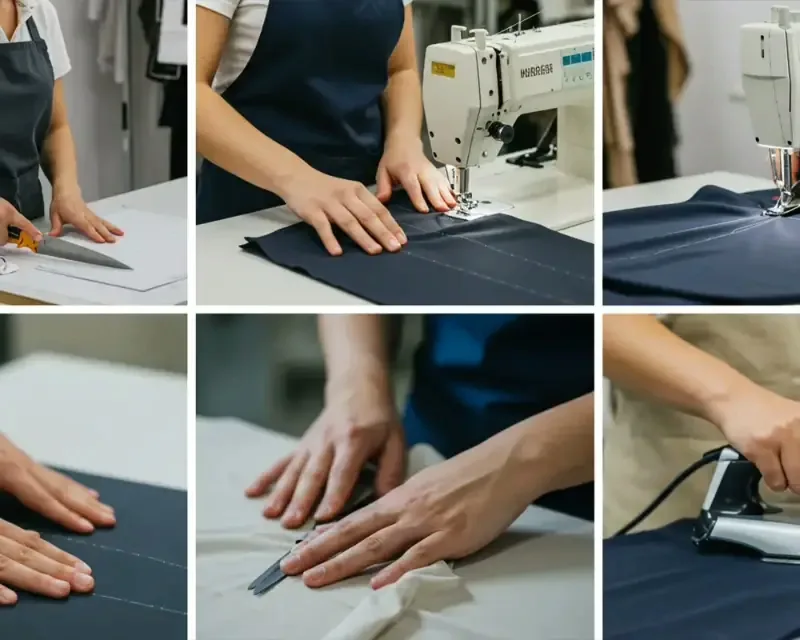
If Supplier A quotes $4.00 per shirt and Supplier B quotes $12.00, the difference isn’t usually efficiency. It is scope. Failing to distinguish between these models is the single biggest error in calculating a clothing manufacturing cost breakdown.
The Two Pricing Models
CMT (Cut, Make, Trim) is a labor-only service. You act as the general contractor. You must purchase and ship every button, zipper, and fabric roll to the facility. If materials arrive late or with defects, you pay for the downtime and replacement costs.
Fully-Factored is a turnkey solution. The custom clothing manufacturer manages the entire supply chain, from yarn procurement to final packing. They absorb the liability for fabric defects and logistical delays.
| Cost Component | CMT (Labor-Only) | Fully-Factored |
|---|---|---|
| Fabric & Trims | You Buy & Ship | Factory Buys |
| Quality Liability | You (Materials) | Factory |
| Logistics | You coordinate multiple vendors | One contact point |
| Unit Price | Low (Labor only) | High (All-inclusive) |
5. Factory Overhead & ‘Invisible’ Production Costs
Your fabric and labor calculations might be perfect, yet the factory quote often lands 30% higher. The missing variable is factory overhead. These are the indirect costs—rent, utilities, equipment maintenance, and compliance administration—that don’t physically end up in the box but are required to build the product.
The Volume Multiplier
Overhead allocation explains why unit costs fluctuate. Factories have fixed daily operating expenses regardless of output.
- Low Volume: Fixed costs divide by only 50 units. Each shirt absorbs a massive share of the factory’s electric and administrative bill.
- High Volume: The same daily cost spreads across 5,000 units. The overhead per unit becomes negligible.
Impact of Setup Fees
Setup charges act as “one-time” overhead. Tools like screen printing frames or cutting dies have fixed prices. A $50 screen fee adds $1.00 to every shirt in a 50-unit order, but only one cent in a 5,000-unit run.
🚀 Actionable Insight: Explicitly ask if setup fees (patterns, dies, screens) are amortized into the unit price or billed separately. Always negotiate to own these tools so you don’t pay setup fees on re-orders.
6. Development Costs: Sampling, Patterns, Tech Packs, and Revisions

A $150 sample fee for a $12 hoodie isn’t a markup; it’s engineering. Sample makers manually cut fabric and calibrate machines for single units, a process that takes five times longer than bulk production.
Your clothing manufacturing cost breakdown must account for these specific R&D line items:
- Tech Packs: The blueprint. Without a professional tech pack, the factory is guessing.
- Patterns & Grading: The technical templates used to cut fabric and scale sizing across S, M, and L.
- Sample Tiers: You need a Proto (aesthetics), Fit Sample (measurements), and Size Set (grading verification).
- Logistics: International courier fees for shipping samples back and forth ($50–$100 per shipment).
The Iteration Reality
Revisions are predictable expenses. Expect 2–3 rounds. If you change fit or fabric mid-process, the factory must create new patterns, repeating the initial labor costs.
7. Quality Costs: AQL Inspections and Compliance
Relying on a factory’s internal checks is like letting a student grade their own homework. To protect your capital, you must treat quality control (QC) as a distinct line item in your clothing manufacturing cost breakdown.
Internal vs. Third-Party QC
Internal QC happens “in-line” to catch production errors early. Third-party Pre-Shipment Inspection (PSI) verifies finished goods against your tech pack before they leave the dock. You need both.
Understanding AQL
Use the Acceptable Quality Limit (AQL) standard. This isn’t a guarantee of perfection; it is a statistical sampling method to reduce risk. Inspectors check a random percentage of the order. If major defects exceed the threshold (usually 2.5%), the shipment fails.
Essential Budget Items
- Third-Party Inspection: Budget approximately $300 per man-day for independent audits.
- Lab Testing: Mandatory for high-risk categories. Baby products require lead testing to meet CPSC standards. Performance gear needs ISO 105 colorfastness testing.
- Rework Allowance: Set aside a 2% contingency fund for minor repairs upon arrival.
8. Logistics, Shipping, and Customs Duties
A $5.00 shirt on a factory quote often costs $8.50 by the time it reaches your warehouse. This gap is your Landed Cost. If you exclude these variables from your clothing manufacturing cost breakdown, you will lose money on every sale.
Logistics is not a single “shipping fee.” It is a chain of charges split into three distinct zones:
- Origin Charges: Getting goods from the factory to the port. This covers local trucking, export documentation, and terminal handling at the departure point.
- Main Freight: The actual cost of ocean container or air cargo space, plus cargo insurance.
- Destination Charges: The most overlooked category. This includes port handling, customs clearance, and “last mile” delivery to your door.
Hidden Fees That Kill Margins
Supervisors often approve a budget only to panic when the final logistics invoice arrives. Watch out for these commonly missed line items:
- Port Handling Charges: Fees for moving containers off the ship at the destination.
- Customs Brokerage: The fee paid to the licensed agent filing your paperwork.
- Bank Fees: Intermediary charges for international wire transfers (T/T).
- Demurrage: Daily fines charged if your cargo sits at the port too long because paperwork was late.
9. Pricing Strategy: Wholesale Markup and Margin
Your landed cost is not your break-even point. If you sell a shirt for $20 because it cost $10 to make and ship, you will likely lose money. You have ignored the cost of selling.
First, clarify your metrics. Markup is the percentage added to cost. Margin is the profit percentage of the final price. A 50% markup on a $10 item creates a $15 price, but only a 33% margin. If your business overhead requires 40% to survive, you are underwater.
The Bottom-Up Pricing Formula
Stop guessing. Build your price using this logic:
- Landed Cost: Total manufacturing, freight, and duty per unit.
- Operating Overhead: Add specific dollar amounts for marketing, platform commissions, and return allowances.
- Target Profit: This total becomes your Wholesale Price.
The Retail Multiplier
If you sell B2B, your partners need profit too. Standard retail strategy requires boutiques to mark up your wholesale price by 2.2x to 2.5x. If your wholesale price is $25, the retail price must be at least $55. If the market rejects that price, you must reduce production costs, not your margin.
🚀 Actionable Insight: Never price based on best-case scenarios. Always build a 10-15% contingency buffer into your overhead calculation to cover unexpected duty hikes or quality defects without destroying your profit.
10. The Execution Plan: Calculate Your True Landed Cost
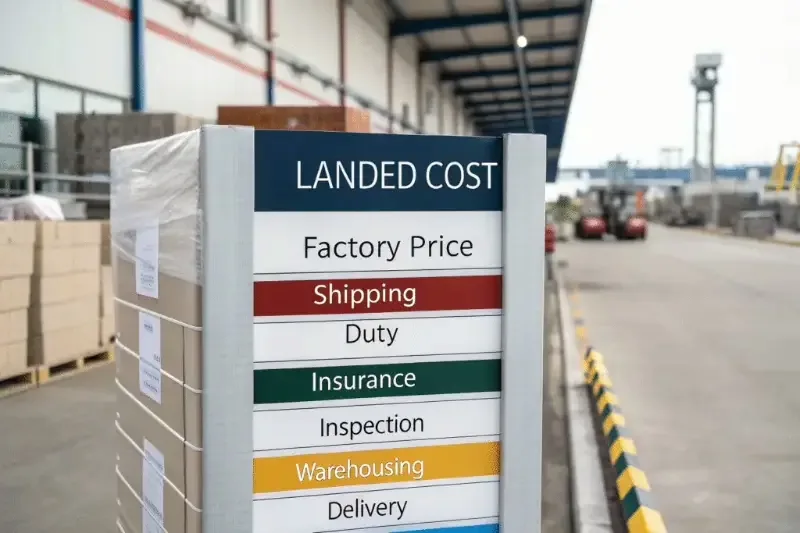
Do not guess margins. Build a precise model that accounts for every cent from the factory floor to the warehouse door. Follow this four-step process to validate your quote and calculate the final landed price.
Step 1: Decode the Incoterms
The Incoterms rule defines where factory responsibility ends and your liability begins.
- EXW (Ex Works): You pay the price at the factory door. You must arrange the truck to pick up goods, drive them to the port, and clear export customs. This is standard for sample orders.
- FOB (Free On Board): The price includes production, delivery to the port, and export clearance. The factory loads the goods onto the ship. You take over only once the cargo is on the vessel.
Rule: Never compare an EXW unit price to an FOB unit price. The EXW price hides local logistics costs. Request FOB quotes to compare suppliers accurately.
Step 2: Sanity Check the Product Cost
Verify the internal cost ratios before calculating shipping. A standard garment breakdown follows this structure.
| Component | Allocation | Note |
|---|---|---|
| Fabric | 60% to 70% | The dominant cost driver. |
| Trims & Packaging | 5% to 15% | Labels, tags, and polybags. |
| CMT (Labor) | 10% to 20% | Cutting, making, and trimming. |
| Factory Margin | 5% to 15% | Overhead and profit. |
Variations:
- Technical Garments: Complex pockets or waterproof taping raise labor costs to 30% or more.
- Hardware: Heavy metal buckles on denim increase the trim percentage.
If a factory quotes 50% labor for a plain t-shirt, flag it. They are likely inefficient or outsourcing the work.
Step 3: Calculate Real-World Landed Cost
Do not rely on the FOB price. Add the logistics layer to find your true cost per unit.
Scenario: 1,000 hoodies. FOB Quote: $12.00. Total Goods Value: $12,000.
| Line Item | Cost | Context |
|---|---|---|
| Product Cost (FOB) | $12,000 | Paid to the factory. |
| Bank Fees | $45 | Wire transfer plus intermediary bank fees. |
| Ocean Freight | $1,500 | LCL shipment to Los Angeles. |
| Cargo Insurance | $60 | Protects against damage or loss. |
| Customs Duty | $1,920 | Based on HTS Classification (Est. 16% for cotton). |
| Merchandise Processing Fee | $50 | Standard U.S. port handling fee. |
| Customs Broker Fee | $150 | Agent fee to file paperwork. |
| Final Mile Delivery | $400 | Trucking from port to warehouse. |
| Total Project Cost | $16,125 | |
| Landed Cost Per Unit | $16.13 | $4.13 higher than the FOB quote. |
If you price your retail strategy based on $12.00, you lose profit on every unit sold.
Step 4: Finalize the Budget
Use the data above to build a defensible budget. Create a spreadsheet template. Force yourself to fill in every row listed in Step 3. If a cell is empty, find the missing quote.
If the final number exceeds your target, do not just ask for a discount. Remove waste from the supply chain. Read our guide on supply chain cost reduction to find cuts.
FAQs About Clothing Manufacturing Cost Breakdown
1. What is the difference between EXW and FOB when a factory quotes me a price?
EXW (Ex Works) is the price of the goods sitting on the factory floor. You are responsible for paying a truck to pick them up, driving them to the port, and clearing export customs.
FOB (Free on Board) includes those local logistics costs. To compare an EXW quote to an FOB quote, you must add local transport and export documentation fees to the EXW price.
2. What is the difference between CMT and fully-factored (FOB) pricing?
CMT (Cut, Make, Trim) means you buy the fabric and ship it to the factory. You control the material cost but absorb the risk for delays. Fully-factored means the factory sources the material for you.
For startups producing fewer than 5,000 units, always choose fully-factored. Shipping fees and fabric waste management usually wipe out the small savings from CMT.
3. How do I estimate fabric consumption and wastage if I don’t have a marker plan?
If you lack a CAD marker, use the “weight method.” Weigh a similar sample garment and check the fabric GSM. Convert the total weight back into yards based on the roll width. Always add a conservative 15% buffer for wastage. If you estimate too low, you will run out of fabric before the order is finished.
