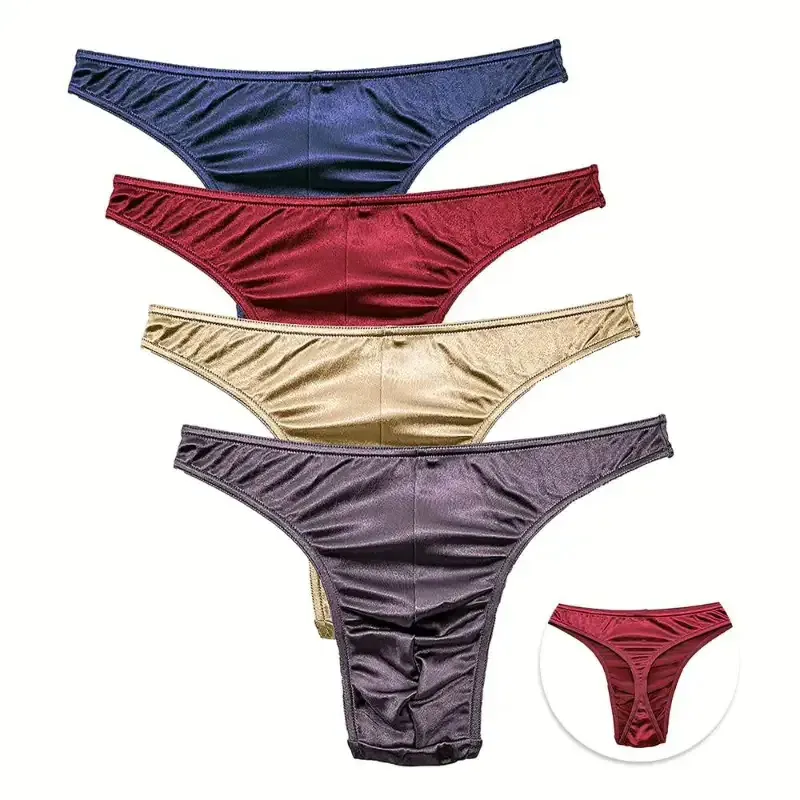
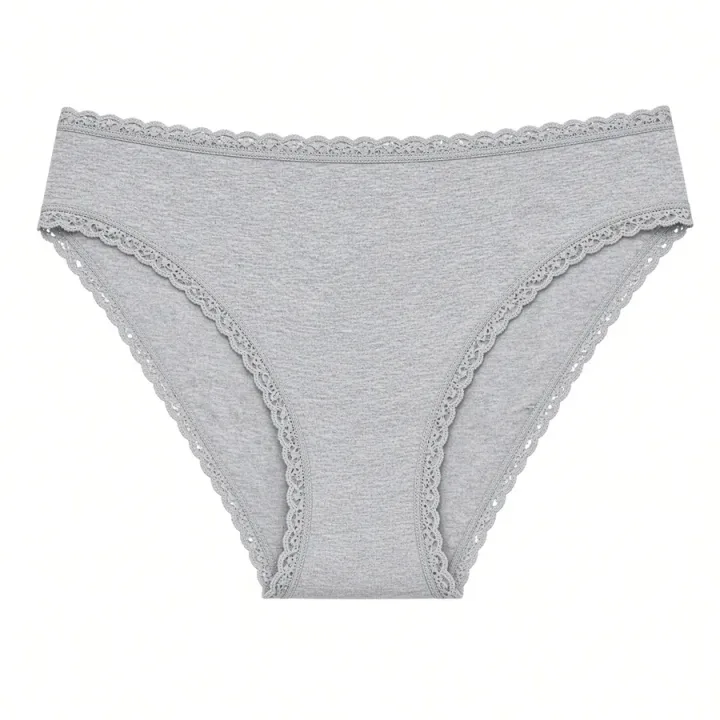
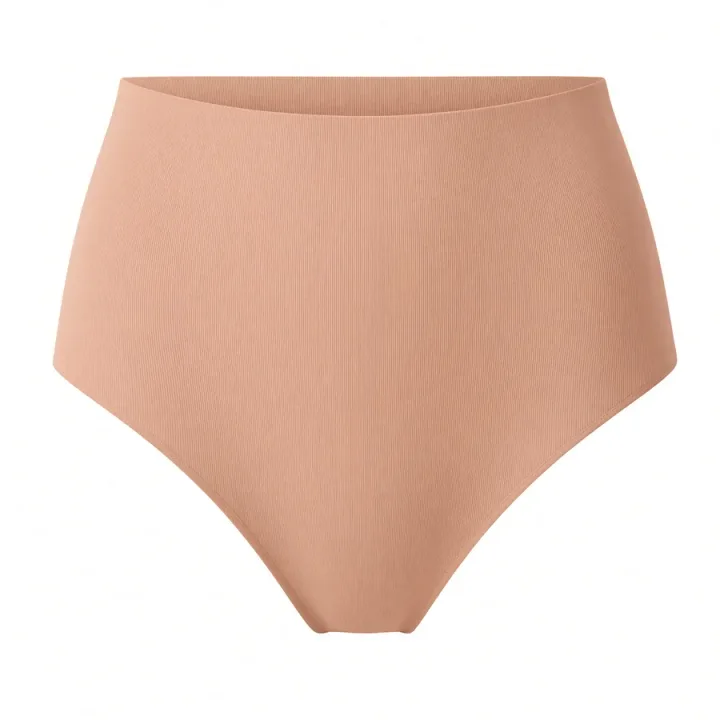
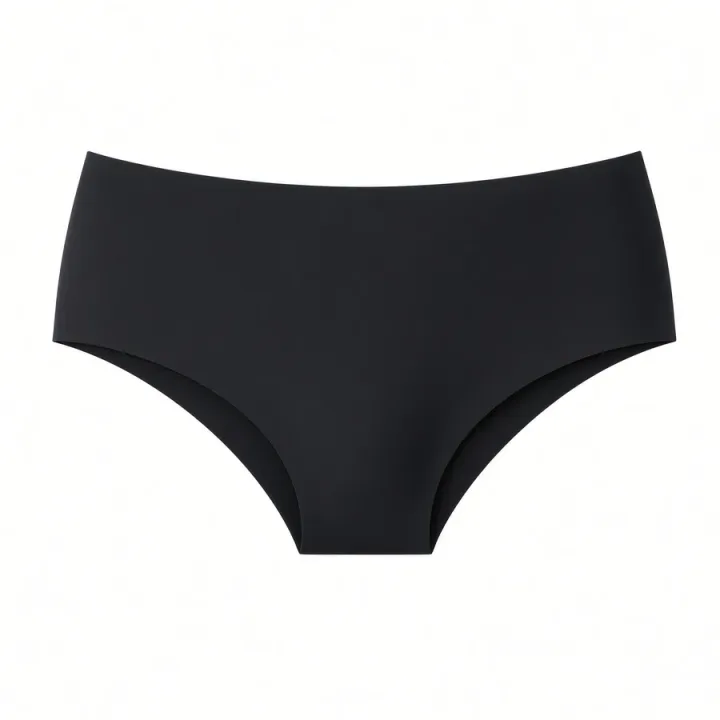
- RiseHigh rise
- Leg lineFull leg
- GussetFully lined
Value basics, mature buyers, shapewear layering.
A private-label source grading silhouettes to the rise and leg line a brand actually cuts — not a stock block. Front and back rise are logged relaxed and extended on the POM table, and a 7-day fit sample sets the spec before bulk starts. Graded XS–3XL to a ±1/8" tolerance, sized to a measured circumference.
The Coverage Spectrum
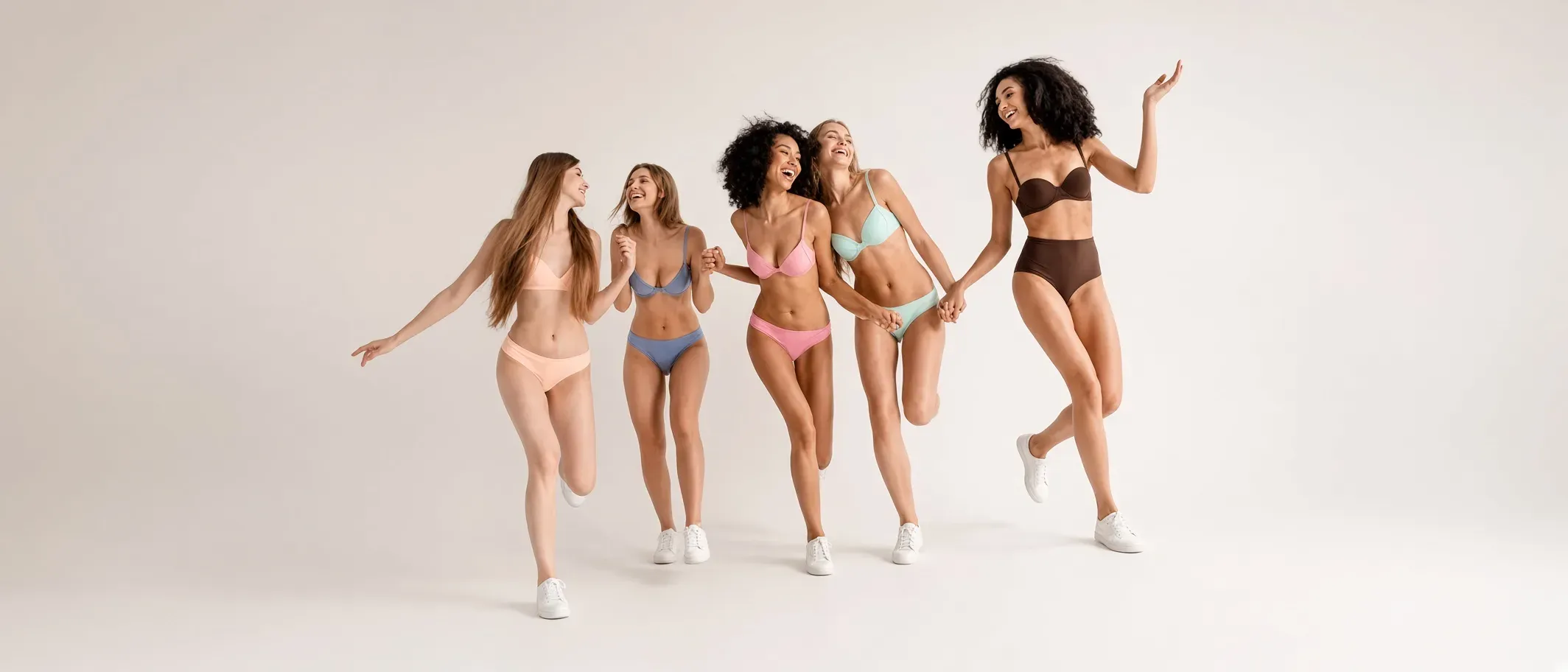
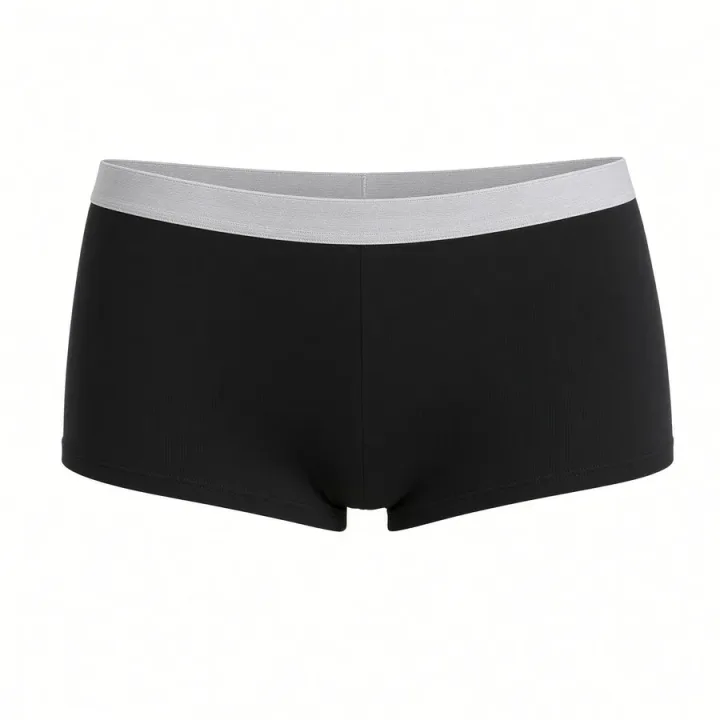
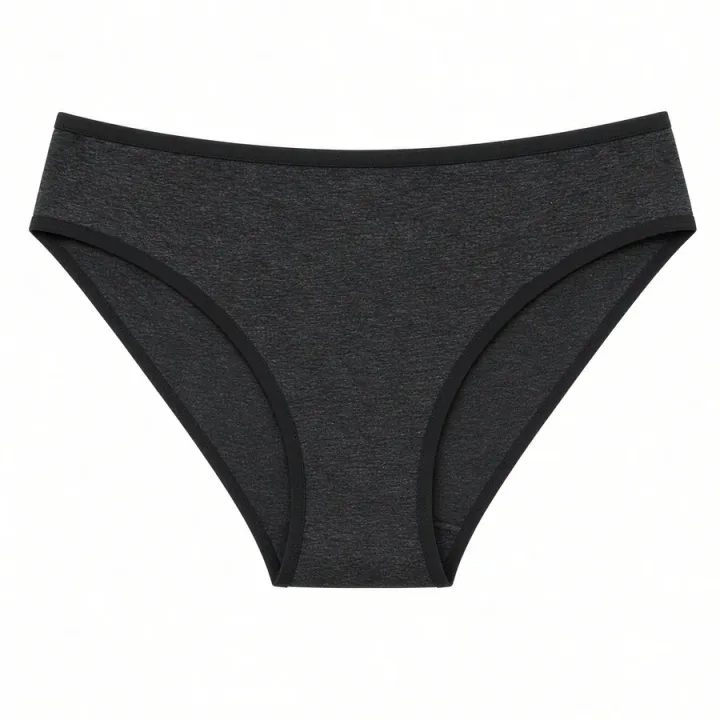
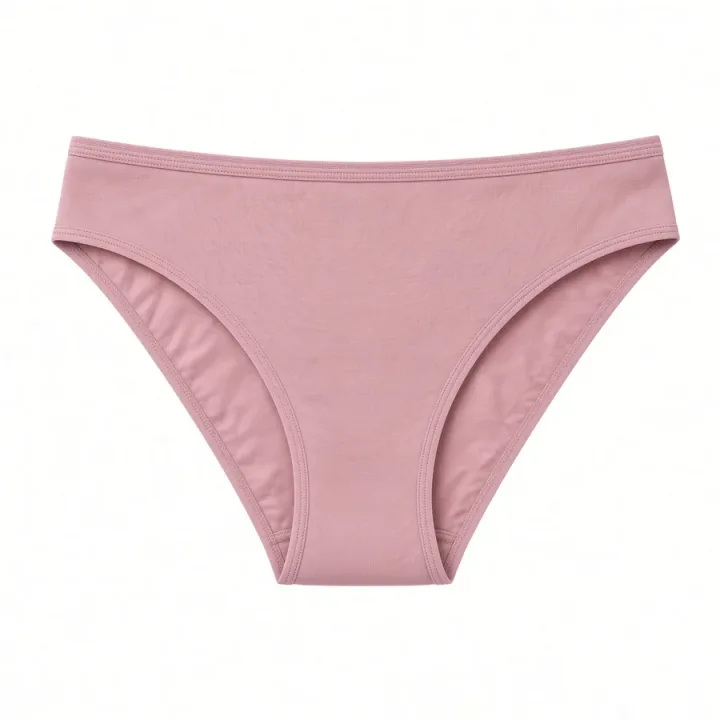
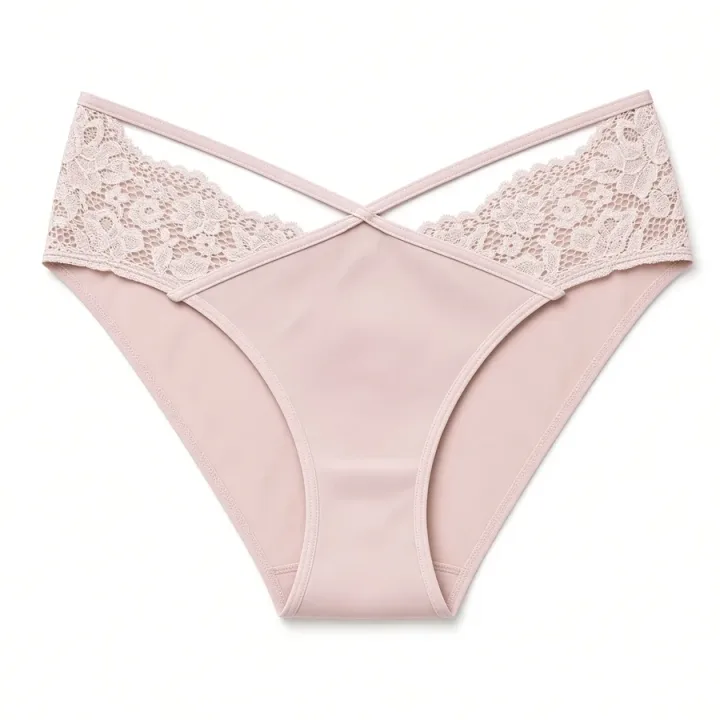
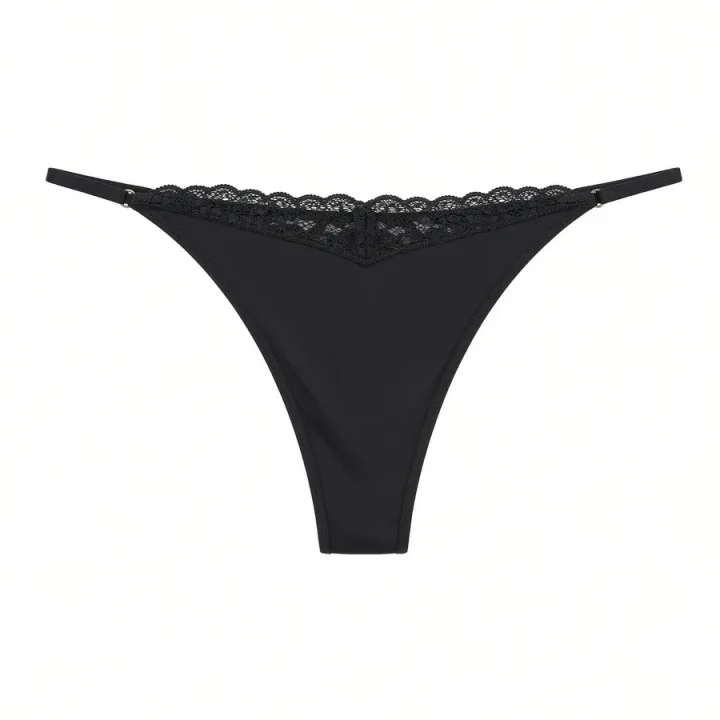
Core panty silhouettes, ordered by how much fabric they carry — full-coverage briefs through string thongs. This is the shorthand buyers use to pick a mix, because coverage is what sets the rise, the leg line and the customer a line is selling to.
Fit & Grading
The tech pack for custom panties reads differently to a t-shirt pack — rise, leg opening, gusset width and waistband width are all logged at two states and graded to a tolerance, because a fit that drifts between batches is a sizing return waiting to happen.
| Size | Waist | Front rise | Back rise | Leg opening |
|---|---|---|---|---|
| XS | 24–25" | 7.0" | 9.5" | 6.5" |
| S | 26–27" | 7.5" | 10.0" | 7.0" |
| M | 28–30" | 8.0" | 10.5" | 7.5" |
| L | 31–33" | 8.5" | 11.0" | 8.0" |
| XL | 34–36" | 9.0" | 11.5" | 8.5" |
| 2XL | 37–39" | 9.5" | 12.0" | 9.0" |
| 3XL | 40–42" | 10.0" | 12.5" | 9.5" |
How to read this table
Send a reference garment or sketch and the graded table comes back with the sample.
Make Your Mark
Custom panty production can pick a decoration method with confidence. The thing most buyers miss is the waistband: printed is the low-commitment way to start, and jacquard is the reorder upgrade that stops the cracked-logo return. The rest is how a brand makes the cut its own.
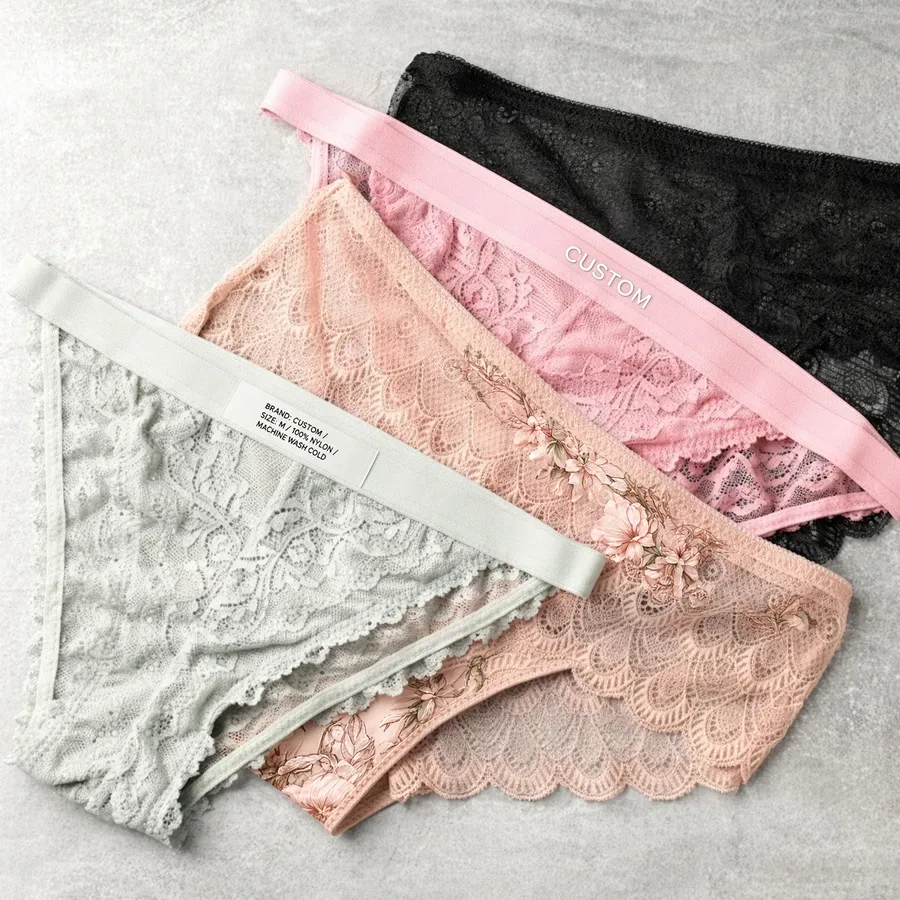
Edge-to-edge, photo-real colour on a polyester-blend cut. Dyes into the fibre, so it cannot crack or peel.
Heat-transfer or silkscreen logo on the elastic. Low commitment to start — but it sits on top of the band, so it breaks down where the elastic stretches most.
Yarn-dyed into the band itself, so it physically cannot peel. The reorder upgrade once a brand is past a couple of runs.
Care, size and brand printed flat on the fabric — nothing to scratch. The detail a customer notices the first time they put a pair on.
Open-Book Pricing
No single 'from' price that hides the add-ons. The per-unit number below is the cotton base at each break; the table next to it is what pushes that cost up and why. For OEM panties manufacturing the quote is itemized, so the full cost is on the page.
Base cotton jersey, single-colour elastic, XS–3XL grading. Setup applies once per design for pattern, grading and the first sample.
Add-ons stack on the base unit cost — take the ones a line needs, leave the rest.
Lock the Fit Before the Run
Tell us which panty cuts to run and which body to cut for — the rise, leg-line and gusset that fit them, fabric options and a per-unit cost come back within one business day.
From Panty Brand Owners
Independent underwear brands and wholesale buyers running custom panty programs with LeelineApparel.

Daniel T.
Founder, Activewear Panty Line
A 100-piece first run carried 3 silhouettes on one line. The Coverage Spectrum narrowed it — brief and boyshort for the full-coverage base, one thong for a no-VPL option.
Rise and leg opening came back logged relaxed and extended, graded XS–3XL. Fit returns stayed in single digits across two seasons.
The waistband was the payoff. Printed carried the first run, then jacquard took over — the logo is woven in and has not peeled across washes. 500 units a month since.

Angela Yan
Founder, Organic Cotton Intimates Brand
Organic cotton ran in ecru and pale blush — the shades that usually read sheer. A heavier weight at the right elastane, plus an opacity test on the sample, cleared both before bulk.
The gusset came fully-lined on those light shades, so nothing showed through. Transparency complaints stopped within the first launch.
All-over sublimation became the seasonal hook — photo-real prints with no cracking. Two collections in, the line has doubled its reorder volume.
Panty Buyer Concerns
Read coverage and leg-line together, not coverage alone. A cheeky gives shape without a hard edge, but the no-visible-line result is won or lost at the leg-line — a cheek cut sits at the glute crease so there is no edge to print, while a full leg on a brief always shows under tight fabric. A seamless is knit in one piece, so it has zero side seam to show — the strongest no-VPL of the eight, at the cost of a fixed cut and less shape support. Most buyers shortlist on the Spectrum between cheeky and seamless, and a first sample of each settles the line under actual tight fabric rather than a guess.
The fit is locked before the greige is ordered. Front and back rise, leg opening and gusset width are graded on a POM table and logged at both relaxed and extended — so a size M is sewn to a measured circumference, not “around a 30”. The approved sample is held as the pre-bulk gate: production does not start until the fit is signed off in writing, and the approved spec is what the next run is cut against. A batch drift is what happens when a pack logs one relaxed measurement and no tolerance; logged two-state and graded to a tolerance, the fit repeats.
The waistband width and tension, not the fabric, decide roll versus flat. A wide band is specced 25–40 mm and logged at both relaxed and extended, against the front and back rise on the grading table — so the band’s stretch matches the body it sits on instead of pulling the knit down. On a high-rise over-the-tummy cut the gusset is fully-lined, so the shaping comes from construction rather than squeeze. A too-narrow or too-stiff elastic for the rise is the usual “rolls down and digs” culprit, and it is a spec fix, not a fabric swap.
Usually the pattern (front/back rise) and the gusset lining, not the fabric. A sagging rise means the back rise is too long or the crotch gusset is missing or sewn as a single layer with an outer seam. The front and back rise are graded on the POM table and the gusset is built flatlocked or fully-lined with a speced seam allowance — so the fabric sits where the pattern put it. It is one of the top QC failure points on intimate construction, and it is a pattern fix, never a fabric one.
Opacity is a weight and elastane-percent question, not a “quality” one. Light shades hold to a heavier weight — 190–200 GSM at 5–7% elastane — and an opacity test runs on the sample before the colour is committed, under your own light source. On a light shade the gusset is doubled as standard, because a single-layer gusset is where the complaint usually shows. It is prescriptive, not reactive: the shade is cleared on the sample, not discovered after the first wash.
Print sits on top of the elastic, so it fails where the band stretches most. Printed (heat-transfer / silkscreen) is the right low-commitment start — a small metre run and a modest setup — but it cracks under heavy stretch. A yarn-dyed jacquard logo is woven into the elastic itself, so it physically cannot peel; it needs a bigger elastic commitment to justify the loom, which is why a brand moves there on a reorder. Once a brand is past a couple of reorders, the jacquard upgrade removes the cracked-logo return entirely.
Share the cuts and the body you cut for — get the rise, leg-line, gusset and per-unit cost back within one business day, before a metre is off the roll.
Start typing to find articles
No articles found
Try a different keyword