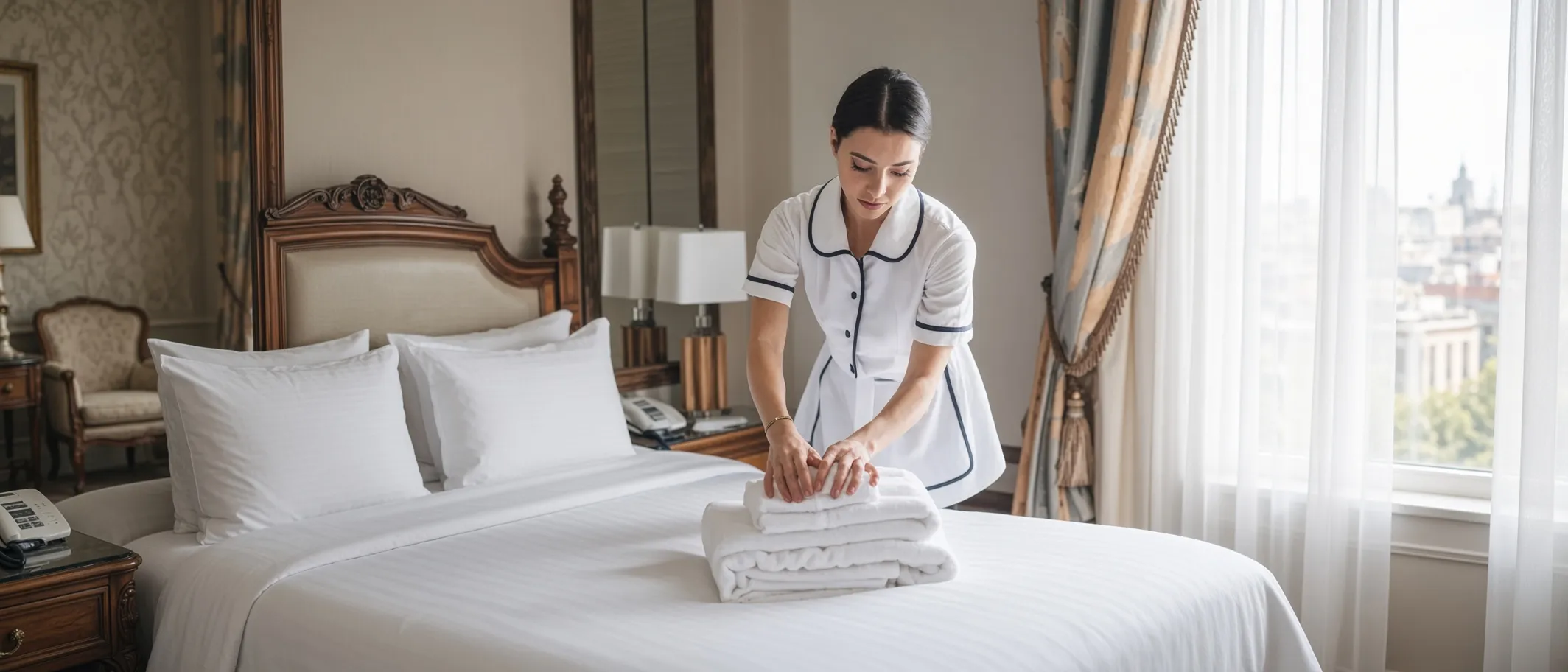

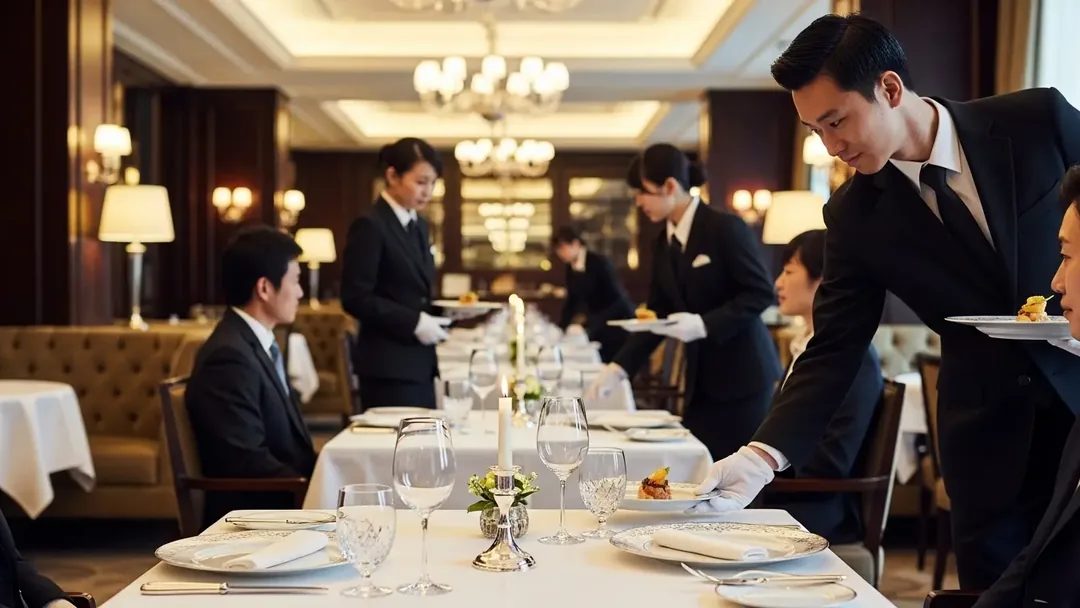
Restaurant
Fine Dining Restaurants
Starched whites and hot-oil service — the hardest wash cycle in the building.
A hospitality uniform program is bought as one approved spec, not a product range — a single pack covering uniform and towel, built to the cycle the house actually runs, one landed figure per property, and every new opening issued against it without resampling. MOQ 100 per design per color; production in 15–25 working days once the pack is signed.
The Laundry Is the Customer
A guest wears a uniform for one shift. The laundry runs it again the next morning, and the morning after — hot, bleached and tumbled. Hospitality uniform programs are decided by that loop, not by the catalogue shot.
Program Scope
That load is fixed by the laundry, not by the order. Hospitality uniform programs are often confused with rented workwear — where that line falls decides whether you own a standard or subscribe to a service.
Front desk, housekeeping, F&B and back-of-house roles — cut to your pattern, sourced to the fabric, from 100 units per design.
Bath, hand, face, pool and spa piles specced alongside the uniforms, so guest linen and staff kit carry one standard of shade and weight.
Embroidery, woven labels and jacquard crests, with one Pantone shade locked before the first cut and checked on every later lot.
Customs, duty and final-mile consolidated into one landed figure per address — a property group does not field a separate freight invoice.
You own the uniform and the towel outright — no per-week rental line, and no unreturned-garment charge when the term ends.
Your laundry contract, equipment and staffing stay as they are. We build the garment to survive that cycle instead of replacing it.
Par levels, cloakroom stock and in-house distribution stay a property function; we supply the packed allotment each site draws from.
The floor is 100 units per design per color; a replacement draws on your site allotment rather than opening a smaller run.
Client Type — Hotel Groups
A group opens its properties across a calendar of lease and renovation dates. The hospitality uniform program has to hold one approved standard while the rollout moves site by site.
One approval, but the first issue arrives in waves — so a site opening in month eight must match the look of the one that opened in month one.
One design and shade standard is approved before the first cut. Each property is then issued against that reference on its own opening date, packed per destination.
Every property draws on the same approved pack. A late opening inherits the standard rather than re-negotiating it.
Client Type — Restaurant Groups & Chains
A chain is judged branch by branch. A server apron that reads one color in the flagship and another two streets away undoes the brand in a single service — so the standard has to travel with the rollout.
New branches open faster than a design process, seasonal menus change the front-of-house, and a stained apron cannot wait three weeks for a replacement.
The shade is approved once and checked on every lot. Front-of-house replacement runs off a standard holder, and menu or season changes are calendared in advance rather than ordered in a panic.
Every branch opens to the same color, the same cut and the same badge — with a replacement path short enough to cover a Friday-night spill.
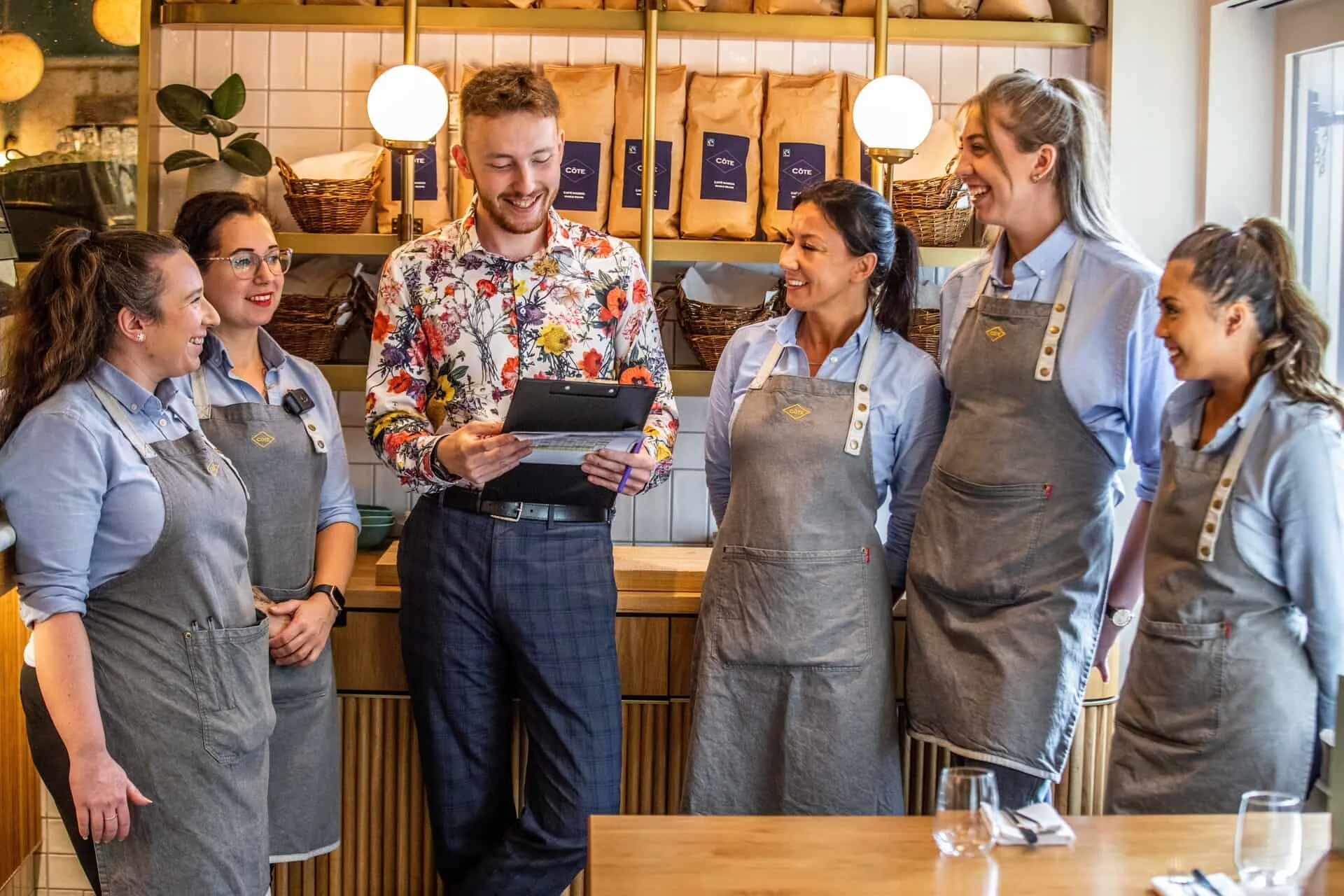
Issued against the approved pack — no fresh sampling, same shade and trims as the estate.
Front-of-house styles refreshed on the rolling annual calendar, not at short notice.
Single-unit replacement from a standing allocation, sized to the branch profile on file.
Client Type — Resorts, Spas & Cruise
A resort asks a single hospitality uniform program to dress staff moving between an air-conditioned lobby, a sun-baked terrace and a chlorinated pool deck — and to supply linen that sits in all three.
A fabric chosen for the lobby cracks in sun and city humidity; a towel picked for plushness bleeds into the bleach load or loses its hand by the second season.
Roles are grouped by the climate they actually work in, and the garment and the towel are specced to that build — one shade across the property, a different construction per zone.
Staff stay presentable from lobby to poolside, and the linen holds its shade and weight through a season that runs hotter and wetter than a city hotel.
Test It Before You Commit
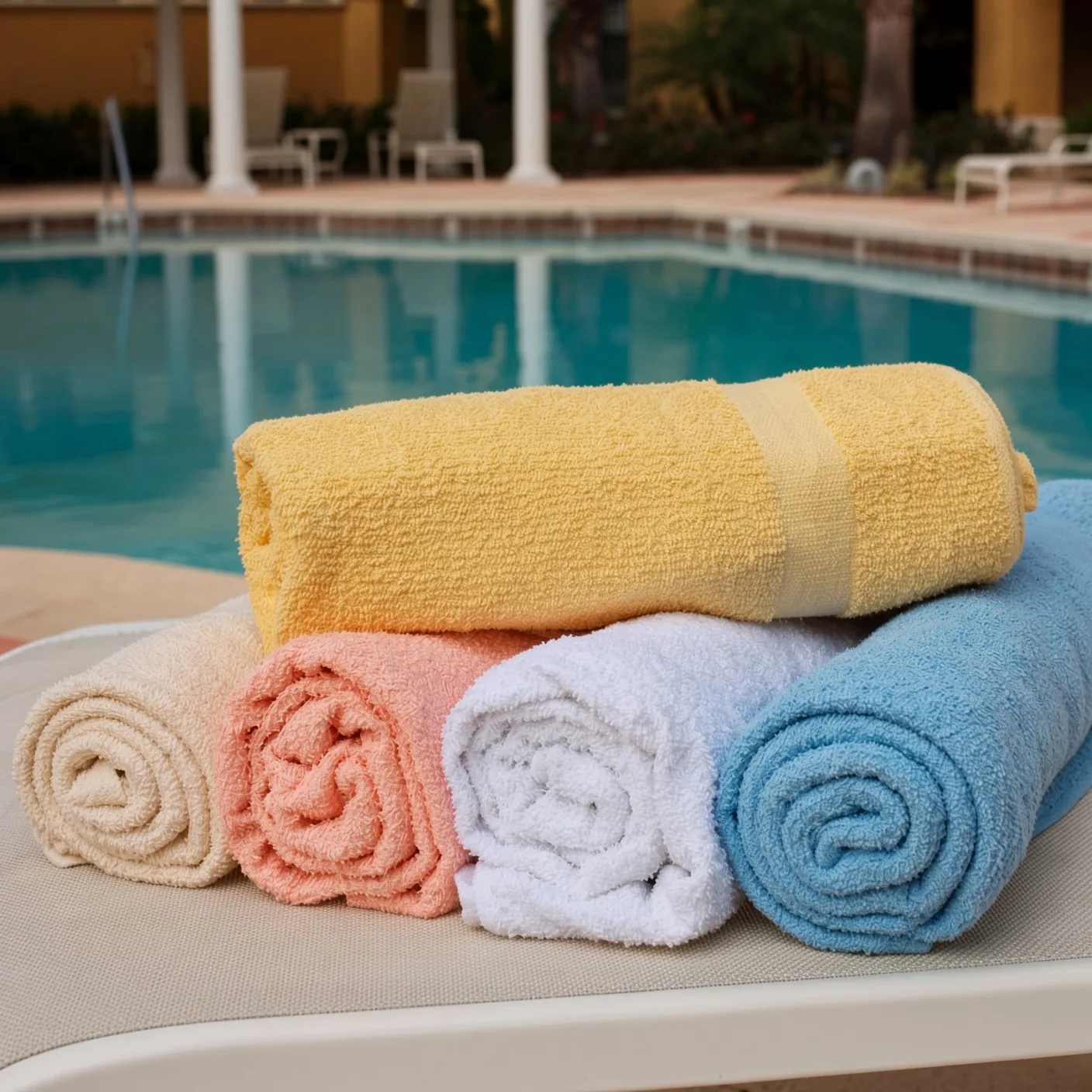
Ask for a wash-trial kit: a finished garment and a towel run through the cycle pattern your laundry actually uses, so shrinkage, shade and hand are proven before a property goes live.
Hospitality Formats
A hotel is one kind of property. The same shade and wash spec also has to dress the dining room, the café counter, the catering crew and the banquet floor — each imposing its own load on the garment and the linen.
Starched whites and hot-oil service — the hardest wash cycle in the building.

Milk, coffee and daily bleach — aprons rewashed and shade-checked so the counter never fades.
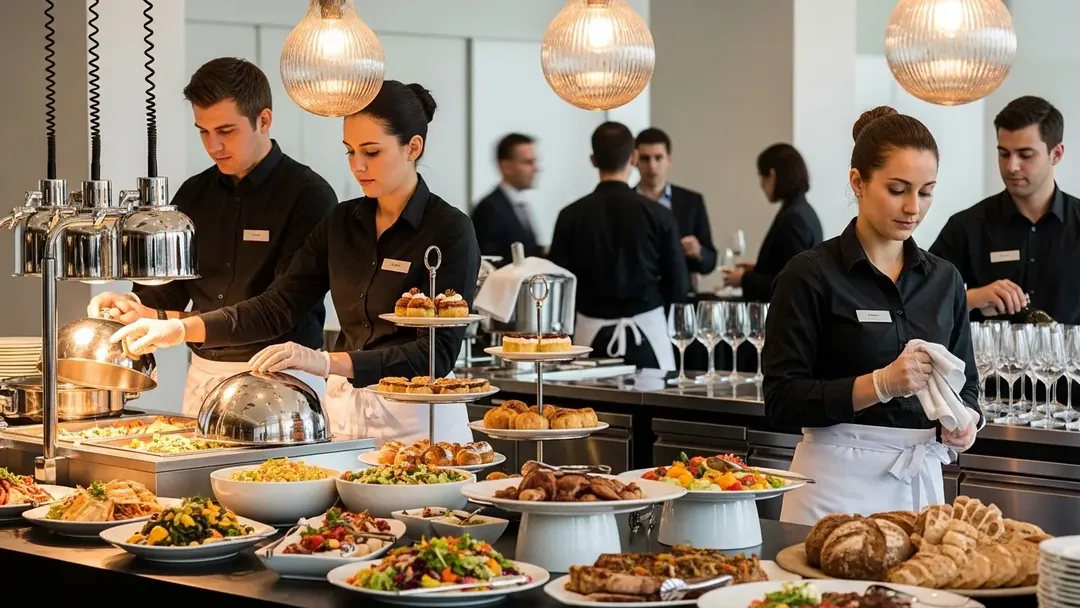
A full kit per event, packed and replaced against one shade standard.
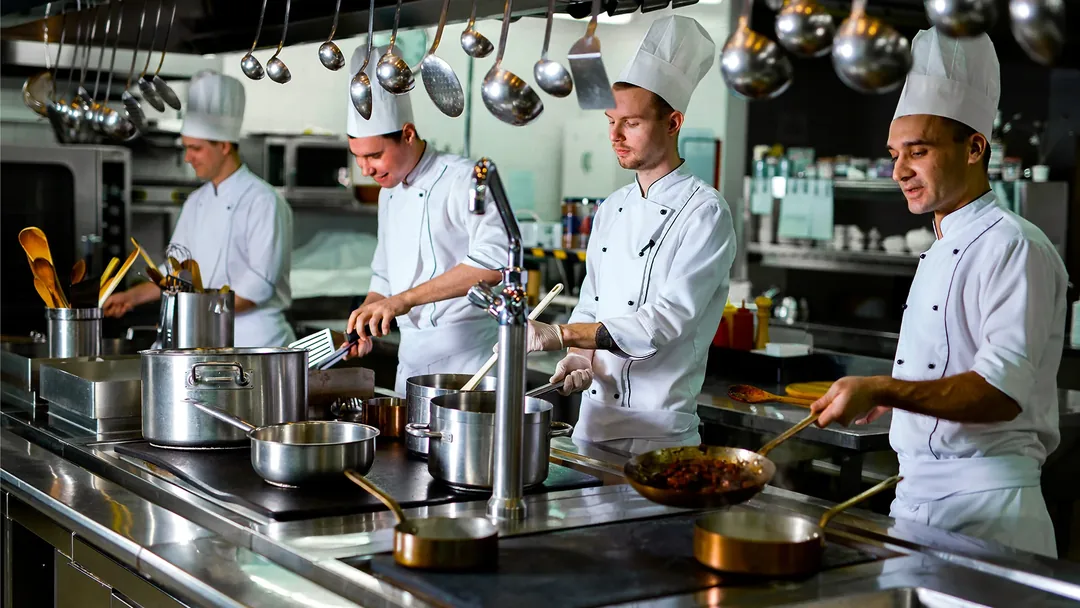
Commercial heat, oil and hygiene rules — kitchen whites built for industrial laundering.
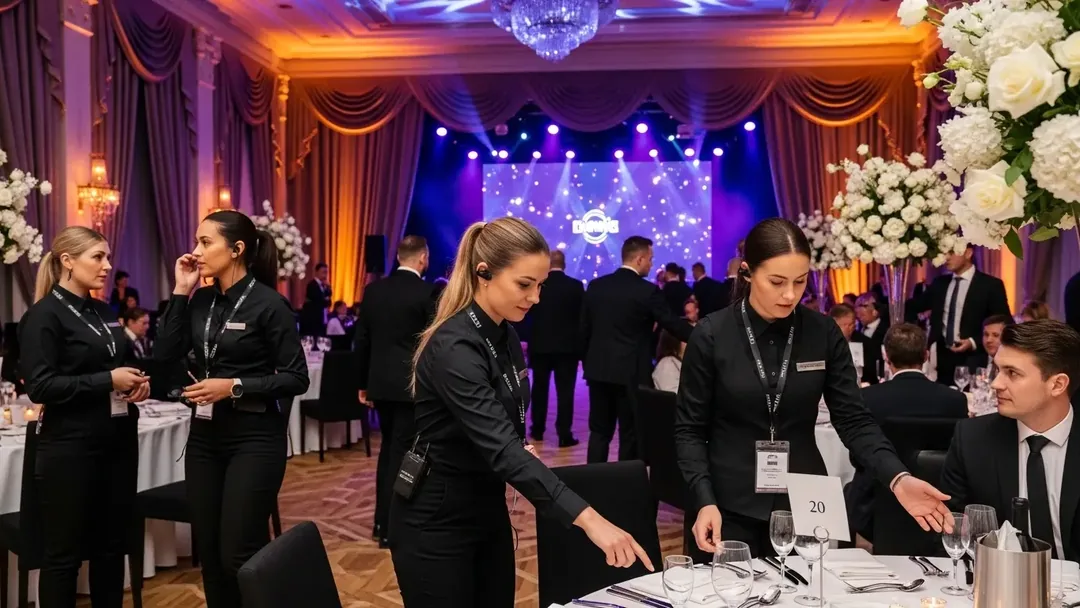
A seasonal crew that scales up and down — sized from a standing matrix, replenished fast.
Guest Touchpoints
From the forecourt to the last goodbye, a guest reads the brand through whoever is in front of them — and through the linen they touch. Each stop carries the same standard in a different role.
Outerwear built to hold shape through a full standing shift.
Brand signalThe first read of the property before a word is spoken.
Tailored, shade-fast shirt and jacket that stay sharp all day.
Brand signalPrecision — the brand at its most formal.
Aprons and front-of-house pieces built for spills and motion.
Brand signalWarmth and competence, close up at the table.
Light, UV-stable builds plus bleachable pool towels.
Brand signalRelaxation — the brand in leisure mode.
Move-with-you tunics and the guest bath and hand piles.
Brand signalCare, behind the scenes and in the room itself.
Quick-dry, chlorine-tolerant kit and spa-grade linen.
Brand signalCalm and quiet quality, in a wet environment.
The same uniform that opened the stay, still on standard.
Brand signalConsistency — the last impression matching the first.
Acceptance Check
Hospitality uniform programs are tested after the showroom, not in it. This is the short set a buyer can verify at inspection — one column for the garment, one for the linen.
Client Experience
Two hospitality operators, two very different service models — a city hotel that left a rental contract, and a café group that scaled seasonal crews. Both describe the same standard holding after handover.
Three properties, 240 staff, one rental contract. A single stocktake settled the case for leaving it — and the shade family that came back holds its tone across the 60–90 °C cycle.
Housekeeping cuffs meet bleach every shift; new panels came in at ΔE 0.9 against the reference swatch, inside the ΔE 1.5 limit, and held it past 50 industrial washes.
Towels lost volume under the old supply; replacement lots match GSM and weigh flat at 240 cycles. Reorders draw on the handover matrix, so property three opened on schedule.
A six-site café group and a weekend banquet arm bought uniforms separately until last spring. One shade card closed the gap: aprons, chef whites and event crew now read as a single standard.
Seasonal hiring once meant a tape-measure round every April; last summer 46 hires came in against the size matrix on file, S through 3XL plus two petite bands, and leavers’ kits return to the pool.
Prints failed the wash early on. A soil-release finish and embroidery over backing stabiliser have now held two years of 60 °C laundering, and a July top-up lands inside July.
Hospitality Due Diligence
The questions buyers ask from inside a property program — the housekeeping shift, the shared bleach load, the chef’s whites, the slipped opening date, the peak-season crew.
The cuffs and hems meet the chemicals, so the cloth and finish are chosen for contact, not for the look. Housekeeping roles are specced in a shade that holds through bleach exposure rather than one that only reads bright on the sample, with a soil-release finish so a splash lifts in the wash instead of setting. It is one program, but not one cloth — the role decides the panel, the finish and the shade depth, while front-of-house and housekeeping stay on the same approved standard.
Yes — and the shared load is exactly why they belong in one program. Deep shades are bleed-tested against white in the same load, so a navy apron cannot dye the bath towels, and whites carry their own chlor-bleach test. Both are specced to the hottest cycle the house actually runs, which is what lets a single approval pack and one landed figure per property cover the towel and the uniform together.
Construction and finish matter more than color here. Chef whites are specced with a soil-release finish and reinforced stress points, so a stain is a stain rather than a permanent mark, and the garment takes repeated hot laundering without seam failure. Decoration on chefwear is chosen to sit flat and survive the heat — embroidery over a backing stabiliser, not a print that lifts in the wash.
An approved standard, not a fresh design cycle. Where the shade and design come from an approved sister-site pack, sampling runs in 5–7 days and cut-and-sew production in 15–25 working days — but towelling is a 30–45 working-day line, so a late linen order is the honest bottleneck. The realistic play on a compressed opening is to launch uniformed front-of-house first and phase the towels against their own delivery, rather than force both through a rushed cut.
Attrition is a property-level number, so it is planned per pile rather than absorbed at year-end. Pool and spa allocation is sized to the site’s own loss rate and drawn from a continuity lot, so a replacement matches the retired towel in shade and weight after 200–300 cycles. The site requests a top-up against its allocation instead of the shortfall being discovered at stocktake.
No — the peak is covered by a standing allocation, not a one-time order. Employee size profiles stay on file per property and per role, so a seasonal hire is matched to the existing matrix without a measurement round, and a departing hire’s kit returns to the pool. Production runs 15–25 working days from a settled pack, so a mid-season top-up lands inside the month rather than after the season closes.
The minimum is 100 units per design per color, so replacements are built into the program rather than ordered one at a time. Each property carries a small replacement pool inside its allocation, and the size matrix already on file says which sizes to hold. A walked garment is replaced from the pool, and the pool is refilled on the next scheduled top-up instead of a bespoke order.
One supplier, tiered standards — the property’s guest promise decides the cloth, not the group logo. Luxury and select-service can carry different weights, shades and trim depth while sharing one approval process and one physical shade reference, so a manager moved between properties still recognises the standard. What does not vary is the wash spec: every tier is built to the group’s hottest cycle, so no property fails on the towel just because its laundry runs harder.
You keep your laundry contract and lose the monthly rate; what you gain is the spec. Ownership means the garments are built to your cycle instead of a rental catalogue cycle, the shade standard is a physical swatch you hold, and a reorder draws on a continuity lot rather than whatever the supplier has on the shelf. Par levels, cloakroom stock and day-to-day distribution stay a property function — we manufacture, we do not run the linen room.
Send the property list, the roles and the target opening dates. A costed outline with the approval-pack checklist lands within one business day.
Start typing to find articles
No articles found
Try a different keyword