Screen Printing Manufacturers With Specialty Inks That Survive the Wash

Print a garment built to a brand’s own pattern and fabric — cut, sewn and printed by a single supplier, so the fit, the textile and the finished print all come from one place instead of an off-the-rack tee. Artwork can run across a seam or span a whole panel, since the garment is made first and printed after.

14 base pigments mixed in-house
20+ wash durability rating
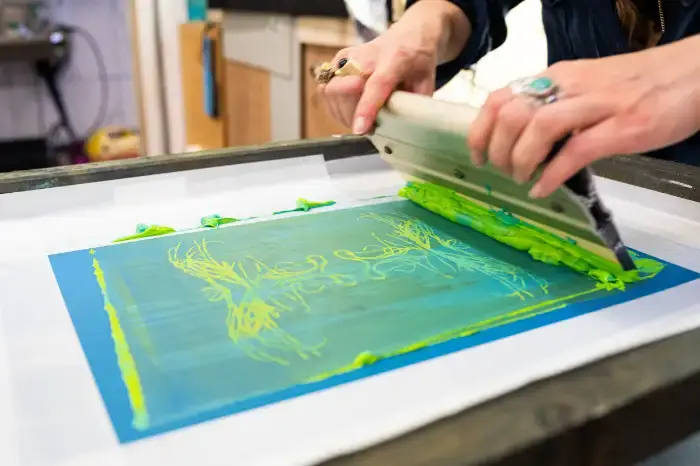
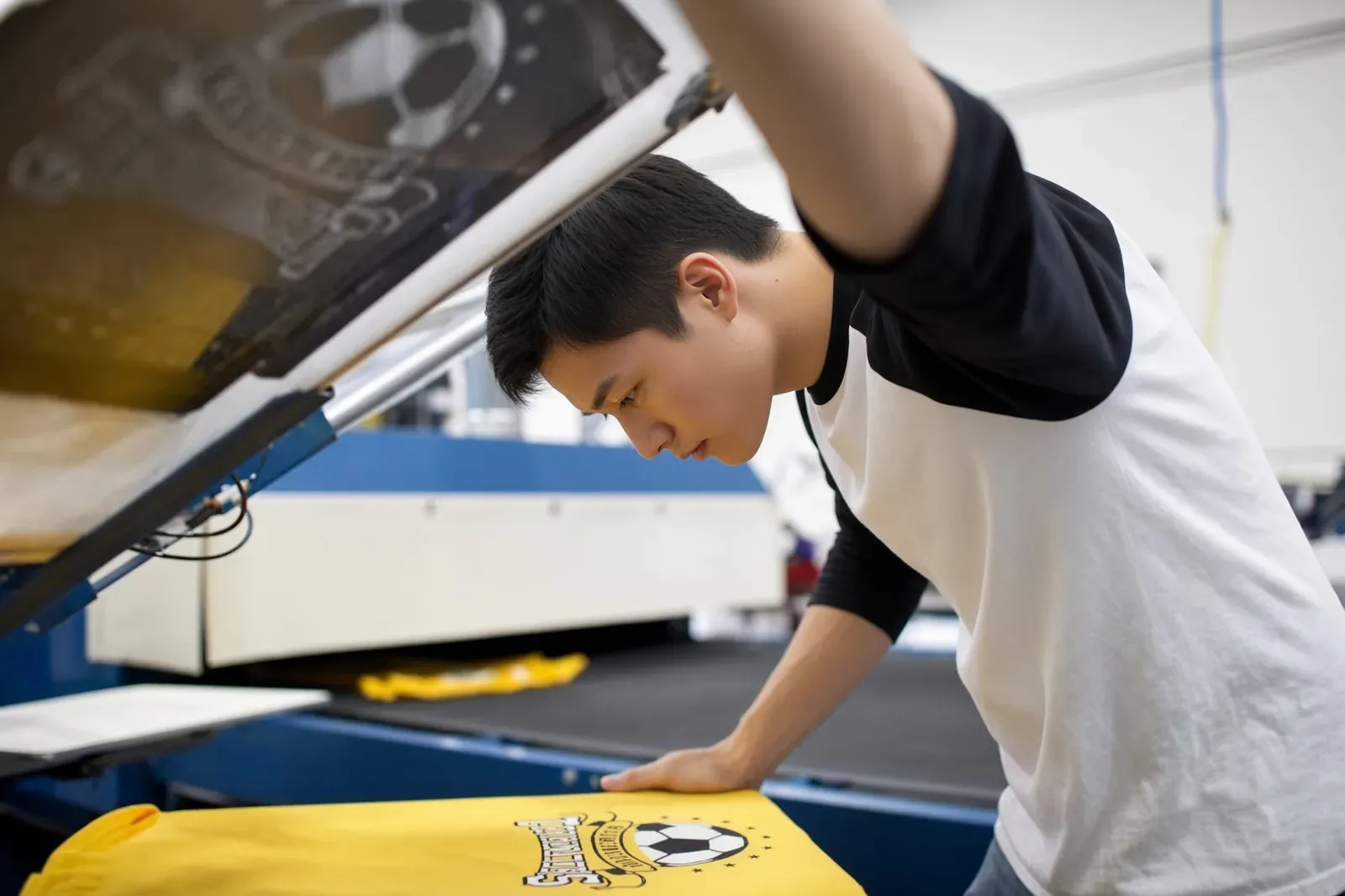
Screen-printing press applying ink on the production floor

Plastisol vs Water-Based

Two Ink Systems, Chosen for the Garment

Industrial screen printing is not one ink. The right choice depends on the fabric, the artwork, and how the print should feel in hand — we match the ink system to the brief, not to a default.

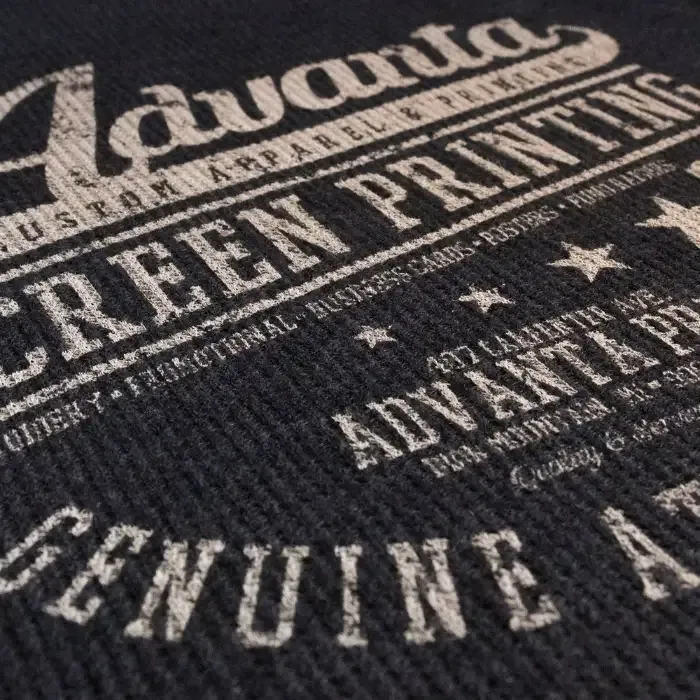
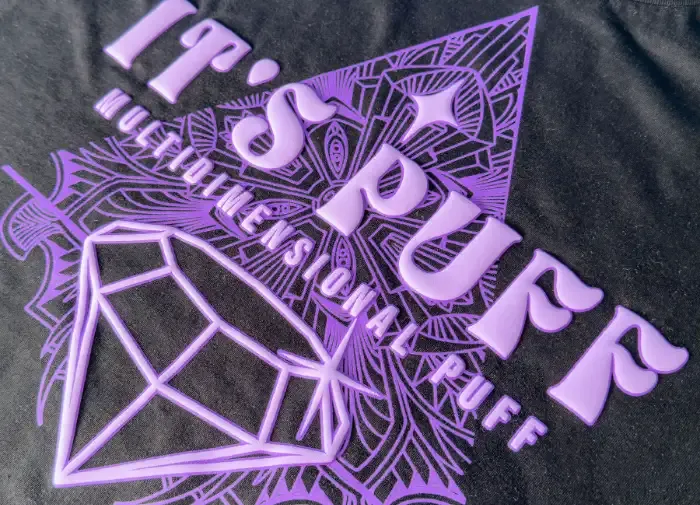
Screen-printed puff finish in bold opaque ink on a black tee
Plastisol Bold, opaque, workhorse

A PVC-based ink that sits on the surface of the fabric rather than soaking in. Best for big flat colour, white underbases on dark shirts, and the per-unit economics of a run at volume.

  • Opaque on any base colour — no white underbase bleed-through
  • Most economical per unit once the screen cost is amortised
  • 20+ wash durability on cotton and blends with a clean, crisp edge
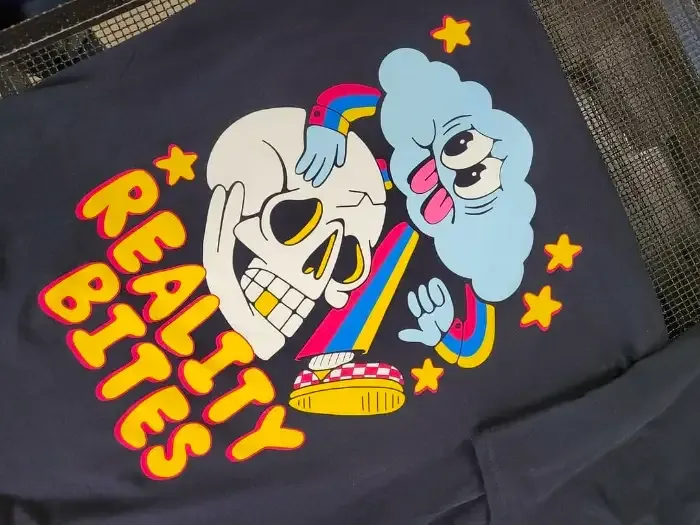
Water-based screen print detail on a colourful tee
Water-based Soft hand, eco-friendly

A water-borne ink that penetrates the fibers and dyes the fabric rather than coating it. Produces a soft, breathable print with no hand-feel — a real differentiator against plastisol at the till.

  • Sits in the fabric, so the print has almost no raised feel
  • Eco-friendly formulation for brands courting sustainable buyers
  • Best on light and mid cotton; provides a lived-in, vintage edge
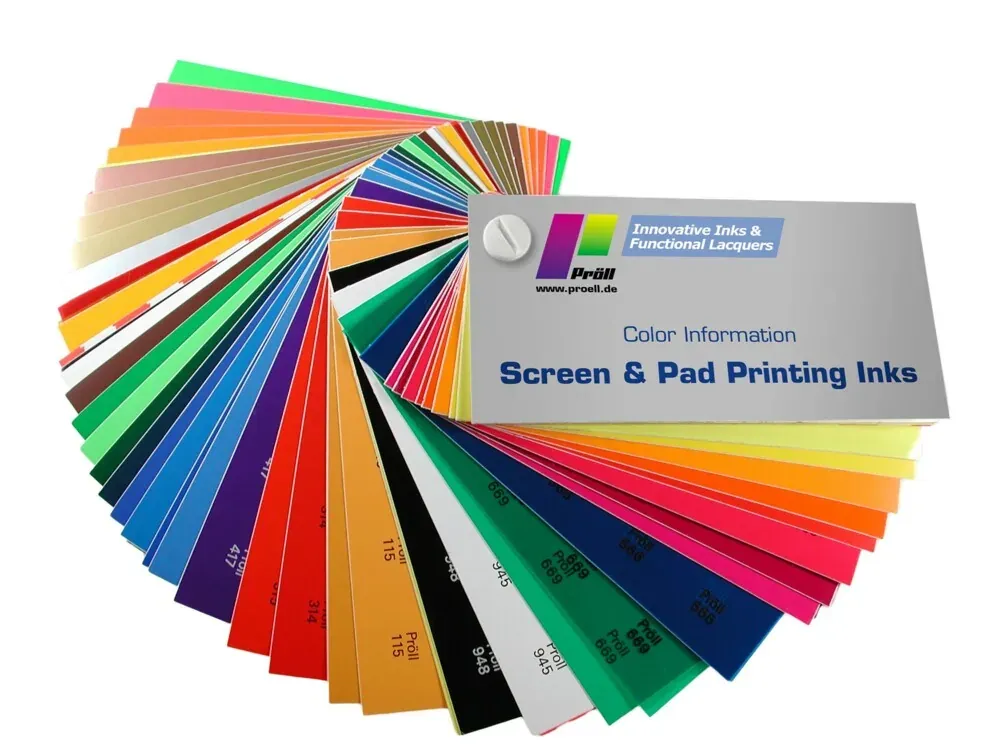
Pigment and ink colour mixing chart for screen and pad printing

Colour Matched On Site, Not Guesswork

An in-house ink kitchen holds 14 base pigments. Pantone Solid Coated targets are mixed to an ink swatch before the first screen is pulled, and the formula is locked for the run — so a reorder a year later comes back the same colour.

  • Discharge printing on dark cotton lifts the dye and replaces it for a soft, broken-in hand with no heavy ink film.
  • Puff, foil, flock and glow as in-house options, so a design can blend ink systems within one run.

Beyond Flat Colour

Effects That Change How the Print Feels

Screen printing is not one look. Foil, puff, flock, glow and crack put a different texture in the hand — and all of them run in-house, so a design can blend systems within one run.

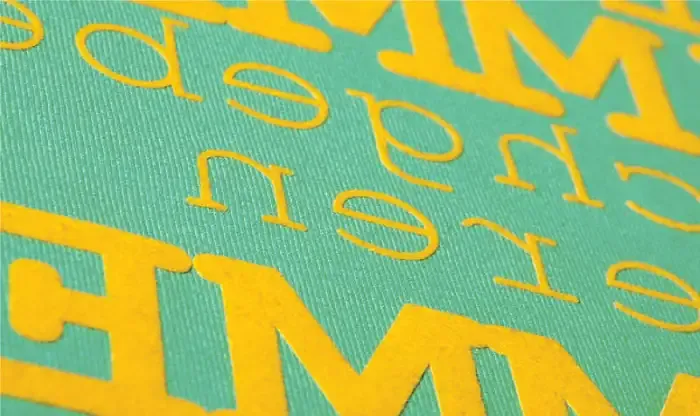
Flock screen printing with a raised, velvety fibre finish Raised, velvety texture

Flock Printing

  • Fine fibre particles stand up off the fabric for a soft, premium hand
  • A high-end, tactile finish that reads as a step above a flat print
  • Often paired with a logo or wordmark a buyer wants to touch
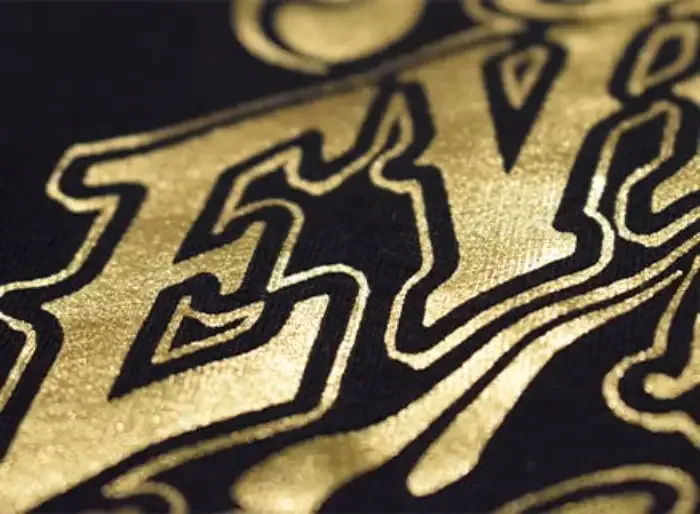
Gold foil screen print detailing on a black garment Metallic, high-shine

Foil Printing

  • A metallic film bonded to a glue base for a reflective, glamorous finish
  • Bold on black and dark bases where a foil edge catches the light
  • Used on promotional pieces, event merch and high-end fashion lines
Puff screen printing creating a raised 3D graphic on a black tee 3D, raised logo

Puff Printing

  • A foaming agent lifts the ink into a tactile 3D relief above the fabric
  • Turns a logo or graphic into something you can feel, not just see
  • Popular on streetwear drops and bold, memorable branding
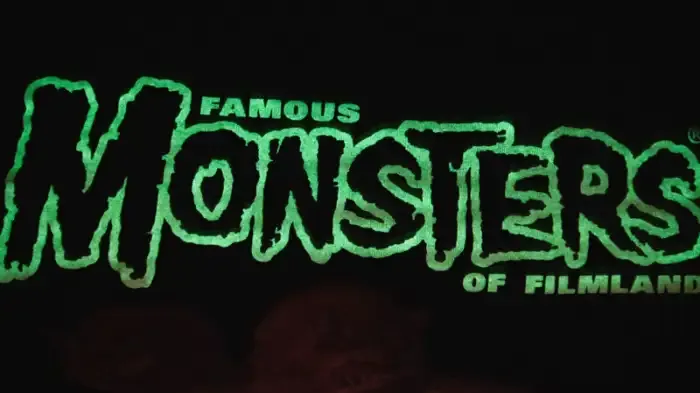
Glow-in-the-dark screen print glowing green on a black garment Charges by day, glows at night

Glow-in-the-Dark

  • Photoluminescent ink absorbs light and re-emits it in low light
  • A playful, interactive finish for night events and novelty apparel
  • Applies like a standard screen print, so it holds up to repeated wear
Cracked, distressed screen print with a worn vintage texture Worn-in, vintage look

Crack / Distressed

  • Ink applied to crack after curing for a rugged, broken-in appearance
  • A distressed texture that gives a garment character out of the box
  • Targeted at casual, fashion-forward and vintage-inspired lines
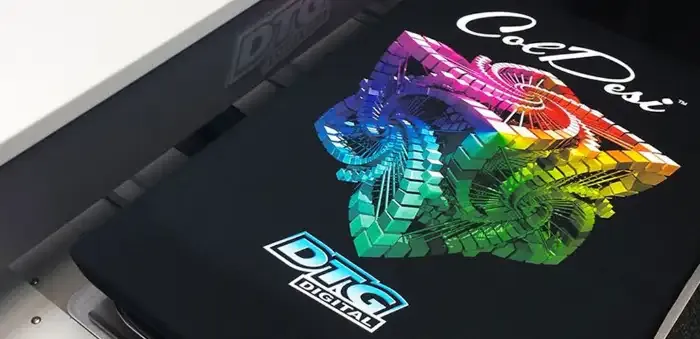
Direct-to-garment full-colour print of a detailed graphic on a black tee Full colour, no screens

Direct-to-Garment

  • Digital inkjet printing for photographic and gradient-rich art — no screens
  • CMYK + white underbase lets small, intricate multi-colour designs run
  • The choice for personalised, low-quantity and limited-edition pieces

Colour Economics

How Far Does Colour Count Run Up the Cost?

The tension every buyer feels: a simple design keeps the setup cheap, a richer design sells harder on the rack. Colour count is the cost lever either way — here is what each level actually buys you before you commit to the screens.

Design Colours to set up Setup cost
Street Logo A single brand mark or wordmark — the most common start
1 colour
1× Lowest setup. Ideal when the print is a logo, not the whole story — leaves budget for more units or a better garment.
Two-Colour Crest A team or club badge in two flat colours
2 colours
2× Still affordable, with room for two tones to lift a badge off the chest. A common sweet spot for uniforms and merch.
Four-Colour Graphic An illustration with its own shading and accents
4 colours
4× Setup cost climbs, but so does the value — worth it when the artwork itself sells the piece, not just the brand name.
Photo-Real Detail A six-colour or halftone-grade artwork
6 colours
6× The ceiling. Only worth it if the design genuinely needs that depth — otherwise a simpler artwork saves more than cutting the quantity.

The Volume Lever

The Screen Cost Spreads Thin at Scale

Colour count sets the setup cost; the number of units decides how thin it spreads. Paid for a screen once, more garments lower the unit price — the curve that turns a first run into a high-volume screen-printing schedule.

How to read the curve — per-unit price falls as the screen setup spreads across more units.

  1. 100 unit entry The lowest-risk first run — test a design without over-buying stock.
  2. 500 unit step The sharpest single drop in per-unit cost, where the setup is spread thin.
  3. 1,000+ factory scale Full production runs on a 15–25-day bulk schedule, with the screens kept on file for a quick reorder.

Put It Under Production

Bring a Design, Take a Strike-Off

Send artwork, a reference print or a finished tech pack — get an ink swatch, per-unit cost and a production timeline back within one business day.

A Manufacturer, Not a Print Shop

The Difference Is the Supply Chain Under the Print

A screen-printing shop prints on a blank it bought. A garment built, printed and quality-checked by one supplier is a different thing — same ink, very different result.

A print shop

  • Print on a stock blank
  • One QC glance before it ships
  • Ink colour eyeballed per run
  • Coordinate a factory and a print shop
  • Greenwash claims, no paperwork

A manufacturer

  • Cut-and-sew to your pattern, then print
  • AQL 2.5 / 4.0 inspection on printed garments
  • Colour matched to a locked swatch before the run
  • Fabric, cut-and-sew, print and DDP handled by one supplier
  • GOTS, OEKO-TEX & BSCI checked on issuing-body databases

Put a Print on Your Own Garment

Send artwork, a reference print or a tech pack — get a per-colour cost, an ink swatch and a production timeline back within one business day.

Request a Quote