Store-Ready · Own-Label · Season Rollout

Retail Private Label Clothing Manufacturer,

Sized to the Store’s Curve, Not a National Average.

Retail private-label programs are bought for what they return on the floor: stockroom hours saved by garments that arrive ticketed and barcoded, a presentation that matches the approved sample, and a reorder that is a quantity call rather than a second development cycle — all at one landed figure per destination.

100 unit minimum
5–7days sampling
15–25days production
7–15days DDP transit

Where the Program Starts

The Moments a Retail Range Actually Begins.

A retail program rarely opens with a purchase order. It starts with a planogram already signed, a pilot shelf waiting to prove itself, a best size that sold out, or a supplier that stopped matching its own standard. The entry point shapes the first answer.

Program start · Season one

The First Season Already Has a Floor Date

What the buyer arrives with

A planogram signed off at head office and an opening date the marketing calendar has already announced.

What the program answers

The assortment is fixed first, the shelf-readiness checks applied before cartons leave, and the calendar counted back from the floor date.
Retail team reviewing a signed planogram beside a rack of folded garments
Program start · Pilot

One Store Buys Before the Estate Does

What the buyer arrives with

A single location, one shelf position, and a budget that has to sell through before the next buy.

What the program answers

A folded, ticketed reference approved on a physical sample, and a first size curve small enough for the pilot to actually prove.

Store manager checking a folded garment and its price ticket on a pilot shelf
In season · Replenishment

The Best Size Is Gone in Week Three

What the buyer arrives with

A size report showing one band emptied while the rest sit, and an open shelf slot that cannot wait for a new development cycle.

What the program answers

Continuity fabric held against the original lot, so the top-up comes back in the same shade and inside the per-design minimum.

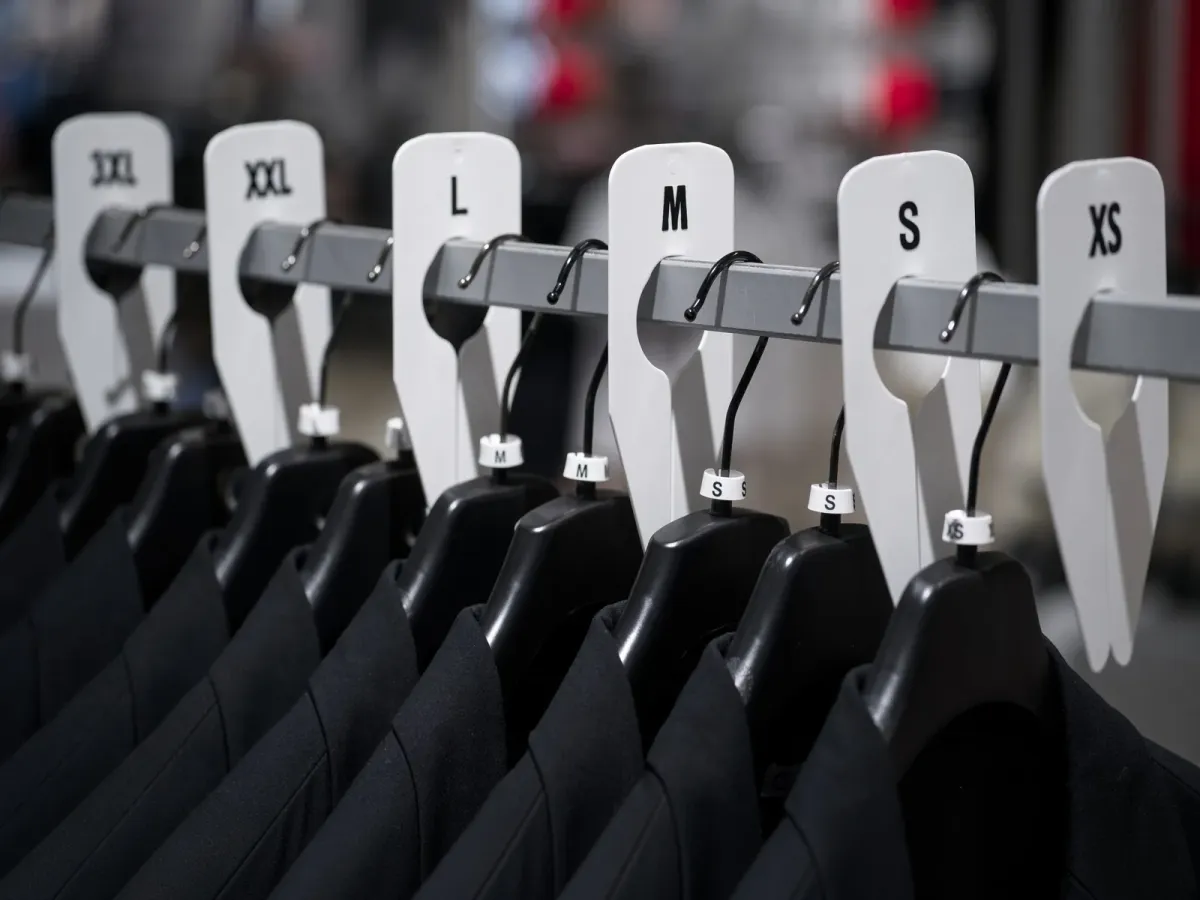
A size rail running from XXXL to XS, the sequence a store uses to find a size that has emptied
Program switch · Transfer

The Current Supplier Is Drifting

What the buyer arrives with

An existing range, a shade card from the previous factory, and a season that cannot be lost to a fresh sampling round.

What the program answers

Approved patterns and the sealed shade standard are rebuilt first, then the shelf-readiness checks applied so the estate never sees the change.

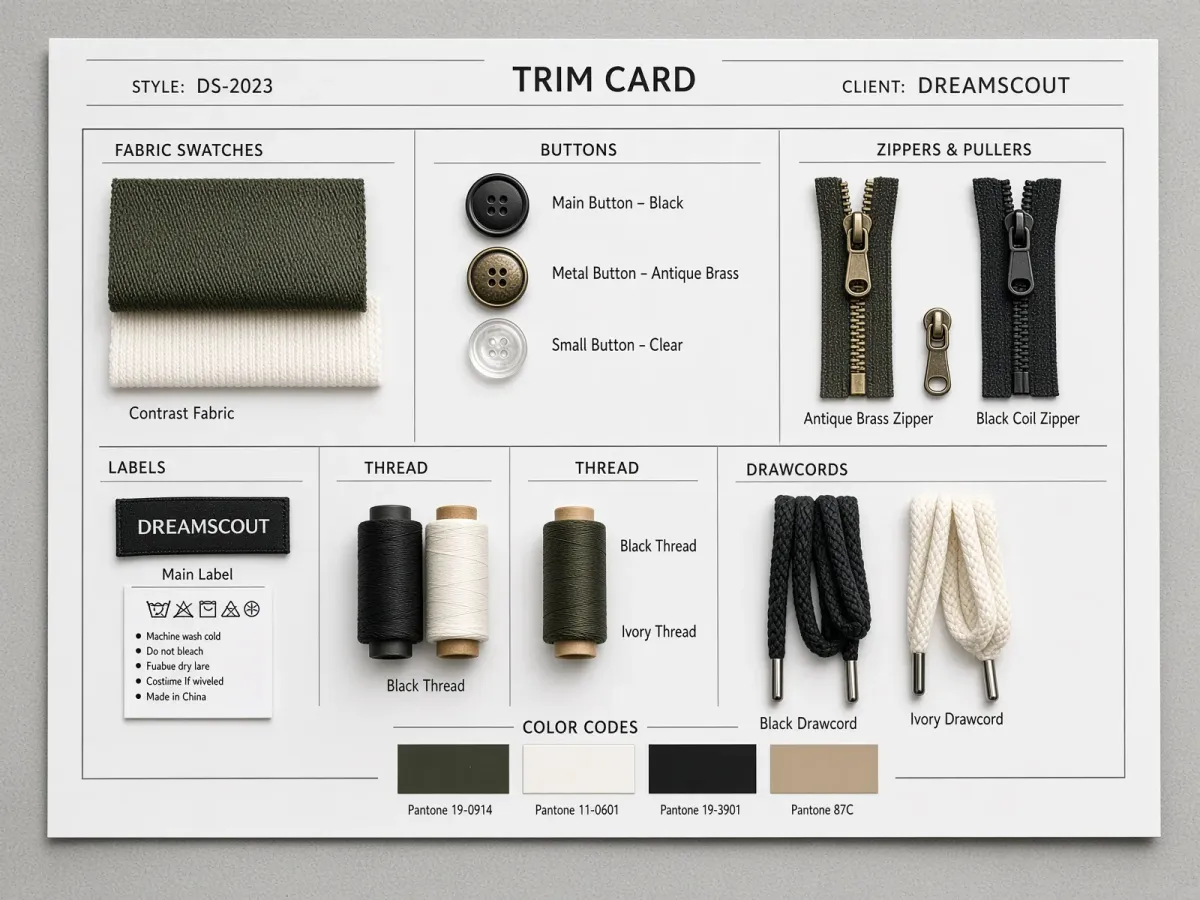
A trim card of fabric swatches, buttons, zips and colour codes held as a reference

Range Planning

The Assortment Is Decided Before the Cut.

A private-label range is not a list of styles — it is a set of commitments. Some categories are there to test the shelf, some to build the season’s volume, some to be carried as the reason a customer returns. Pricing follows the commitment the buyer is actually making.

Essentials & Basics

Anchor

The style the shelf cannot be empty of — tees, crews, a core knit. Needs a held fabric, not a launch.

Carry fabric on hold; reorder against the approved spec.

Seasonal Knitwear

Build

A gifting and weather window with a hard markdown deadline. Committed once, sold through or reduced.

Plan the drop date back from the window, not from production.

Denim & Bottoms

Build

The category where size curve is the whole decision — short runs per fit if the store cannot carry a full ladder.

Fit and wash decide shelf depth; split sizes per store.

Loungewear & Sleep

Test

A category a physical shelf often cannot justify alone — a strong add-on to an online range.

Enter at the entry minimum; prove before a size ladder.

Outerwear

Build

The highest ticket on the rail and the longest lead. Ordered earliest, and the one a late change costs most.

30–45 working days; a change after cutting cannot be recovered.

Accessories & Add-Ons

Test

Beanies, scarves and small knit accessories that lift basket value without a full garment commitment.

Knit accessories open at 50 pieces; every other category holds at 100.

01

Entry styles de-risk the shelf

A first category is planned at the lowest volume that still tests a real shelf position — 100 units per design per colour — letting a range enter without a full-season bet behind it.

02

Anchor styles keep their fabric

The style a customer comes back for is cut from fabric held from the first lot, so a repeat buy in a later month returns the same hand and shade rather than a near-match from new stock.

03

The size curve follows the channel

A store’s sales curve and an online curve are not the same shape. A style sold on both is sized against the channel it is planned for, rather than one default run serving both.

The Shelf-Readiness Gate

The Gates a Garment Clears Before It Reaches the Shelf.

Completion is not the finish line — a garment becomes retail-ready when it can be scanned, ticketed, folded, matched to a colour standard and packed by store. Those are five gates, and a gate is only passed when a piece of proof sits behind it.

  1. 01 SKU & Barcode
    • One SKU per style, colour and size, on buyer codes.
    • A barcode drawn from that scheme, never a default.
    • Labels printed and applied as the garment packs.
    • Matrix checked against the buyer’s stock file.
    Proof it passed

    A SKU matrix mapped onto the buyer’s product codes, so stock lands in inventory without a re-key.

  2. 02 Tickets & Care
    • Hangtag and neck label applied together.
    • Care, fibre and origin set for the market sold in.
    • Wording checked against that market before print.
    • Same care content, same position, across all sizes.
    Proof it passed

    A ticket-and-care spec sheet held with the order, so a label never becomes the reason a shipment is held at a border.

  3. 03 Fold & Presentation
    • The fold is agreed and set before the cut opens.
    • An approved sample sets board, tissue and bag.
    • Size stickers sit where the standard places them.
    • Bulk measured against the sample, not a default.
    Proof it passed

    An approved folded sample sealed at the line — the reference the run is checked against.

  4. 04 Colour Standard
    • A dyed lot checked against the sealed shade card.
    • Read under controlled light, never in daylight.
    • Delta signed off before the lot is released.
    • Drift flagged while the bulk roll is still held.
    Proof it passed

    A lot record carrying the measured shade reading, so a second drop is matched on paper, not by eye.

  5. 05 Carton Split per Store
    • Cartons packed by store and by size ratio.
    • A carton holds one destination’s allocation.
    • The leading carton carries the store’s packing list.
    • Nothing re-split at a distribution centre.
    Proof it passed

    A store allocation sheet and a carton mark per destination, so receiving is a scan-in rather than a sort.

The Retail Calendar

The Shelf Sets the Date. Production Works Back From It.

Four drops a year is a common rhythm for a private-label range, and the whole sequence is counted back from the day the range has to be on the floor. The window a buyer has to work in is set by four fixed lead times — not by how early a factory happens to be free.

  1. Spring Drop

    Floor set · late February
    Released
    Order released · early December
    Decided at release
    Assortment locked, fabric booked, size curve per store settled.
  2. Summer Transition

    Floor set · late April
    Released
    Order released · mid February
    Decided at release
    Lightweight fabrics and the first top-up from the original lot confirmed.
  3. Autumn / Back-to-School

    Floor set · late August
    Released
    Order released · mid June
    Decided at release
    The volume drop — knitwear, denim and outerwear ordered together.
  4. Holiday & Gifting

    Floor set · late October
    Released
    Order released · early August
    Decided at release
    The tightest window: full-price clearance or markdown, with no reorder behind it.
Sampling 5–7 days
Production 15–25 working days
DDP to store 7–15 days
Floor-set buffer 3–4 weeks

Illustrative calendar for a four-drop year. Actual dates are set against the buyer’s floor-set timetable and the market the range ships to; heavy goods add 30–45 working days rather than 15–25.

The Size Curve

An Empty Size Is a Lost Sale, Not a Substitution.

Online, a customer whose size is out may accept a different fit. On a shelf there is no alternative — the sale simply does not happen, and the size that does not sell stays. A retail range is sized to the store’s own sales curve, tails included, rather than to an even run that fills the middle and starves the ends.

Illustrative shelf demand by size. A generic even run under-covers the smallest and largest bands, which is where a retailer loses the sale and cannot recover it.

Missed sale

The size that is not there

One empty size does not convert — it walks to another store, and the centre sizes that do sell cannot make it back.

Stuck stock

The size that stays

The same even run over-buys the middle. Those units sit on the shelf until markdown, which is margin lost twice.

Broken curve

The second order that cannot fix it

If the curve was wrong on the first run, a top-up at entry volume rarely clears the gap before the shelf resets.

Rule 01

The entry minimum spans the whole size ladder — sizes inside a design count together, so tails sit inside the same run instead of forming an order that cannot justify itself.

Rule 02

Ratios are set per location, not per range. Two stores can carry the same style and still sell a different spread of sizes, so the allocation sheet holds a split for each one.

Rule 03

Tails are planned quantities, not exceptions. A top-up draws on the approved curve and fabric held from the first lot, so the size that sold returns in the same shade.

Before the Floor Date

Send the Assortment and the Date. The Calendar Works Back From There.

A style list with a quantity per category, the markets the range sells into and the date it has to be on the floor is enough to return a shelf-ready plan — the gate checklist, the per-store split and the calendar counted back from the buyer’s floor-set date.

Evidence From the Shelf

Real Programs, On the Record.

Figures below come straight from their own case-study record, not averaged into a claim. Read the one closest to the situation at hand, then decide what a program should prove.

Client Experience

What a Second Season Proves on the Floor.

A regional chain and an independent boutique, two very different aisles — both describe the same shift: the program settles the shelf before the season, and a reorder is a quantity decision rather than a second development cycle.

Fourteen doors on one own-brand range, all arriving shelf-ready: barcoded to the till format, ticketed, folded to the approved sample, boxed by store. Stockroom teams scanned the allocation in and relabelled nothing — roughly two days of labour saved per drop.

Sell-through rewrote the buy. Middle sizes took just over half of the first test run across three doors, more than the original ratio allowed for, so the second drop followed the measured curve. Same slots, same landed figure, 74% sold at full price.

Counting back from a 12 September floor date fixed the schedule — sampling, cut-and-sew and transit all had a known span, so arithmetic rather than urgency set the release date, and the range opened on time.

Year two ran on the same base cloth. A sealed shade card, SKU scheme and approved fold already on file turned the season into a quantity decision — no resampling, one landed cost per destination.

Sofia Lindqvist

Sofia Lindqvist

Head of Own-Brand · regional fashion retail chain

Six styles across two boutique floors, entering at the design minimum — small enough to sell through before the next buy, and still a genuine production run. Hangtags carried the brand and did the selling on a crowded rail.

An approval sample fixed the fold before bulk. What arrived matched the web images rather than a packing-line default, so online and in-store read as the same brand — a detail worth more than its cost.

One style outperformed and a mid-season top-up followed from fabric held off the original lot: same shade, at the same entry minimum, no fresh development cycle. Matching colour from the same dye run is what makes a small reorder viable at all.

Landed economics settled the decision. DDP folded freight, duty and final mile into one figure per destination, so the margin still held after the first carton cleared customs — no surprise line at the border.

Daniel Mercer

Daniel Mercer

Owner & Buyer · independent boutique

Retail Due Diligence

The Questions a Retail Buyer Asks Before the First Delivery.

Questions raised from inside a retail buying team — the SKU scheme, the test store, the mid-season gap, the children’s file, the landed number.

Private label is already bought elsewhere. What makes a retail program different?

The garment arrives ready for the shelf, not the stockroom. A standard private-label order ends at a finished garment. A retail program carries it through the shelf-readiness gates first — SKU and barcode assigned, tickets and care content applied, the fold set to the buyer’s presentation standard, colour checked against a sealed reference, and cartons split by store. The difference is not the sewing; it is everything between a folded garment and a scannable unit on a shelf.

Can the factory work to an existing SKU and barcode scheme?

Yes — the buyer’s SKUs become the working key. A product-code structure and the barcode format the till and inventory system reads are enough for the SKU matrix to be built around them. Sizes within a design share a design code and carry their own size suffix, so the range lands in the buyer’s system without a re-key at receiving. A store that scans its allocation in should not have to relabel what the factory sent.

A first order is a test on a handful of stores. Is a small program still worth it?

A test store is the normal way a range enters an estate, and the minimums allow it. Entry is 100 units per design per colour, with sizes within a design counting toward that total. A single style at pilot volume is a genuine first order — it proves the curve on one shelf before the commitment widens to a cluster and then the full store list. What the first order fixes is the spec: patterns, sealed shade, ticket and fold reference, and the SKU scheme all carry forward unchanged.

The launch date cannot move but funding lands late. What stays achievable?

The calendar is counted back from the floor date, and the front of the window is the tight part, not the back. Sampling runs 5–7 days, standard cut-and-sew production 15–25 working days, and DDP transit 7–15 days. That sets the latest realistic order release. If a range includes knitwear, denim or outerwear, those run 30–45 working days and have to be released earlier or phased against their own delivery — forcing them through a rushed cut is where a late opening actually happens.

A best-selling size sells out in week three. Can it be topped up mid-season?

Yes, if the fabric was held — which is the point of planning an anchor style that way. Continuity fabric is kept for styles meant to be replenished, so a mid-season top-up draws on the original lot and returns the same shade and hand rather than a near-match. A top-up still meets the per-design minimum, so the practical protection is planning the curve correctly on the first run and reserving a small allocation for the sizes the shelf proved it needs.

Store one and store eight sell very different size mixes. One order or several?

One order, allocations split per store. The size ratio is set per location on the allocation sheet, and cartons are packed by store rather than pooled by style. That is the same production run and one landed figure per destination, but the store with the wider curve receives the units its own sales ask for. Pooling the range and re-splitting it at a distribution centre is exactly where the tail sizes disappear first.

Children’s sizes are joining the range. What has to be in place before shipment?

The safety file has to exist per style, not per order. Children’s garments are built and tested to the standard the target age band requires, and the test reports and compliance file are held so they can be produced for a customs or retailer audit. Which standard applies is set by the age band and the market the range sells into — it is written into the specification before production, so an auditor’s question is answered with a document rather than a sample.

Why does the landed figure matter more than the unit price on a retail range?

Because a retail margin is set against the landed cost, not the ex-factory price. DDP consolidates manufacturing, freight, customs clearance, duty and final-mile delivery into one figure per destination, with the declared classification named in the quote. Two suppliers can quote the same unit price and land at very different numbers once duty and final mile are in. A range priced on unit cost alone discovers the real margin only after the first container clears.

Selling into the US and the EU from one range — one spec or two?

One garment, two label and compliance requirements. Fibre content, origin and care content have to satisfy the market the unit is sold in, and the chemical and children’s-safety records differ by market too. The garment can be built once; what changes with the destination is the label-and-care content and the compliance file that travels with it. The spec states which market each line is destined for, so the paperwork is right at the border rather than corrected after it.

Send the Assortment. Leave With a Shelf Plan.

Send them and what comes back is a shelf-ready plan with the gate checklist, the per-store split and a calendar built around the date already on your floor set — within one business day.

Request a Quote