Sketch In · Tech Pack Built Here · 100-Unit First Run

Low-MOQ Clothing Manufacturer for Startups,

One Sketch, One Hundred Units

Send what exists — a sketch, a reference garment, a photo grabbed off a brand that stopped replying. The tech pack gets drafted here, the first run lands at 100 units in a design and colourway, and the sample fee comes back off bulk. Quoted inside 24 hours, delivered DDP.

100 first-run minimum
5–7days first sample
50 knit-accessory minimum
82% of brands reorder

Starting Points

A First Run Rarely Starts With a Purchase Order.

First orders arrive at a rail in a shop, on a studio desk after hours, as a sample that came back wrong, or as a client brief with a launch date already printed on it. Four openings, four different points in the process, four different first answers.

A Sketchbook and a Mood Board

What arrives
A front-and-back sketch, two reference photos and a fabric swatch, worked up on a studio desk after hours.
What it is enough for
Enough to draft a tech pack: the flats are dimensioned, the POM sheet written, the fabric and trims called, and construction notes added — the whole spec settled before a metre is cut.
Where it goes next
A first sample 5–7 days after spec sign-off, cut to the sent-in drawing rather than a house block.
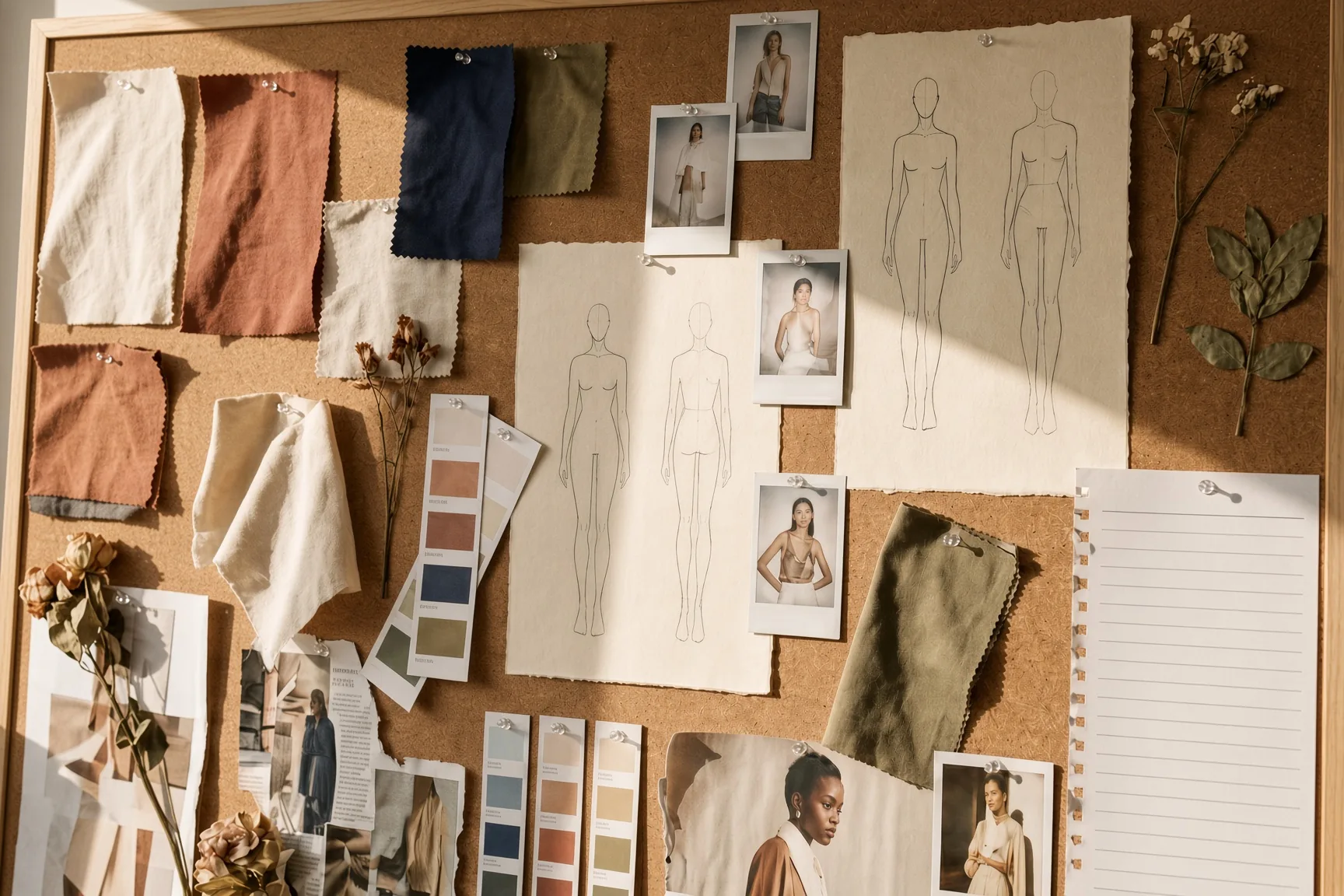
A mood board pinned with fabric swatches, croquis sketches and reference photos

A Rack of Competitor Samples

What arrives
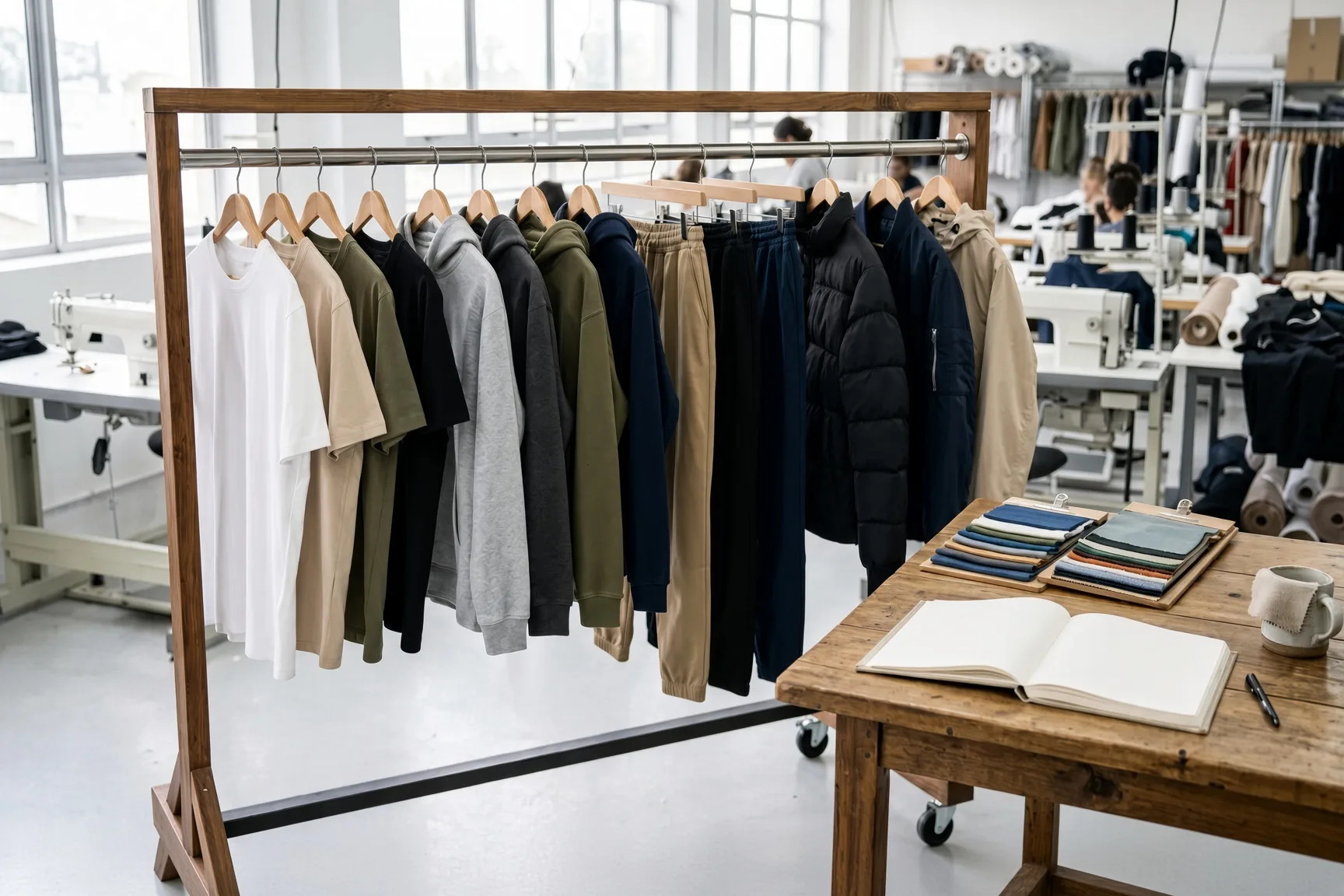
Three or four pieces bought off other brands, hung on a rail for comparison and pinned with notes on what to keep and what to change.
What it is enough for
Pieces get measured point by point and the differences documented, so fit is matched to a real garment rather than guessed off product photos.
Where it goes next
Patterns are graded off the measured reference, with the changes built in before sampling.
A wooden rail of competitor garments in a studio, with swatch books on a worktable beside it

A Sample That Came Back Wrong

What arrives
A garment from another factory — a shoulder that sits low, a neckline that gaps, a shade that drifted from the swatch card.
What it is enough for
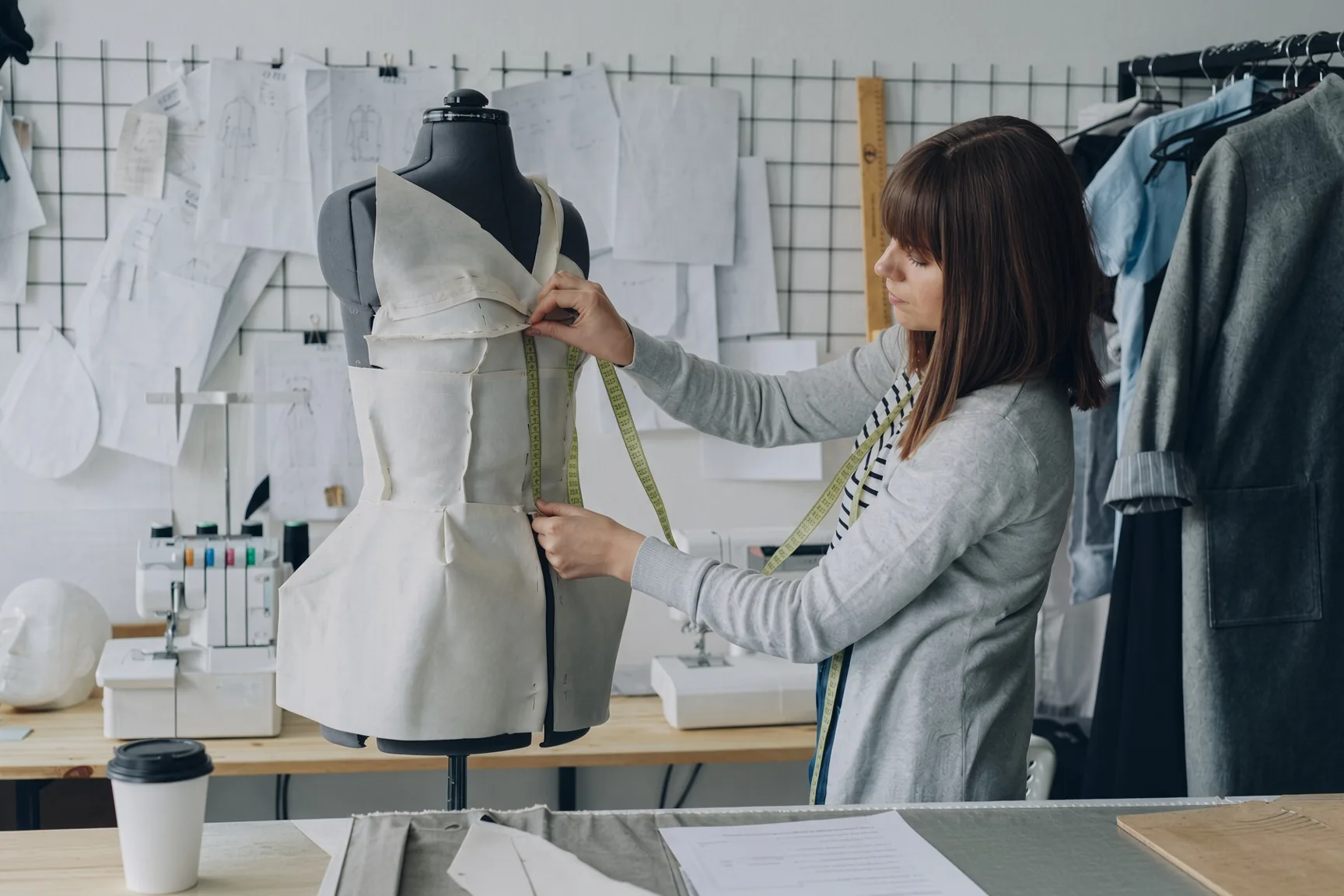
The sample is diagnosed seam by seam, the fault written down, and the pattern rebuilt against a spec you own.
Where it goes next
A corrected sample is made for sign-off, and the fix is documented so a second order does not repeat it.
A pattern maker pinning a calico toile on a dress form to correct the fit

A Launch Calendar With a Date Circled

What arrives
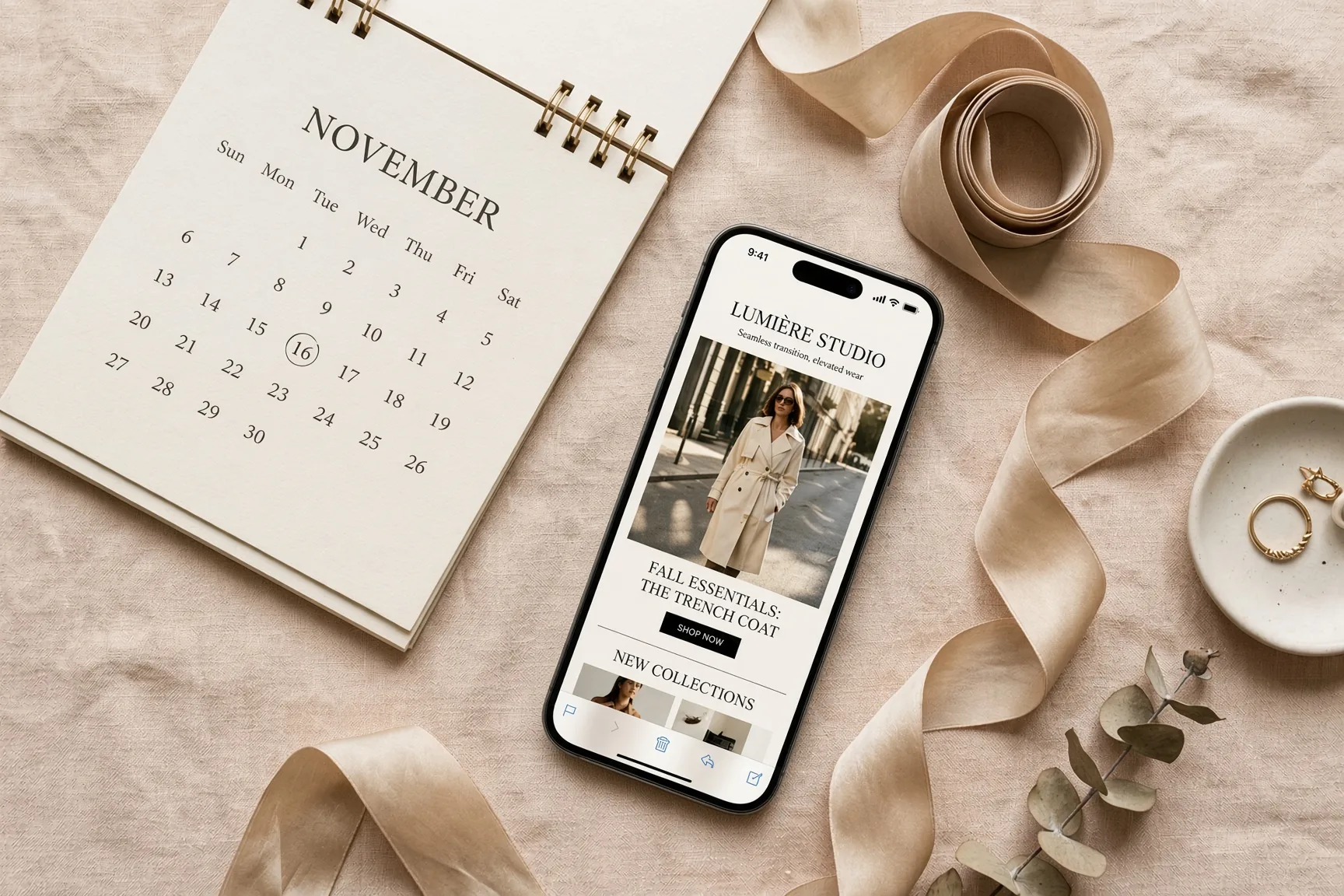
A handful of styles, a client-approved direction and a go-live date the marketing calendar has already announced.
What it is enough for
Schedule counted back off that date, styles phased so the launch holds even when one style runs long.
Where it goes next
One tech pack per style and one production plan across the range, both clocked to the same date.
A desk calendar with a launch date circled beside a phone showing a product launch page

The Tech Pack Is the Output

You Send a Sketch. The Spec Sheet Comes Back.

A tech pack is the document a factory cuts from, and most first-time brands do not have one. That is not a blocker here — it is the first piece of work. Raw material gets measured, drawn and written into a pack you approve and keep.

Sketch in What a first brief usually looks like
  • A front-and-back sketch, or a photo of a fit you like
  • “About a medium, relaxed”
  • A fabric swatch or a name off a mill’s catalogue
  • A list of details you want
  • A reference garment and “make it feel like this”
Spec out What the cutting room works from
  • A dimensioned flat drawing with every seam and stitch line placed
  • A POM sheet — point-of-measure table with target and tolerance per size
  • A weight, composition and hand spec, sampled and tested before approval
  • A trim list: labels, thread, zips, buttons, with placement callouts
  • Construction notes — stitch type, SPI, seam allowance, finishing order

The Commitment Ledger

When the Money Moves, and What Holds It in Place.

A first run is judged on cash as much as on cloth. Here is the order in which money leaves a founder’s account, with the rule attached at every step — so the deposit stops being a leap of faith and the balance is not paid on a promise.

  1. 01 Quote No charge Within 24 hours of the brief Priced line by line from the spec, with shipping included on DDP terms.
  2. 02 Sample Sample fee Before sampling begins The fee is credited back against the bulk order. PayPal accepted at this stage.
  3. 03 Bulk deposit 50% To start production Production starts only after the pre-production sample is signed off in writing.
  4. 04 Bulk balance 50% Before shipment Inspection passes before the balance is due and before anything leaves the building.
  5. 05 Delivery Included 7–15 days door to door DDP covers freight, duty and final mile — no second invoice at the border.

Terms are set in writing on the quote. Milestone-based schedules replace the 50/50 split on larger orders; the sample payment method and the bulk method can differ.

Colourway Math

One Design. One Hundred Per Colour.

The single most common misread of a low minimum is that it applies to the whole order. That number applies per design, per colourway — a three-colour launch is three runs, not one. Sizes vanish inside it; colours do not.

Launch plan 1 design × 3 colourways × 100
  • Black 100 units
  • Bone 100 units
  • Deep teal 100 units
Three colours · one design 300 units

Sizes are chosen per colour, inside each 100. No per-size minimum.

Sizes mix inside a design

XS through 3XL all count toward the same 100. You choose the ratio per size — you are never forced into an even run.

Colour splits nothing

Two colourways do not split the minimum — they double it. Plan the launch colour first and add the second when the first proves.

Knit accessories start lower

Beanies, scarves and gloves open at 50 pieces. Other knit garments still start at 100.

The First-Run Plan

Send the Sketch and the Date. A Path Comes Back.

Two things make a first-run plan possible: what you want to make, and when you want to launch it. Everything downstream — tech pack, sample schedule, landed figure — gets built around those two inputs.

The Sample Loop

You Do Not Pay Twice for the Same Garment.

Sampling is a development cost, not a second unit of the order. Charged once, revised until it is right, then credited back off bulk. That loop is the whole of it — no hidden stage or surprise tooling bill at the end.

  1. Tech pack

    Drawn up off your sketch, reference or failed sample — and yours to keep.

  2. First sample

    A physical garment in 5–7 days, worked from the pack.

  3. Markup rounds

    Fit, shade and trim corrected — as many rounds as the garment needs.

  4. PP sample

    The approved pre-production sample: the reference bulk is matched to.

Unlimited revision rounds before sign-off. Production does not start until the pre-production sample is approved in writing.

First Run, Second Run

The First Run Buys Information. The Second Buys Margin.

A first run is not a small version of a big order — it is the run that settles everything the next order needs. Facts gathered across a hundred units are what let the second hundred move faster, cheaper and without a new sample.

Run 01 · the test

What the First Run Settles

Paid for once, and carried forward as documents rather than memory.

  • Patterns graded to the brand’s fit, owned and filed under the design
  • A pre-production sample approved in writing
  • A sealed shade standard the next lot is matched against
  • A size ratio corrected by the first fit round
  • A landed DDP figure for your destination

Output: a spec any future order can be cut from.

Run 02 · the repeat

What the Second Run Gets

Ordered as a quantity decision, because the development work is already done.

  • No resampling — the approved spec is reused as-is
  • Continuity fabric held off the original lot, so shade matches
  • A per-unit cost that steps down at the 500 and 1,000 breaks
  • A reorder path proven by 82% of brands coming back
  • A replenishment window no longer waiting on development

Output: the same garment again, at a better number.

List-Ready

Approved Before the Product Page Goes Live.

Nothing sells until the garment carries its own information. Fibre, care and origin are not optional extras — they are the content the listing, the label and the market’s rules draw on. All of it is settled in the spec, before the label is woven.

Label wording is set by the market the unit sells in — language and units change with destination, so the spec names that market up front.

  • Fibre content

    Mandatory

    The exact composition and percentage, taken off the tested fabric rather than the mill’s flier. Here is what the product page states and the label prints.

  • Care instructions

    Mandatory

    Wash, dry and iron guidance that matches how the fabric actually behaves in testing — not a generic instruction lifted from another style.

  • Country of origin

    Mandatory

    Production runs in Wuhan, China. Origin marking is part of the label set, and the listing has to agree with it.

  • Size and fit

    Listing

    A size table the buyer can trust, graded off the same POM sheet the factory cuts to — so chart and garment agree.

  • Target market

    Decision

    The market a unit sells into sets language, units and content rules. Declaring it early keeps one order shipping with two conflicting label sets.

  • Barcode / SKU

    Optional

    Needed if the item is sold wholesale or through a retailer’s till. A direct-to-consumer launch can begin without one.

Pre-Flight Check

Three Things Clear the Gate. Three Route Elsewhere.

Before a first run is quoted, the project gets checked against the limits the factory actually works to. Being honest about the rows that do not fit beats discovering it three weeks into a sample round.

  • Sketch or reference garment in hand

    A drawing, a photo or a physical piece is enough. A tech pack is not required — it is built here.

  • Order size reaches 100 units per design per colour

    Sizes mix inside that total. Combining styles or colourways into one number does not count.

  • Wuhan, China production acceptable

    All cutting and sewing stays in-house. Nothing made elsewhere, under any other origin.

  • Below 100 units per design per colour

    Knit accessories — beanies, scarves, gloves — open at 50. Other garments start at 100.

  • Nothing to interpret — no style, reference or direction

    A brief with nothing to interpret cannot be patterned. A sketch or a photo is the minimum start.

  • Decoration-only, on supplied blanks

    Whether blank-garment printing or embroidery is taken on is quoted per enquiry, not assumed either way.

Decoration-only projects — printing or embroidery on supplied blanks — are quoted per enquiry rather than accepted or declined in advance.

Check My Project

Founder Experience

What the First Run Actually Changed.

A two-person label and a small design studio, both starting with a sketch — one grasped the colour arithmetic before the deposit, the other put a client’s launch date ahead of development convenience.

A hoodie screenshot with “boxier than this” pencilled under it. Out of that came a readable tech pack, and a physical sample inside seven days.

Two colourways don’t halve the 100-unit minimum. They double it. Learning that before the deposit freed the budget for one colour launched properly, not two half-done.

Eleven extra days went on the second order — continuity fabric held on the best-selling size. No resample, identical shade, and the per-unit cost stepped down at the 500 break.

Mara Okafor

Mara Okafor

Founder · two-person streetwear label

No tech packs, four weeks of runway, and a first production run pinned to a launch date already sitting in the client’s marketing calendar. A mood board was the only starting document.

Scheduling began at that date and worked backwards. Two simplest styles shipped first, so the launch had stock behind it even if the outer layer ran long.

Fibre, care, origin and size were locked into the spec before any panel was cut. Product pages went live the week stock landed, no fortnight spent chasing label copy.

Théo Marchand

Théo Marchand

Creative Director · small design studio

Before the Deposit

The Questions a First-Time Founder Asks Before Committing.

The pack built off an incoming sketch, the shade that doubles the floor, a third revision round, a repeat placed without sales history, and the listing copy that must exist before the page does.

I have a sketch and a handful of screenshots. Where does a tech pack actually come from?

Raw material gets measured and written into one — the pack is the first deliverable, not the entry ticket. A front-and-back sketch, two reference photos and a fabric swatch go straight to the design desk: dimensioned flats, a point-of-measure sheet with tolerances, the fabric and trim call, plus construction notes. Sampling then runs 5–7 days off that pack, and the pack stays with the brand if the project later moves. Nothing finished is needed to open a file.

My whole launch budget buys roughly 100 units. What does that actually cover?

One design, one colour, sizes mixed across XS–3XL in any ratio. The 100 limits colourways and styles, not sizes. A second colour is another 100, and so is a second style — which is how a 100-unit budget quietly turns into 300. Knit accessories (beanies, scarves, gloves) are the sole exception at 50 pieces. Should 100 sit beyond the budget, waiting is the honest answer rather than chasing a lower floor that does not exist.

Same hoodie in black and bone — does the second colour mean a second sample?

Pattern and fit carry over; shade approval starts again. Construction and grading are signed off once, so a second colourway does not reopen the fit round. What gets re-approved is the shade against a sealed standard before bulk is cut. Commitment is what changes: two colourways means two runs of 100, never one run split down the middle. Launch the hero colour first and add the second once it proves.

If my second sample comes back wrong too, do I pay for the third?

No — the fee covers the development, not the number of rounds. Revision rounds run until the garment is right, typically adding 5–7 days apiece to the calendar. Production only starts after the pre-production sample is signed off in writing, so a late revision moves the run rather than surfacing inside bulk. What a slow sign-off really costs is the launch date, not another sample invoice.

What has to be true before I hand over a deposit?

A line-by-line landed quote, and a sample signed off in writing. The quote is free and lands inside 24 hours, with freight, duty and final mile already inside one DDP figure per destination. The sample fee is paid before sampling begins — PayPal is accepted at that stage — and credited back against bulk. Only after the pre-production sample is approved does the 50% deposit start production; the remaining 50% falls due once inspection passes, before anything leaves.

The launch date is six weeks out. What has to be decided now?

Three decisions lead: sketch, launch colourway and size ratio. Sampling runs 5–7 days, cut-and-sew production 15–25 working days, and DDP transit a further 7–15 days. Six weeks is workable only if the first sample lands right; revision rounds add 5–7 days apiece and eat the remaining slack. A sketch still moving in week two moves the drop, not the factory.

I have no sales data yet. How much should I commit to the second order?

Let the first run answer that — and hold fabric so the answer can be acted on quickly. By the time bulk lands, the run has settled the graded patterns, the sealed shade and a size ratio corrected during fitting. A small continuity allocation against the best-selling sizes lets a week-three top-up draw on the original lot: same shade, no sample round, no fresh development spend.

The product page has to go live the week stock lands. When is label copy locked?

In the spec, before the garment is cut — not after it arrives. Fibre content, care, origin and size are the four fields the woven label and the listing both draw on, and all four are fixed in the pack. Market wording and units are set by where the unit sells, so naming that market early stops one order shipping with two conflicting label sets. Settled in the spec, the page can be written while fabric is still being cut.

If I outgrow you and move factories, do I leave the tech pack behind?

No — the pack, the graded patterns and the sealed shade reference go with you. All three are developed for the design and handed over as documents rather than held as leverage, with a written NDA covering the material from the first conversation. That is what a first run is actually buying: a complete spec another factory can cut from, instead of a second development cycle priced from zero.

Send the Sketch. Leave With a First-Run Plan.

Send whatever exists — a drawing, a reference garment, a failed sample — and the date the launch is pinned to. A first-run plan covering tech-pack scope, the sample schedule and the landed figure comes back within one business day.

Request a Quote