
Table of Contents
Most new brands treat sourcing as a sensory test, yet professional production demands technical precision. I have seen countless “perfect” swatches fail during bulk manufacturing because the handfeel changed or the prints looked muted after washing. To avoid this financial loss, you must understand how to choose fabric based on measurable data rather than aesthetics.
At LeelineApparel, we help founders turn vague design visions into concrete factory specifications. This guide details the exact metrics, such as GSM, recovery rates, and fiber composition, required to validate quality before you approve a purchase order. Fabric sourcing is not a simple vibe check. It is a strict risk control process that separates scalable brands from expensive hobbies.

- What You Need
- How to Choose Fabric
- Step 1: Draft a Functional Fabric Brief
- Step 2: Build a Production-Ready Fabric Spec
- Step 3: Match Fiber Properties to the Garment’s Job
- Step 4: Determine Structure (Knit vs. Woven)
- Step 5: Evaluate Fabric Weight and Drape
- Step 6: Validate Your Decoration and Finish Plan
- Step 7: Enforce Compliance and Performance Testing
- Step 8: Execute the Sampling and Validation Loop
- Step 9: Audit Supply Stability and Finalize Landed Cost
- FAQs About How to Choose Fabric
- Conclusion
What You Need
Estimated Time: 1 Hour | Difficulty: Intermediate
Treat your sourcing kit like a procurement lab. In my experience, most fabric disasters happen because the initial specs were too vague to test against.
Design Inputs
- Garment Use Case: Define the stress level (e.g., activewear vs. kidswear) and tactile goal (soft vs. crisp).
- Target Price: Establish this early to filter realistic fiber options.
- Print Plan: Sublimation requires high polyester; acid wash degrades weak weaves.
The Inspection Toolkit
- Precision Scale (0.01g): Essential for verifying GSM claims.
- Ruler & Scissors: To cut a 10×10 cm square for weight checks.
- Phone Camera: For documenting texture under consistent lighting.
- White “Rub” Cloth: A scrap piece to test for dye transfer (crocking).
- Washer/Dryer: Access to laundry machines is non-negotiable for shrinkage testing.
Access & Compliance
- Permissions: Ensure access to supplier swatch programs and third-party lab reports.
- Safety Planning:
- Kidswear: Plan for CPSIA testing and component traceability.
- EU Markets: Align with ECHA REACH restricted substance lists.
- Skin-Contact: Verify OEKO-TEX Standard 100 certification.
How to Choose Fabric
Step 1: Draft a Functional Fabric Brief
Ignore swatches for now. You must first define the functional “wear moment” to establish production constraints.
- Define the Reality: Write a one-paragraph brief covering Environment (humid gym vs. cold office), Friction Points (inner thighs), and Fit Intent (body-skimming vs. rigid).
- Quantify Feelings: Convert subjective adjectives into measurable metrics.
- “Premium/Heavy” → Request 300+ GSM.
- “Flowy” → Prioritize Drape (Rayon or Modal).
- “Performance” → Require Wicking and Recovery.
- Set Care Standards: Account for market habits. US consumers typically tumble dry on high heat, while EU markets hang dry. For durability-focused items like uniforms, you must explicitly specify industrial wash stability to prevent pilling.
Step 2: Build a Production-Ready Fabric Spec
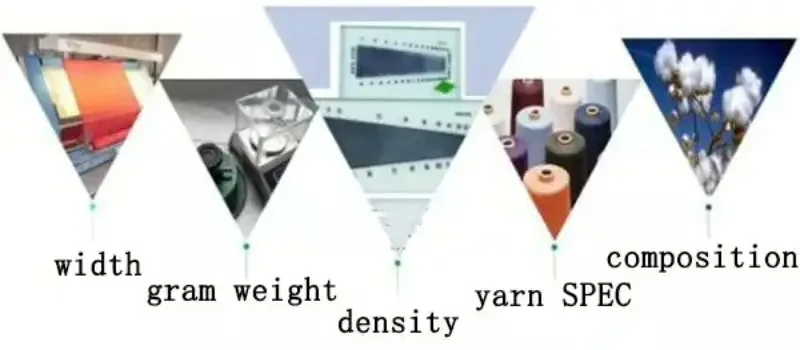
Don’t ask a factory for “soft” fabric. In my experience sourcing in Wuhan, vague adjectives result in cheap polyester coated in silicone softeners. To get exactly what you want, you must replace sensory language with technical data.
Create a one-page Fabric Selection Criteria sheet with these five non-negotiable targets:
- Composition: Define the exact fiber blend (e.g., “Target 95% Organic Cotton / 5% Elastane”).
- Construction: Specify the structure, such as Single Jersey for tees or Interlock for leggings.
- Weight: Set a target GSM with a variance range. I always write “Target 280 GSM ± 5%” to account for knitting realities.
- Stretch: Require 4-way stretch or specific recovery rates for activewear.
- Finish: Name the mechanical process, like Carbon Peached or Mercerized.
For color accuracy, reference your Pantone workflow standards. When describing finishes, use visual descriptors (e.g., “Matte Olive”) to aid accessibility and prevent confusion with glossy coatings.
⚡ Speed Verification: A supplier reading this spec should be able to ship three relevant swatches without a follow-up call. If they have to call you to clarify “how soft,” your spec is too vague.
Step 3: Match Fiber Properties to the Garment’s Job
Classify your product’s primary function: Comfort, Performance, or Image. In my experience, a 100% cotton hoodie feels premium in a showroom but becomes a heavy, wet sponge during a workout.
Apply these manufacturing decision rules to select your base:
- Activewear: Select Synthetics (Polyester/Nylon). Test the handfeel: Polyester “rebounds” from wrinkles immediately, whereas cotton holds the crease.
- Uniforms: Use Poly-Cotton Blends. I find these retain colorfastness significantly longer than pure naturals during repeated industrial washing.
- Luxury: Choose Silk or high-grade Rayon. You are paying for the immediate “cool touch” and liquid drape.
- Denim: Fiber blends dictate wash outcomes. Consult our Jeans Manufacturers Guide for specific weave density impacts.
Fabric Property Cheat Sheet
Use this ranking to align your budget with physical realities.
| Fiber | Breathability | Durability | Cost | Best For… |
|---|---|---|---|---|
| Cotton | High | Medium | Low | Tees (Holds creases) |
| Polyester | Low | High | Low | Sportswear (Wicks & Rebounds) |
| Silk | Medium | Low | High | Luxury (Cool touch, hard care) |
| Bamboo | High | Low | Medium | Intimates (Soft, but pills easily) |
Step 4: Determine Structure (Knit vs. Woven)
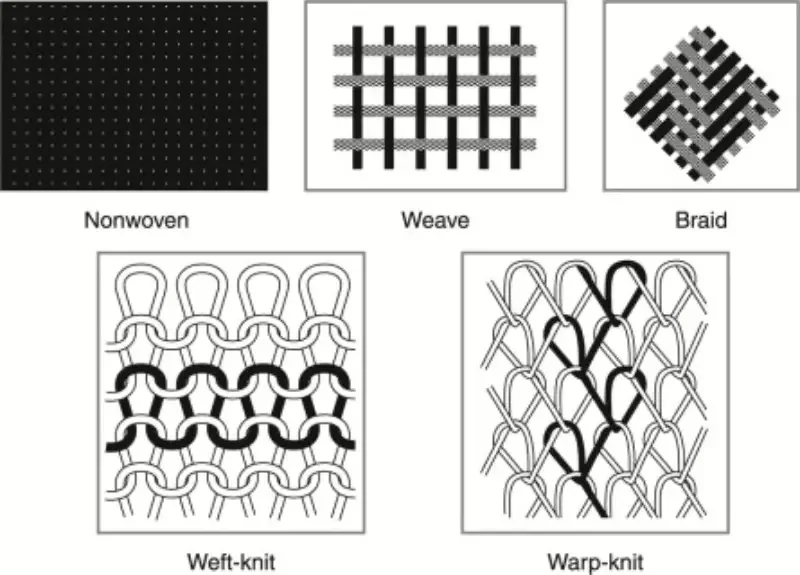
Construction dictates fit behavior and the machinery required on the production floor. Follow this sequence to prevent fit failures:
- Select Woven for structure. Use this for jackets, trousers, or items with zippers/buttons. Wovens rely on a stable “checkerboard” grid that holds sharp creases.
- Select Knit for movement. Use this for tees, leggings, or pull-on styles. Knits use looped “V” stitches that allow the fabric to stretch without resistance.
- Test the “Snap Back.” Stretch a swatch to 150% of its width and release. In my sourcing tests, quality activewear (10-15% Elastane) returns instantly. If it ripples or lags, reject it—it will “bag out” at the knees.
- Verify the edge. Cut a raw edge. If it curls inward, it is a Knit. If it frays with loose threads, it is a Woven.
⚠️ Production Warning: Do not use standard lockstitches on knits. A single-needle lockstitch creates a rigid seam. In my experience, this causes seams to pop the moment a customer pulls the garment on. You must specify Overlock or Coverstitch machinery to ensure the seam stretches with the fabric.
Step 5: Evaluate Fabric Weight and Drape
Stop using subjective terms like “heavy.” To ensure production quality, you must quantify the fabric GSM explained (Grams per Square Meter). This metric dictates warmth, opacity, and your final shipping costs.
1. Set GSM Benchmarks: Target these ranges for textile properties for garment production:
- 120–150 GSM: Linings or sheer summer tops.
- 160–190 GSM: Standard midweight T-shirts.
- 220–300 GSM (Activewear): Essential for compression and “squat-proof” opacity.
- 280–400+ GSM: Heavyweight hoodies and outerwear.
2. Verify via Field Spot-Check: Suppliers often round up weight figures. I verify swatches personally:
- Cut a precise 10cm × 10cm square.
- Weigh it on a digital scale (e.g., 2.5 grams).
- Multiply by 100 to get the GSM (e.g., 2.5g × 100 = 250 GSM).
3. Test Textile Weight and Drape: Weight does not equal stiffness. Perform a Corner-Hang Test: hang the swatch 50% over a table edge. A high-GSM fleece should “stand off” rigidly, while jersey should fluidly cling.
4. Update the Spec: Ensure your tech pack lists both the target GSM (with ±5% tolerance) and a drape description (e.g., “Fluid” vs. “Structured”).
Step 6: Validate Your Decoration and Finish Plan
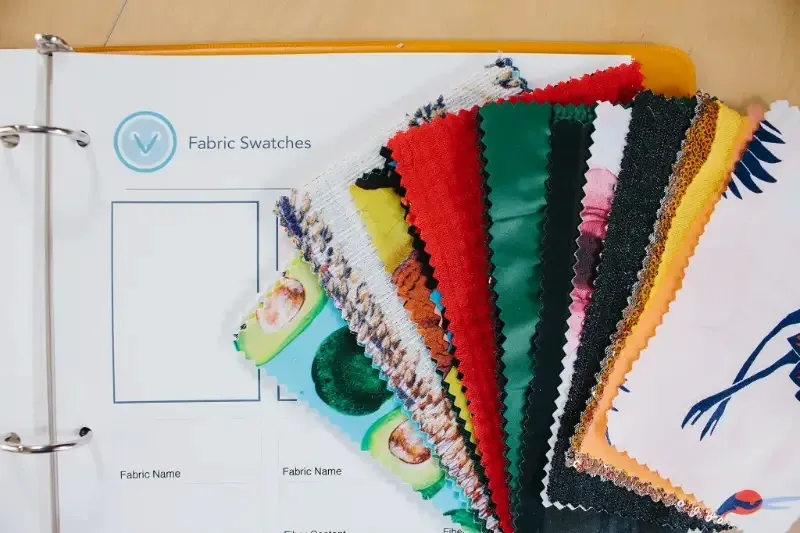
Don’t pick fabric in a vacuum. Your print method defines the material. I have seen “perfect” high-stretch knits ruined because they melted under sublimation heat or cracked under thick ink.
1. Match Decoration to Fiber: Select the method based on chemical tolerance:
- Sublimation: Use 65%+ Polyester. Cotton scorches; poly binds vibrant color.
- Screen Printing: Avoid thick plastisol inks on high-stretch activewear. The ink layer will crack when the fabric pulls.
- Embroidery: Use 200+ GSM heavyweight fabric. Lighter fabrics pucker under needle tension.
Sensory Check: Run your hand over the print. Sublimation feels “invisible” and smooth. Screen printing adds a raised, tactile layer you can feel with a fingernail.
2. Calculate Finish Risks: Finishes alter fabric lifespan and stability:
- Brushing/Peaching: Softens handfeel but significantly increases pilling risk.
- Anti-Wrinkle: Check OEKO-TEX Standard 100 limits for formaldehyde.
- Garment Dye/Acid Wash: ⚠️ Warning: Expect aggressive shrinkage.
3. Run the Survival Audit: Ensure your fabric survives these processes without distortion or shine. Consult a start-to-scale manufacturing partner to review your tech pack risks before cutting the first yard.
Step 7: Enforce Compliance and Performance Testing
Define your “pass” criteria before production starts. In my experience, undefined standards lead to expensive, unsellable inventory.
1. Align with Market Regulations
- US Market: Mandate CPSC compliance. For children’s products, CPSIA tracking labels and lead testing are non-negotiable.
- EU Market: Verify REACH adherence to ban restricted substances like azo dyes.
2. Lock in Performance Metrics: Write these specific thresholds directly into your Tech Pack or Purchase Order (PO):
- Dimensional Stability: Set limits at <5% shrinkage (<3% for premium).
- Colorfastness: Require Grade 4 against rubbing (crocking) and washing.
- Abrasion: Demand a Martindale Pilling Test for high-friction zones.
3. Verify Chemical Safety: For sensitive categories like skin-contact lingerie, request a valid OEKO-TEX Standard 100 certificate to prove the fabric is formaldehyde-free.
Step 8: Execute the Sampling and Validation Loop
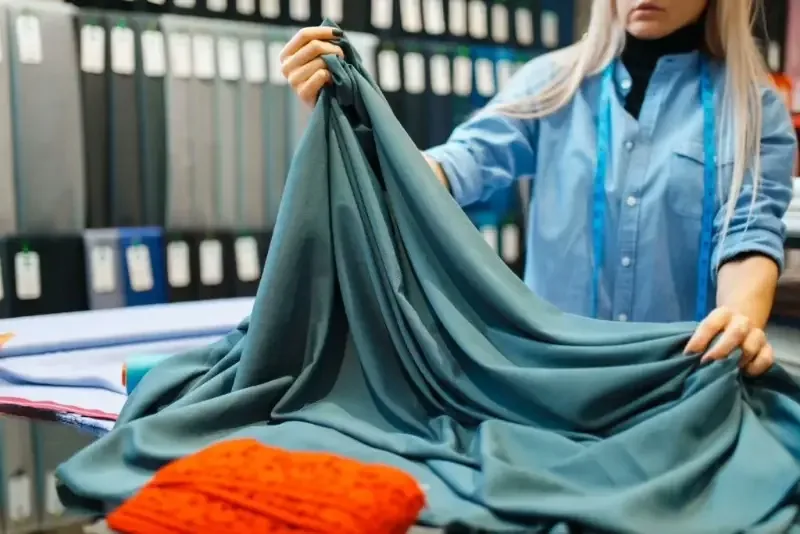
You aren’t just buying fabric; you are validating a manufacturing system. In my experience, a “perfect” handfeel means nothing if the fabric twists or fades after one cycle in a washing machine. You must move from digital specs to physical destruction testing before authorizing bulk production.
1) Request a Sampling Ladder
Do not rely on a single swatch. Request a Sampling Ladder to compare multiple weights (e.g., 180 vs. 220 GSM).
- Lab Dips: Request small dyed swatches to approve specific Pantone shades.
- Strike-Offs: Demand a printed sample to verify ink penetration and sharpness.
2) Build a Materials Library
Label every swatch immediately. I have seen weeks of sourcing work wasted because a designer ended up with a pile of identical white squares. Write the Supplier, GSM, Width, and Date on the header card instantly.
3) Perform the Wash Test
Wash and tumble dry the sample exactly as your customer will.
- Measure Shrinkage: Draw a 10cm x 10cm square on the fabric before washing. If it dries smaller than 9.5cm (>5% shrinkage), reject it.
- Check Distortion: Lay the garment flat. If side seams twist toward the front, the construction is flawed.
4) Run the Rub Test
Rub the dry swatch against a white cotton cloth for 10 seconds. Repeat with a wet cloth. If color transfers to the white cloth, the dye is unstable and will ruin other clothes.
5) Verify the Results
Record a hard Pass/Fail decision. Do not accept “seems okay.” For high-wear categories like corporate uniforms, I recommend validating durability via third-party lab testing to ensure industrial compliance.
🧠 Author’s Verdict: If it’s a “Maybe,” it’s a “Fail.” Small annoyances in the sample stage—like a slightly scratchy surface or 6% shrinkage—become massive liabilities when multiplied by 1,000 units. Be ruthless now to be profitable later.
Step 9: Audit Supply Stability and Finalize Landed Cost
Finding a nice swatch is easy; buying it at scale is the hard part. I have seen collections stall completely because a mill discontinued the specific yarn or required a 3,000-yard minimum for a re-order.
Interrogate the supply chain:
- Confirm “Running Quality”: Ask if the mill keeps this fabric in stock year-round. Avoid seasonal closeouts that you cannot reorder.
- Check Greige Availability: If they hold undyed goods (greige), lead times are ~15 days. If they must weave from scratch, expect 45+ days.
- Calculate Real Costs: The “Ex-Mill” price is deceptive. Factor in 10–15% cutting waste (selvage edges) and freight weight. Heavy 350 GSM fleece costs significantly more to ship than jersey.
Note: If China-based tariffs are prohibitive, compare costs with clothing manufacturers in Sri Lanka for alternative duty structures.
FAQs About How to Choose Fabric
1. How do I check fabric quality without professional lab equipment?
You must perform a “destructive wash test.” Measure a 10cm x 10cm square of the fabric, wash it on a hot cycle, and tumble dry it on high. Remeasure the square. If it shrinks more than 5% (smaller than 9.5cm) or twists at the edges, reject it. In my experience, 90% of “soft” samples fail this basic stress test because they rely on temporary chemical softeners that wash away.
2. What is the best GSM for a high-quality streetwear t-shirt?
Target 220 GSM to 280 GSM. A standard promotional tee (like a Gildan blank) is usually 150–180 GSM, which feels thin and shows transparency. For that “boxy,” premium streetwear drape that holds its shape, I always recommend starting at 220 GSM. Anything over 300 GSM enters “heavyweight” territory, which is durable but can be too hot for summer markets.
3. Why does the fabric color look different from my Pantone chip?
This is likely “metamerism,” where colors match under one light source but clash under another. Factories often dye fabrics under cool fluorescent factory lights, while you review them in warm office lighting.
I always require a Lab Dip approval under “D65 Daylight” standard lighting. Never approve a color based on a smartphone photo; screen calibration differences will mislead you every time.
Conclusion
Sourcing fabric is not about picking what feels good; it is about securing a supply chain that performs repeatedly. You have successfully “sourced” your fabric only when you have completed this workflow: defined the job, locked the specs (GSM/fiber), validated the print, passed the wash tests, and signed a Purchase Order.
Stop risking your budget on untested swatches. Contact us today to request professional fabric sourcing, sampling, and QC support. Let’s build your supply chain the right way.
