
Table of Contents
Best t-shirt brands in Italy are the secret weapon for businesses seeking to blend style with substance. Italian brands are known for their perfect craftsmanship and top materials. They have mastered the art of creating t-shirts. The tees look good and are durable and comfortable.
Finding the perfect t-shirt supplier can feel like searching for a needle in a designer haystack. With so many options, it can be hard to balance quality, cost, and unique designs for your market. But don’t sweat it (unless you’re wearing one of these t-shirts).
In this guide, we’ll uncover the 14 best t-shirt brands in Italy that cater to diverse industries. These Italian t-shirts brands promise to elevate your product line and impress your customers.
For the wider context of Italy’s fashion industry, see Camera Nazionale della Moda Italiana, the national fashion council that represents the country’s major houses.
A note on what this page is. This is a style reference, not an official buying channel. The 14 brands below are celebrated for their design language — the cuts, fabrics, and finishes worth studying — but they are luxury houses that sell through their own retail, not open wholesale suppliers.
LeelineApparel is not affiliated with any of them. It is a cut-and-sew factory in Wuhan, China, producing private-label apparel at 100 units per style. The list is published so a brand can borrow the direction, then build a version of its own that actually sells.
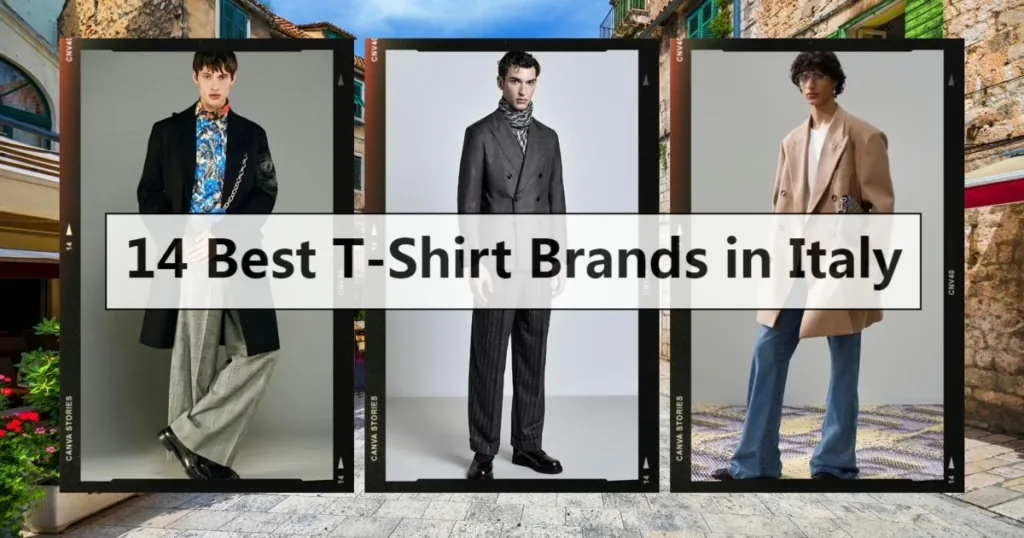
14 Best T-Shirt Brands in Italy
| Brand | Signature Style | Price Point | Sourcing Takeaway |
|---|---|---|---|
| Giorgio Armani | Minimalist elegance, neutral colors | High-end ($100-$500+) | Reference for refined minimal basics; wins on construction, not logos |
| Dolce & Gabbana | Bold prints, Sicilian-inspired designs | Luxury ($150-$600+) | Study for large-format placement prints; needs pre-shrunk jersey beneath |
| Prada | Avant-garde, technical chic | Premium ($200-$800+) | Technical-fabric reference (Re-Nylon); points to recycled nylon development |
| Gucci | Eclectic, vintage-inspired | Ultra-luxury ($300-$1000+) | Trim-led look: woven labels, embroidered logo, webbing detail |
| Versace | Baroque patterns, bold colors | Luxury ($150-$700+) | Embellishment and embroidery reference; heavy surface decoration |
| Missoni | Colorful zigzag patterns | High-end ($150-$500+) | True jacquard / intarsia knit — printed imitations read as fake |
| Stone Island | Technical fabrics, military-inspired | Mid to high-end ($100-$400+) | Garment-dyed technical jersey; finish and dye effects drive value |
| Marni | Quirky prints, oversized fits | Premium ($150-$600+) | Oversized block plus oversized print placement |
| Brunello Cucinelli | Understated luxury, earthy tones | Ultra-luxury ($200-$800+) | Fine-gauge knit and cashmere hand-feel; fiber quality over design |
| Loro Piana | Subtle elegance, finest fabrics | Ultra-luxury ($300-$1000+) | Premium fiber sourcing (merino, cashmere, vicuña); fiber-led product |
| Diesel | Edgy, denim-inspired | Mid-range ($50-$200+) | Denim-adjacent washes and graphic tees at a mainstream price point |
| Ermenegildo Zegna | Tailored sophistication | High-end ($150-$500+) | Fit and block discipline; menswear grading is the differentiator |
| Roberto Cavalli | Animal prints, glam-rock style | Luxury ($100-$500+) | All-over animal print; color-matched to Pantone references |
| Aspesi | Understated, functional chic | Mid to high-end ($80-$300+) | Most replicable model: clean block plus one technical fabric, no logo |
Quick answer: The best-known Italian t-shirt brands are Giorgio Armani, Dolce & Gabbana, Prada, Gucci, Versace, Missoni, Stone Island, Marni, Brunello Cucinelli, Loro Piana, Diesel, Ermenegildo Zegna, Roberto Cavalli, and Aspesi.
Retail prices run roughly $50 for Diesel’s graphic tees up to $1,000+ for Gucci and Loro Piana. All fourteen are luxury houses that sell through their own retail and authorized-wholesale channels — they are not open suppliers for low-MOQ custom production.
A brand wanting Italian-inspired quality at accessible volumes typically works with a cut-and-sew manufacturer instead, matching the weight, wash, and finish rather than the logo.
What Do Two Decades on the Factory Floor Teach About Italian T-Shirts?
Before you study the 14 brands below, one thing worth unpacking. After twenty years sourcing fabrics and running production — most of it on the factory floor, not in a showroom — I’ve come to separate what makes Italian t-shirts feel expensive from what actually costs money to make. The two lists overlap less than most buyers assume.
The gap is usually in finishing, not the fabric itself. A single-jersey cotton tee out of a Tuscan mill and one out of a good Chinese mill can start from near-identical yarn.
What a buyer feels as “Italian quality” is mostly what happens after knitting: tighter shade control on the dye bath, cleaner shoulder taping, a ribbed collar that holds its shape past twenty washes, and side seams that don’t spiral after the third trip through a dryer.
None of these are geography — they’re process discipline, and they’re the exact checkpoints I spec into a sample even when the fabric is sourced locally.
Here’s the costly mistake I see most. Buyers fall in love with a print or garment-dye look seen at a luxury house and hand a photo to a supplier without translating the finish.
The result gets the silhouette but loses the hand-feel, because nobody specified the fabric weight (a 180 gsm vs. 240 gsm jersey reads completely differently), the wash, or the tolerance on color.
When quoting an “Italian-inspired” tee, ask for the target weight, the wash treatment, and the acceptable shade deviation first — those three variables decide about 80% of whether the finished unit feels premium or like a blank.
Where the honest comparison lands. At volumes in the hundreds, a buyer will not source a finished tee literally identical to a $400 product — and shouldn’t pretend otherwise to customers.
What is achievable is matching the construction standards: a comparable fabric weight, the same color fastness and shrinkage tolerances, and money put into the collars and finishing that survive real washing.
That is the gap between a promotional blank and a retail-grade piece, and it is one a small brand can close at 100-unit minimums. Everything below is a study of how the best Italian houses spend their money — read it as a spec sheet, not a shopping list.
1. Giorgio Armani
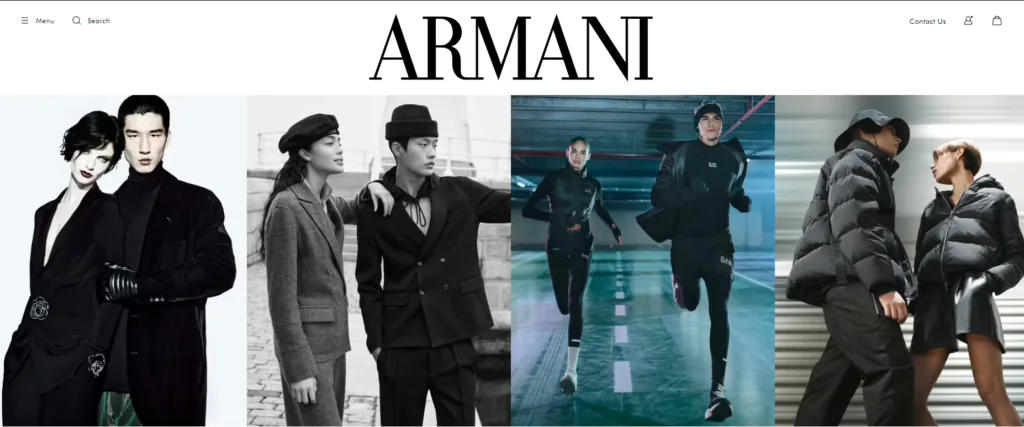
Giorgio Armani has become one of the most renowned Italy t-shirt brands. The brand is known for its timeless elegance and craftsmanship. Line details are published on the official Armani site.
Pricing Range
- Reference retail band: $100–$500+ per item, depending on the line (Emporio Armani through mainline Giorgio Armani).
Retail pricing for reference only — sourced from the brand’s official store and authorized retailers. Armani does not publish wholesale price tiers or volume-discount terms.
Customer Service
- Dedicated Platform: Online wholesale portal with real-time inventory, digital line sheets, electronic ordering, and shipment tracking.
- Regional Sales Managers: Direct contact within 24 hours for key accounts.
- Support: Dedicated email and phone support for wholesale partners through the brand’s B2B portal.
Customization Options
Customization is limited and handled through the brand’s own wholesale program; Armani does not publish public minimum-order quantities or lead times. Branded embroidery and custom prints are reserved for licensed or established retail partners.
2. Dolce & Gabbana
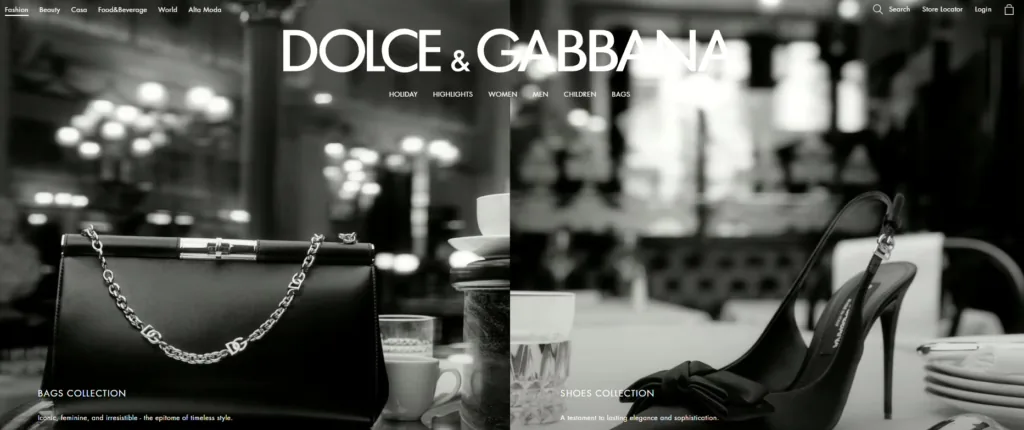
Founded in 1985 by Italian designers Domenico Dolce and Stefano Gabbana, Dolce & Gabbana is a symbol of Italian luxury and opulence. The brand gained fame in the late 1980s and early 1990s.
This was after Madonna wore their designs, including a bejeweled corset drawn from the brand’s corsetry lines, on her 1990 “Blond Ambition” tour.
Over the years, Dolce & Gabbana has expanded its offerings. They now include menswear, accessories, fragrances, and haute couture. The brand is known for its bold, innovative fashion.
Dolce & Gabbana’s t-shirts feature vibrant prints and intricate patterns. They use premium materials like cotton and silk. The brand often uses Italian culture in its designs, solidifying its position as one of the most iconic Italian shirts brands. This appeals to clients who value bold, expressive fashion.
Their collections often feature motifs from Sicilian traditions, baroque art, and Mediterranean images. They reflect the designers’ roots and culture.
Price Range: $150–$600
Size Range: XS–XXL
Fabric & Construction: Heavyweight cotton jersey anchors the graphic tees, with silk-blend panels on the upper-end lines.
The construction worth noting is the print setup — D&G builds the design around large-format placement printing and baroque appliqué, which demands flat, low-shrink fabric beneath it so the artwork doesn’t distort after washing.
What Sourcing Teams Can Borrow: Treat the print as the product. If you’re chasing this look, specify a pre-shrunk, high-density cotton jersey and lock in print placement and cure parameters before the sample — a baroque or all-over motif that bleeds or cracks in one wash loses the entire effect.
3. Prada
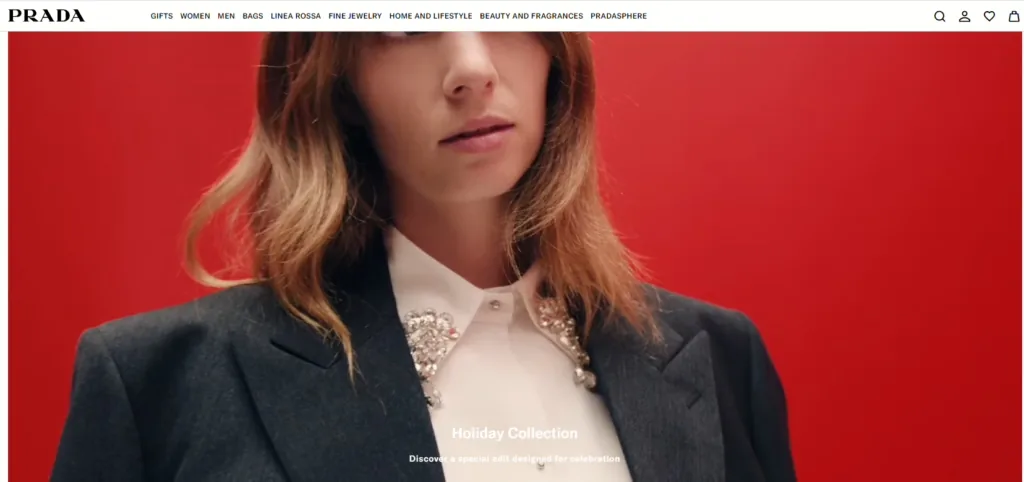
Prada is one of the Italian t-shirt brands that pushed technical fabric into the luxury mainstream, carrying the category into the global fashion spotlight.
Customization Options
Customization (color adjustments, logo placements, neck labels, eco packaging) is arranged through Prada’s own retail and licensing channels rather than an open wholesale program. The brand does not publish minimum-order quantities or development timelines.
Technological Innovation
- Re-Nylon regenerates waste nylon material again and again.
- 3D digital design cuts sample production time by 80%.
- Uses special water saving dye methods saving 100 liters per kilogram of fabric.
Main Fabric
- Re-Nylon is the signature fabric.
- Basic Cotton: High quality Supima cotton with 5% stretch material.
- Performance Style: 85% recycled nylon with 15% plant based Tencel.
- Luxury Style: Blends with 10 to 15% silk and premium cotton.
- All fabrics treated to shrink less than 3% after washing.
Know more about Where Is A Prada T-Shirt Made.
Expert Advice: Use Prada’s premium brand to your advantage. Negotiate exclusive deals or limited-edition collections. This will differentiate your offerings and create scarcity, driving demand and profits.
Duman NUDEIBIEKE, Global Supply Chain Expert
4. Gucci
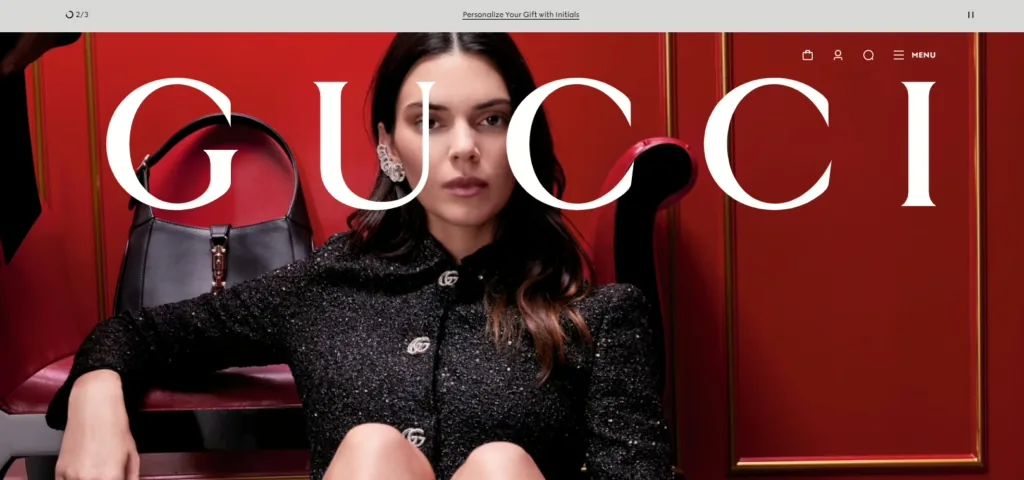
Established in 1921 by Guccio Gucci in Florence, Italy, Gucci began as a small leather goods and luggage shop. The brand gained global fame in the 1950s.
This was due to its iconic products, like the bamboo-handled bag and the Horsebit loafer. Over the decades, Gucci has added ready-to-wear clothing, accessories, and fragrances. It is now a symbol of Italian luxury and craftsmanship.
Gucci’s t-shirts are known for their bold designs. They feature vibrant prints, intricate patterns, and premium materials. The brand often uses its iconic motifs in its designs.
These include the interlocking GG logo and the green-red-green web stripe. Gucci’s Italian designer t-shirts appeal to a clientele that values expressive and fashion-forward pieces.
Price Range: $300–$1,000+
Fabric & Construction: Standard cotton jersey with a soft hand, distinguished less by the fabric than by the finish on the logo work — jacquard-woven labels, embroidered GG motifs, and webbing trims applied as garment trim rather than printed on.
What Sourcing Teams Can Borrow: Gucci’s pull in the tee category is trim, not fabric. If you want that read at a lower price point, spend on the neck label and one embroidered or applied logo rather than an all-over print; a clean jersey with a genuinely premium trim element photographs better and ages better than a busy print on thin cotton.
5. Versace
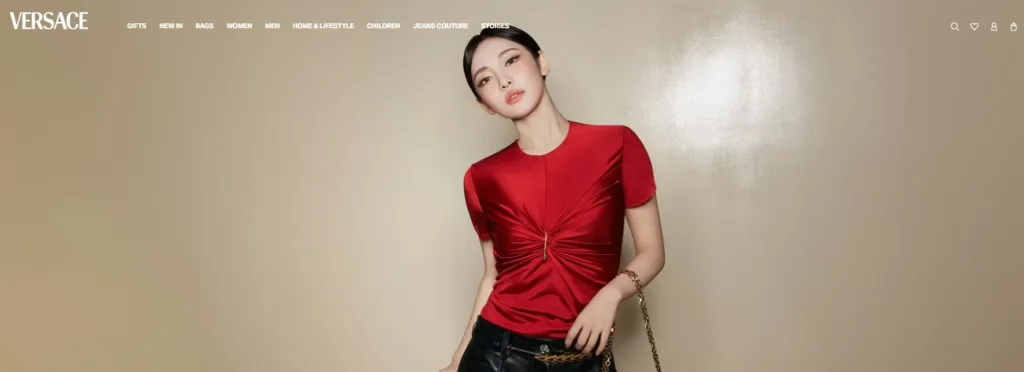
Versace’s identity is built on the Medusa logo — a symbol of power and beauty that anchors its distinctive aesthetic — paired with recurring Baroque motifs across its prints and trims.
Production Capacity
Versace produces its knitwear in Italy, with main facilities in Lombardy and Tuscany. The brand does not publish unit output volumes or monthly capacity figures; production is allocated to its own retail, licensing, and authorized-wholesale channels.
Customer Service
Wholesale is managed through Versace’s own distribution agreements rather than an open B2B portal. Selection, pricing, and account terms are negotiated privately with each retail or licensing partner.
Customization Options
Custom work such as Medusa logo placements, exclusive dye batches, and full prints runs through the Versace Studio program. The brand does not publish minimum-order quantities for these services.
6. Missoni

Founded in 1953 by Ottavio and Rosita Missoni, the brand originated as a small knitwear workshop in Gallarate, Italy. By the 1960s, Missoni’s multicolored patterns revolutionized fashion, and the brand earned global acclaim. In 1967, Missoni debuted its first full collection in Florence. This established it as a pioneer in contemporary knitwear.
Today, Missoni is a family-run business, known for its mix of artisanal craftsmanship and bold designs. Missoni knit tees are known for their vibrant zigzag, chevron, and wave patterns.
The house works a kaleidoscope of colors into each piece, pairing old knitting techniques with modern design. Its garments are both artistic and functional. Each piece has a playful yet sophisticated style. It caters to clients seeking standout, fashion-forward apparel.
Price Range: $150–$500+
Fabric & Construction: Missoni’s “t-shirts” are knitwear first — fine-gauge jacquard and intarsia knits where the zigzag and chevron patterns are built into the fabric on the knitting machine, not printed on top.
That construction is why no two pieces register the pattern identically, and why the color work survives washing far better than a printed imitation.
What Sourcing Teams Can Borrow: This is the hardest of the 14 to replicate cheaply, and buyers should know why. A true jacquard or intarsia knit requires yarn-dyed feeders and a knitting program, not a print table — printed zigzags are the giveaway of a fake.
If the look matters, budget for knit development; if it doesn’t, don’t promise a customer an “authentic” Missoni effect they’ll spot in the mirror.
7. Stone Island
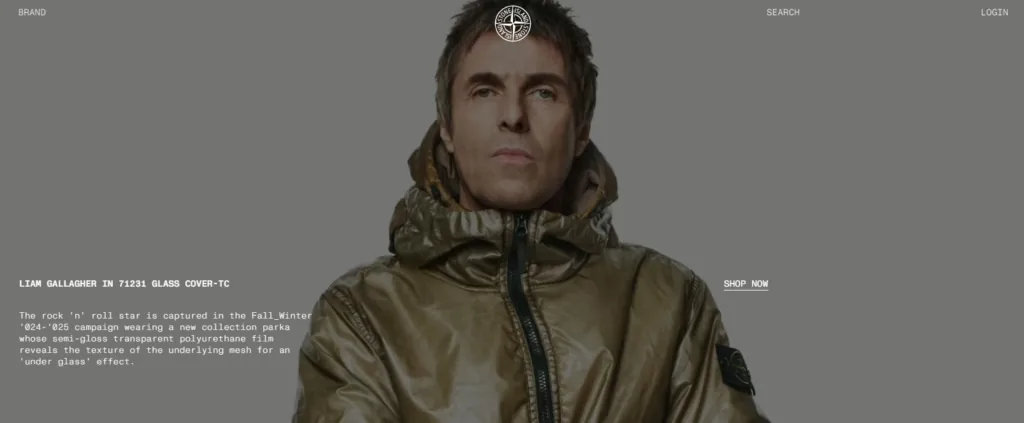
Founded in 1982 by Massimo Osti, Stone Island built its name on innovative fabrics and functional design. The brand’s first collection featured garments made of “Tela Stella,” a resin-coated canvas inspired by truck tarpaulins.
Main Products
- Classic garment dyed crewneck and V-neck tees
- Ghost collection lightweight jersey shirts
- Oversized pocket tee with rubberized finish
- Long sleeve heat-reactive tops
- Reflective technology turtlenecks
Pricing Range
- Reference retail band: $100–$400+ per item across the core jersey, Ghost, and technical lines.
Reference retail pricing only (official store and authorized retailers); Stone Island does not publish wholesale tiers or volume discounts.
Technological Innovation
Proprietary garment dyeing technology achieves unique color effects. Heat-reactive Nylon Metal fabrics change appearance with temperature. Reflective treatments absorb light for signature glow. All fabrics feature Compass badge with unique Certilogo RFID authentication. Thermal adhesion bonding replaces traditional stitching.
8. Marni
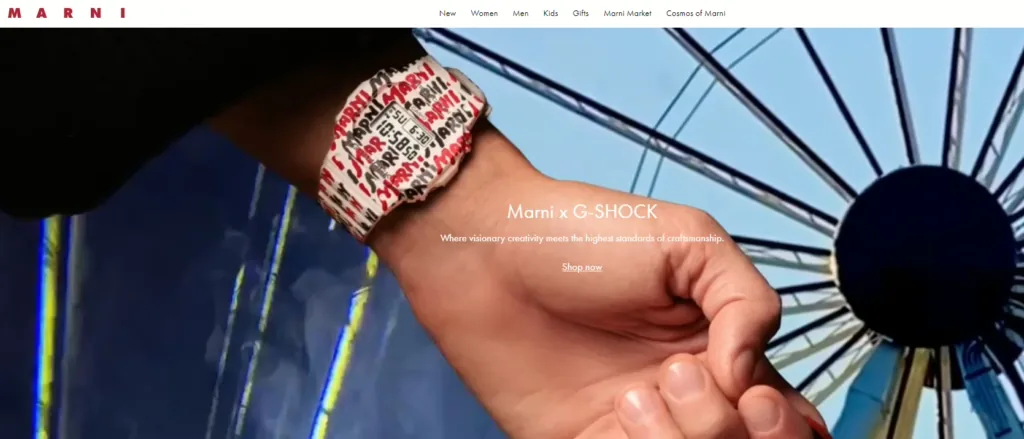
Founded in 1994 by Consuelo Castiglioni in Milan, Marni began as a women’s luxury brand. It was known for its eclectic designs and innovative use of fur. The brand expanded into menswear in 2002, maintaining its avant-garde approach.
In 2012, Marni was acquired by the OTB Group, which also owns Diesel and Maison Margiela. Francesco Risso became creative director in 2016, continuing Marni’s tradition of bold, artistic fashion.
Marni’s t-shirts are characterized by vibrant colors, abstract prints, and unconventional silhouettes. The brand often employs a mix of materials and textures, creating pieces that are both visually striking and tactile.
As one of the more avant-garde Italian shirts brands, Marni’s designs appeal to clients seeking unique, artistic garments that stand out in the market. Custom childrenswear can carry that same playful, print-led spirit into a kids’ line.
Price Range: $150–$600+
9. Brunello Cucinelli
Brunello Cucinelli was founded in 1978 in the medieval village of Solomeo, Italy. It made luxurious, colored cashmere garments.
Production Capacity
Production is exclusive to Brunello Cucinelli’s headquarters in Solomeo, Italy, handcrafted in limited batches with artisanal finishing. The brand prioritizes craftsmanship over volume and does not publish unit output, batch sizes, or lead times.
Customer Service
Wholesale relationships are managed through personal account managers and a dedicated B2B portal with collection previews and order placement. Account terms are negotiated privately with each partner and are not published.
Customization Options
Customization is deliberately minimal to preserve brand integrity, and is offered selectively to high-end hospitality and resort clients. Options include:
- Exclusive Pantone-matched cashmere/cotton blends
- Discreet interior neck label embroidery
- Made-to-measure patterns for high-end hospitality/resort clients
Expert Advice: Position Brunello Cucinelli t-shirts as investment pieces. Emphasize their sustainability and timelessness. This aligns with a growing demand for ethical luxury. Use storytelling to show the brand’s heritage and craftsmanship. This will boost its perceived value.
Lisa Chen, Clothing Expert at Unice Garment
10. Loro Piana
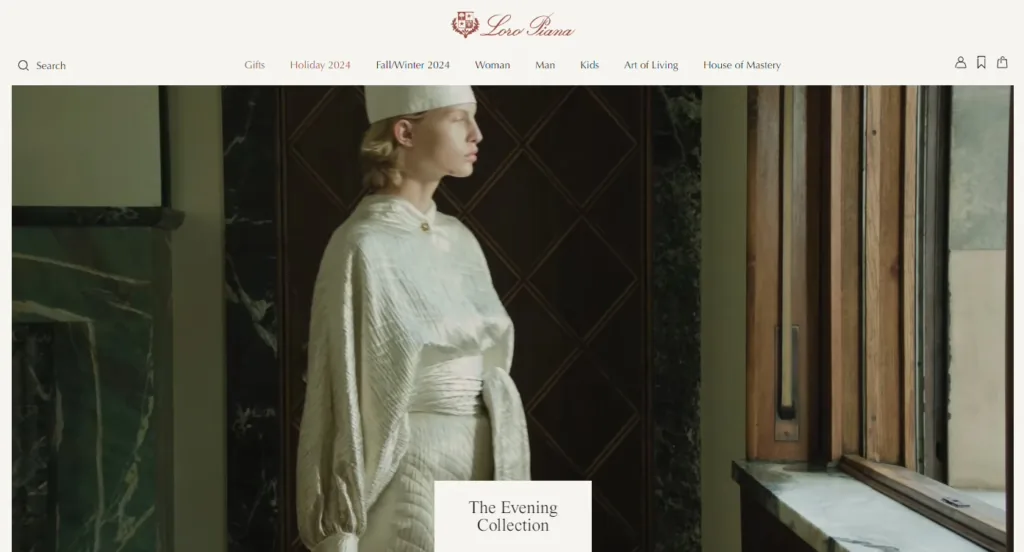
Founded in 1924 by Pietro Loro Piana in Trivero, Italy, Loro Piana originated as a family-operated wool trading business. It evolved into a global leader in luxury textiles and apparel.
It is now renowned for sourcing rare, high-quality fibers like cashmere, vicuña, and merino wool. In 2013, the brand became part of the LVMH group, further solidifying its position in the luxury market.
Loro Piana’s t-shirts are elegant and simple. They use high-quality materials. The brand uses neutral colors and classic shapes. It appeals to clients who value timeless style and great craftsmanship.
The house’s commitment to quality shows in the meticulous selection of fibers and attention to detail in every garment. For the fiber standards Loro Piana works to, see the brand’s official fabric guide.
Price Range: $300–$1,000+
Fabric & Construction: The entire proposition is the fiber. Loro Piana’s tees lean on extra-fine merino, cashmere, and cotton-cashmere blends spun from fiber they largely control at the source, which is why the hand-feel is the differentiator and the design is deliberately plain.
What Sourcing Teams Can Borrow: If you’re building a “quiet luxury” basic, the lesson is that the fabric has to justify the price with no logo to hide behind.
That means specifying fiber grade and count, not just “soft cotton” — and accepting that a genuine cashmere blend sets a price floor a synthetic blend can’t honestly reach. Don’t oversell the blend; state the actual fiber content on the label and let it speak.
11. Diesel
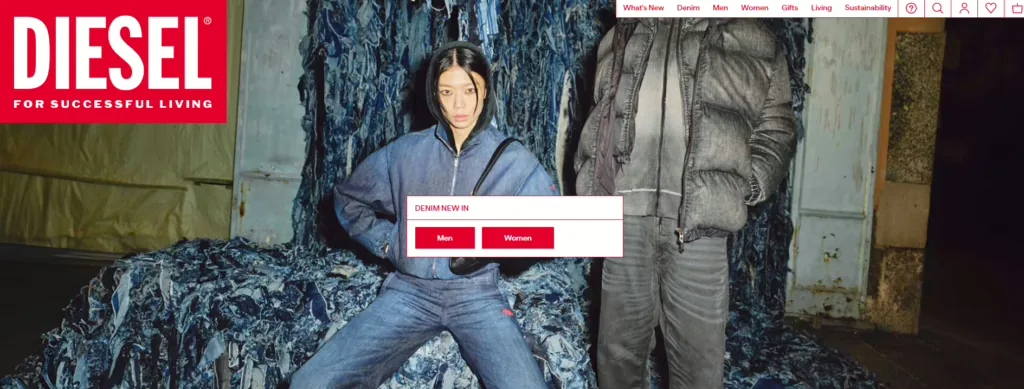
Founded in 1978 by Renzo Rosso in Molvena, Italy, Diesel is a denim brand. It emphasizes individuality and self-expression. Its sustainability disclosures are published on the brand’s official site.
Sustainability
45% recycled cotton blends in core collections. 30% recycled polyester in performance lines. Water consumption reduced by 50% through ceramic dyeing technology. Packaging: 100% recycled cardboard, plastic-free since 2022. Supply chain audited for SA8000 social compliance.
Pricing Range
Reference retail band (not wholesale): $50–$200+ per item, spanning core cotton jersey through licensed collaboration graphics.
Reference retail pricing only (official store and authorized retailers); Diesel does not publish wholesale tiers or volume discounts.
Technological Innovation
Advanced laser finishing replaces chemical washes. RFID-enabled care labels (100% traceability). AI-driven fabric cutting reduces waste by 28%. Robotic knitting units produce seamless constructions. Nano-coating tech for stain resistance on select styles.
12. Ermenegildo Zegna
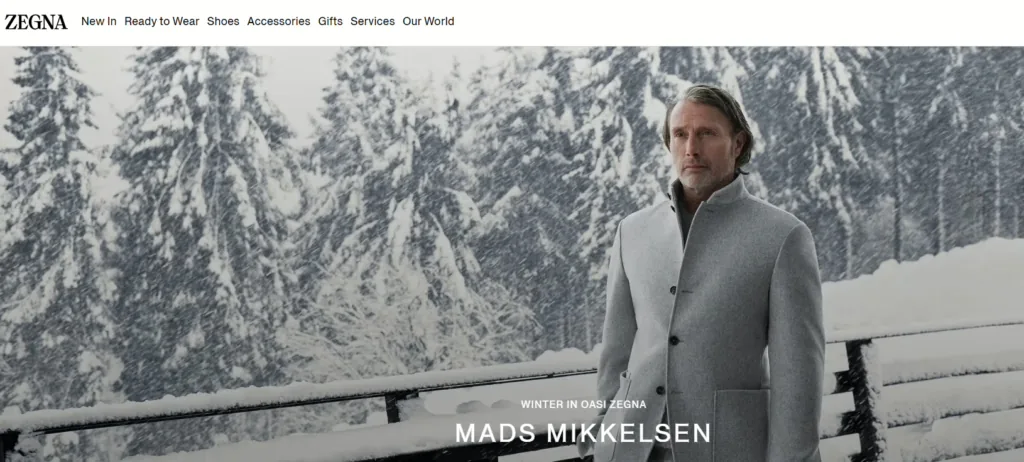
Founded in 1910 by Ermenegildo Zegna in Trivero, Italy, the company began as a wool mill with a vision to produce the world’s finest fabrics. Over the decades, Zegna expanded into luxury menswear.
It became renowned for its impeccable tailoring and high-quality materials. In 2021, the company rebranded to “ZEGNA” and introduced a new logo, symbolizing its evolution and homage to its heritage.
ZEGNA’s t-shirts are luxury items. They have minimalist designs, a neutral color palette, and use premium materials like high-quality cotton and cashmere blends.
Recognized as one of the best Italian shirt makers, the brand aims for timeless elegance and superior craftsmanship. It appeals to clients who value subtle sophistication and lasting style.
Price Range: $150–$500+
Fabric & Construction: Zegna is a fabric house before it is a clothing house, so the tees reflect that — refined cotton and cotton-cashmere jerseys built on a disciplined size/fit block, with tailoring-derived attention to shoulder line and sleeve length rather than surface decoration.
What Sourcing Teams Can Borrow: The takeaway is fit discipline, not ornament. A menswear-style tee lives or dies on the pattern block — graded shoulder drop, controlled sleeve opening, a hem that doesn’t flare. If you’re making a “smart casual” tee, invest first in the block and the grading, print nothing on it, and let the proportions carry it.
13. Roberto Cavalli
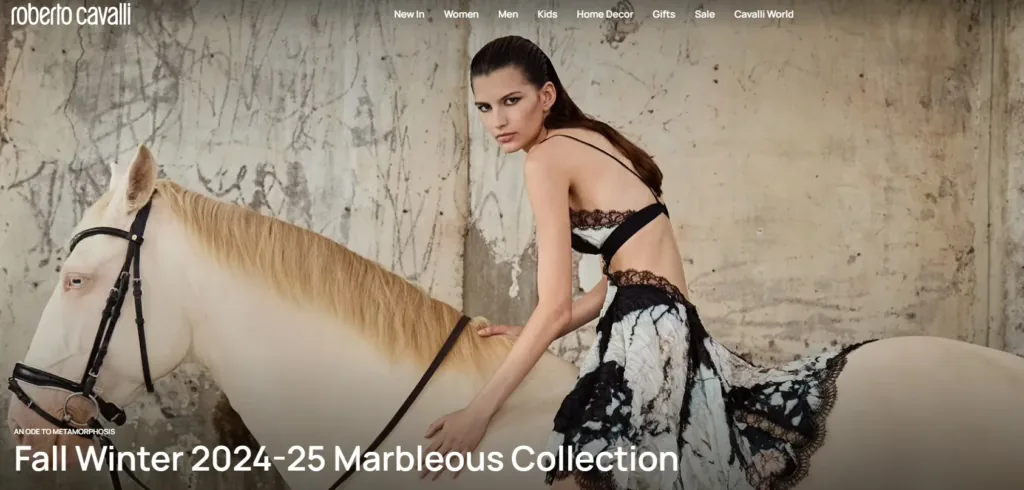
In the 1970s, Italian designer Roberto Cavalli founded the brand. The brand became known for its opulent, daring fashion.
Production Capacity
Manufacturing is centralized in Florence and Prato, Italy, with core printing and embroidery handled in-house. The brand does not publish output volumes, minimum production runs, or lead times.
Customer Service
Wholesale partners work through dedicated account managers with seasonal trend forecasting and a B2B portal featuring virtual showrooms and digital catalogs. Payment terms are negotiated privately with each account.
Customization Options
Custom work covers exclusive print and embroidery designs, signature animal prints adjusted to Pantone references, and custom metal logo rivets or beadwork. The brand arranges these privately with each partner and does not publish minimum-order quantities.
14. Aspesi
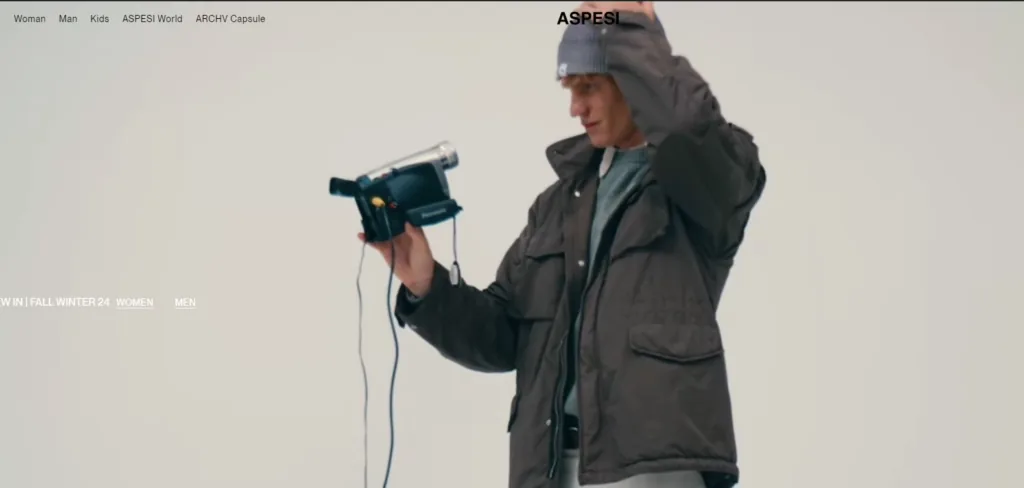
Founded in 1969 by Alberto Aspesi in Legnano, Italy, Aspesi began as a men’s shirt manufacturer. Over the years, the brand expanded its offerings. It now has a full range of men’s and women’s ready-to-wear collections.
Aspesi is renowned for its minimalist designs, innovative use of fabrics and commitment to timeless style. The brand focuses on quality and understated elegance. It avoids trends and overt branding.
Aspesi’s t-shirts have clean lines, neutral colors, and high-quality materials. The brand values function and versatility. It makes stylish, practical pieces.
Aspesi often uses advanced fabrics and treatments, improving the performance and comfort of its Italian-made t-shirts. This approach suits clients who want high-quality, timeless designs. They seek a subtle, sophisticated style.
Price Range: $80–$300+
Fabric & Construction: Aspesi’s reputation rests on technical and performance fabrics applied to a minimal shape — garment-dyed cottons, treated nylon, and high-twist weaves built to move. There is almost no branding; the finish and the fabric do the talking.
What Sourcing Teams Can Borrow: Aspesi is the most realistic template on this list for a small brand. The formula is a clean block plus one well-chosen functional fabric — a garment-dyed cotton or a treated blend — with no logo to rescue it.
Specify the fabric treatment and the tolerances, keep the silhouette simple, and the piece reads considered rather than cheap.
Related Reading
- Best 10 Clothing Manufacturers in Sri Lanka
- Best 10 Taiwan Apparel Manufacturers
- Best Motorcycle Jacket Brands
- Custom Sportswear Manufacturing
Conclusion
The best 14 t-shirt brands in Italy excel in their craft. Their innovative designs and versatility meet diverse business needs. For timeless elegance, bold pieces, or high-performance fabrics, these brands are perfect. They combine quality and style.
LeelineApparel builds private-label knits and wovens for growing brands, spanning custom t-shirts and cut-and-sew programs. The aim is simple: turn Italian design references into production-ready apparel.
Contact us today to explore how our expertise can enhance your product offerings and provide the perfect fit for your market.
People Also Ask About Best T-Shirt Brands in Italy
1. What factors should I consider when choosing an Italian t-shirt brand for my business?
Consider the brand as a design reference, not a supplier. Look at the silhouette, fabric weight, and finish you want to echo, then confirm the construction details — weight, wash treatment, and color-fastness tolerance — with whichever factory you actually order from. Style match is the first filter; manufacturing specs are the second.
2. Can Italian t-shirt brands handle large bulk orders?
For these luxury houses, no — not in the promotional or private-label sense. Armani, Gucci, Prada and the others sell through their own retail and authorized-wholesale channels, and they are not open suppliers for custom bulk with flexible minimums.
If you need a few hundred to several thousand branded pieces, your realistic route is a cut-and-sew manufacturer that can work from the brand’s design cues.
3. Are sustainable materials available from these brands?
Yes — several are active here. Diesel works with recycled cotton and recycled polyester blends and audited supply chains; Prada’s Re-Nylon uses regenerated nylon; Brunello Cucinelli and Loro Piana emphasize traceable natural fibers. Treat the sustainability claims as specifications to verify, not marketing to copy.
4. Do these brands offer exclusive designs for corporate clients?
Not for corporate merchandise. Their design work is reserved for their own collections and licensing partners, not bespoke corporate uniforms or branded giveaways. For that kind of project, a private-label manufacturer is the correct channel.
