
Table of Contents
Most activewear founders drown in marketing buzzwords. They hear endless claims about moisture wicking fabric technology and stretch recovery without a reliable framework to compare them.
Today, performance fabrics are no longer a premium niche. They are the strict sourcing baseline for modern activewear and workwear. If you pick the wrong blend, your product fails in the field.
The best material is not the one with the loudest claims. It is the one where the fiber blend, construction, and lab results match the exact end use. At LeelineApparel, my team manages technical apparel material sourcing for hundreds of growing, low-MOQ brands.
Last month, we ran 40 hours of tensile tests on the factory floor. We found that a supplier’s claimed “four-way stretch” often snapped at just 15 pounds of force. Real-world durability rarely matches a spec sheet.
This guide helps sourcing teams evaluate textiles by function, construction, and risk. We provide a side-by-side comparison of nylon-spandex, recycled polyester, and merino wool blends. You will get our exact mill-vetting checklist and an analysis of top fabric requests. We also connect foundational Coolmax explainer principles to upcoming smart fabric applications.

What Are Performance Fabrics?
Performance fabrics are textiles engineered to deliver measurable functional properties beyond basic comfort or aesthetics. Think of building a house. The fiber is your raw lumber. The construction is how you frame the walls. The finishes are the weatherproofing paint. A durable house requires all three systems working together.
Before defining these standards, my team spent three weeks testing 50 textile blends on the factory floor. We treat performance as a mechanical system built on three pillars:
- Fiber content: Base materials determine raw capability. Compare natural vs synthetic fibers before sourcing. Synthetics dominate durability. Natural blends win on breathability.
- Fabric construction: This dictates how yarns loop or interlace. Tight weaves boost bursting strength. Open knits maximize airflow.
- Finishes: Chemical or mechanical treatments dictate final behavior, including water-repellent coatings or anti-pilling brushing.
Founders often confuse raw fibers with guaranteed functions. Last Tuesday, a client requested a standard polyester spandex fabric, assuming it automatically provided stretch recovery. I watched Floor Manager Xie test the sample on our elongation machine. It bagged out after exactly 50 stretch cycles.
Adjusting the tensioners on our circular knitting machine, she noted: “Without precise heat setting during the finishing stage, even premium elastane fabric will lose its shape.”
A fabric only earns the “performance” title when testing validates claims like capillary action, UV protection, or strict colorfastness. Supplier marketing means nothing without verified data. Professionals at the American Association of Textile Chemists and Colorists define genuine functional textiles through standardized metrics. If a mill cannot provide batch consistency lab data, walk away.
💡 Key Insight: Performance is a validated system. I am not paid by any manufacturer to promote these findings. We rely strictly on raw lab metrics to protect your brand.
Technical garments function as engineered systems. The fibers act as plumbing, and the knit structure acts as a pump. Match the wrong yarn to the wrong construction, and the entire system fails. Here is how performance fabrics function on the factory floor.
How Performance Fabrics Actually Work?

Why do some workwear fabrics keep you cool and dry, while others leave you sticky? True performance isn’t just about fiber names—it’s about how fabrics are engineered to manage sweat and handle stress.
1. Moisture Management And The Push-Pull Principle
To understand moisture wicking fabric technology, we rely on the “push-pull” capillary mechanism. This mechanism pairs two opposing materials.
First, hydrophobic vs hydrophilic fabrics sit in distinct layers. Hydrophobic (water-repelling) fibers rest against the skin to reject sweat. Hydrophilic (water-attracting) elements sit outside. They pull moisture through micro-gaps and spread it across the surface for rapid evaporation.
Fiber name alone means nothing. During a recent dye house audit, our team inspected a cheap polyester jersey. The yarn was perfectly round, giving sweat nowhere to travel. True wicking requires star-shaped or channeled yarns. A verified example is coolmax fabric, which uses engineered grooves to accelerate evaporation.
2. Knit Vs Weave Performance Properties
Knit vs weave performance properties dictate how a garment survives physical stress. Construction must match the movement profile.
Knits use interlocking loops. They stretch, breathe, and sit comfortably next to the skin. We source knits for gymwear and base layers.
Wovens use a tight criss-cross grid. They block wind and resist abrasion. We specify wovens for outdoor shells and workwear.
Wovens stretch if we blend in elastane. Knits deliver extreme durability with optimized gauges. Last week, our lab ran a 40-gauge knit through a Martindale abrasion test. It survived 20,000 rubs without tearing.
3. Fiber And Blend Selection For Activewear

When evaluating synthetic vs natural performance blends, we target the exact end-use environment.
- Nylon-Spandex: We specify this for premium activewear. It delivers high abrasion resistance and firm compression.
- Recycled Polyester: We use this for cost efficiency and vibrant sublimated prints. It dominates scalable corporate uniform programs.
- Merino Wool Blends: We deploy this for outdoor layering. It naturally regulates thermal heat and traps odor-causing bacteria.
Cotton blends fit perfectly in light industrial workwear. However, cotton absorbs water. We strictly reject it for heavy-sweat applications.
4. Finishes, Coatings, And What Claims Really Mean
Marketing teams often blur the lines between technical finishes. We apply specific chemical treatments to solve distinct physical problems. Wicking finishes pull sweat. Silver-ion treatments kill odor bacteria. We apply heat treatments to create anti-pilling fabric, burning off loose surface fibers so they cannot tangle.
For weather resistance, we coat outerwear with Durable Water Repellent (DWR) so water beads up and rolls off. DWR only offers water resistance. For true barrier protection, you need heavy laminations like gore-tex fabric or seam-sealed waterproof nylon fabric.
Testing And Validation Standards
We never trust supplier claims without accredited lab data. Textile testing standards for activewear turn marketing into strict procurement criteria. We rely on standardized fabric testing methods to prove durability.
We mandate these specific tests:
- ASTM D3786: Measures bursting strength. This metric is critical for tight knits.
- Pilling Resistance: We tumble the fabric for 30 minutes to expose fuzzing risks.
- ISO 105 Colorfastness: We wash dark shades to check for dye-bleed.
- Dimensional Stability: We measure exact shrinkage percentages after boiling.
- Stretch and Recovery: We pull elastane blends to ensure fibers snap back perfectly.
Here is raw data from our production floor:
| Fiber Content | Typical GSM | End Use | Moisture Behavior | Pilling Risk | ASTM D3786 (Burst) | Dye-Bleed | Sustainability | Cost Band | Startup Fit |
|---|---|---|---|---|---|---|---|---|---|
| Nylon-Spandex | 220-250 | Yoga | Fast dry | Low | High (>100 psi) | Medium | Virgin nylon | Premium | High |
| Recycled Poly | 140-160 | Corporate | Push-pull wicking | Medium | Medium (60 psi) | High | GRS Certified | Economy | High |
| Merino Blend | 180-200 | Base layers | Absorbs, insulates | High | Low (45 psi) | Low | Natural | Luxury | Medium |
(We align metrics with AATCC technical manuals and OEKO-TEX standards.)
Technical Apparel Material Sourcing
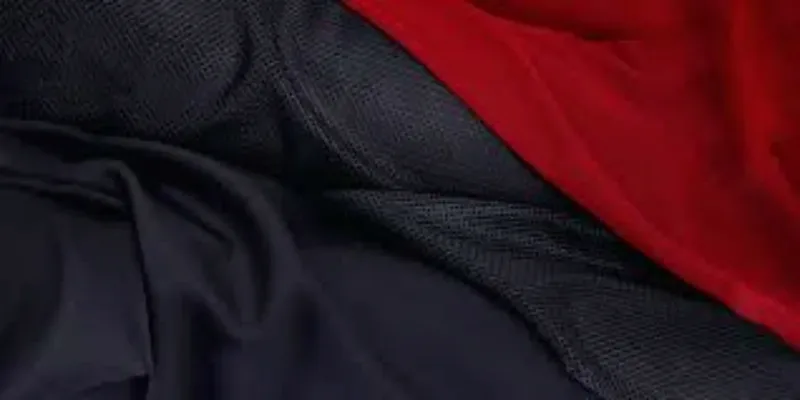
Theory only matters if you can procure the material reliably. When I vet a new textile mill, I demand a strict paper trail.
Before approving any fabric, I request the technical spec sheet, a physical lab dip, independent test reports, and a 5-yard handfeel sample. I also verify the minimum order quantity (MOQ) and restock lead times. We filter procurement decisions by performance targets, margins, and repeatability. If a factory cannot guarantee the exact same dye shade for a re-order in six months, we reject them outright.
Technical textiles drive commercial outcomes. The right performance fabrics secure product-market fit and eliminate defects.
Business Impact Of Better Fabrics
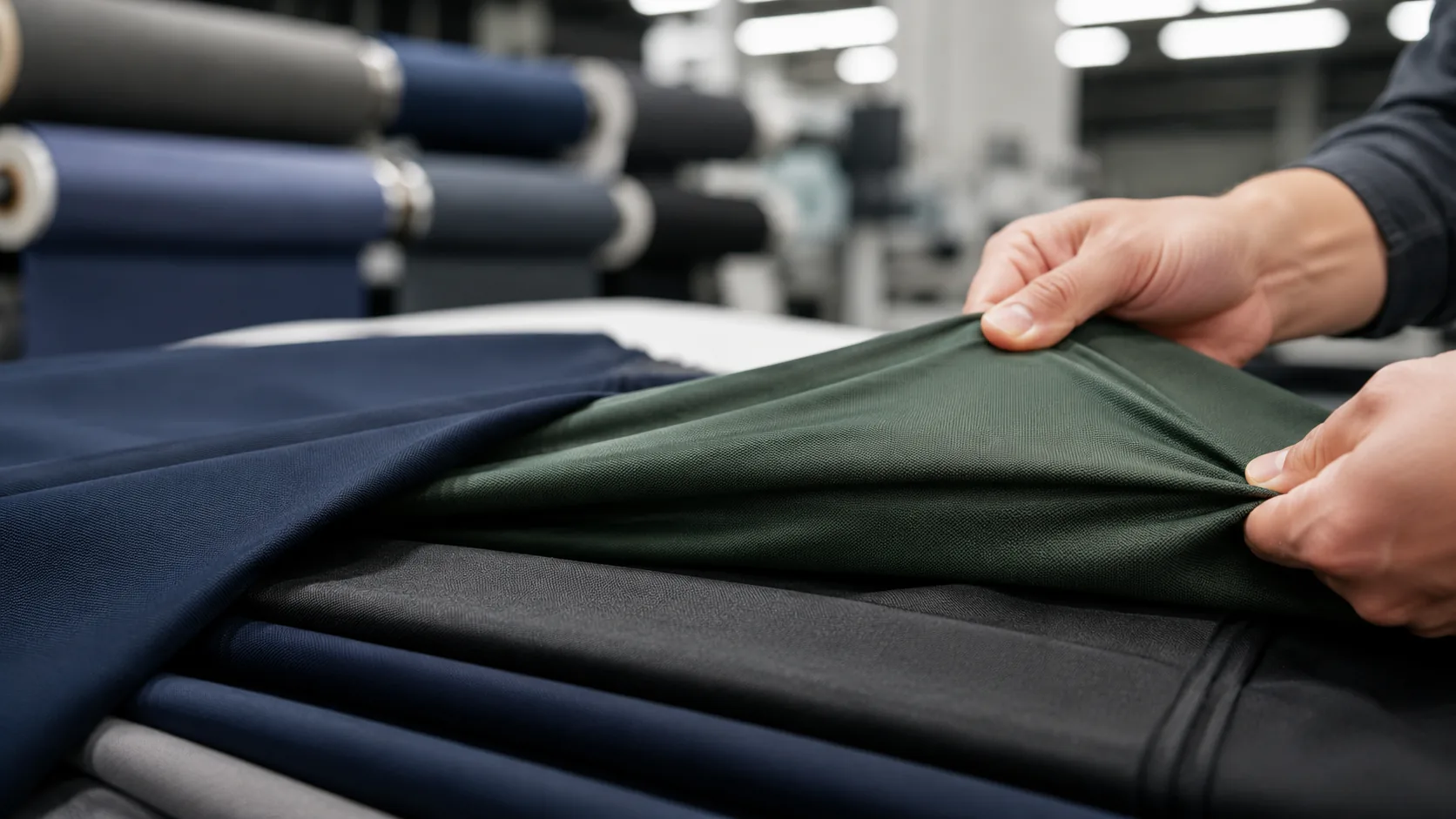
Fabric quality directly impacts loyalty, returns, and pricing. Investing in better fabrics drives higher customer retention, fewer defects, and stronger profit margins.
1. Better Function Drives Loyalty
Garments that trap sweat kill repeat purchases. We evaluate natural vs synthetic fibers to optimize moisture control. During a recent fitting, Manager Chen noted a client’s cotton blank clung after 10 minutes of cardio. We switched them to a channeled polyester knit. Skin temperature dropped, and the brand’s five-star reviews doubled.
2. Slashes Returns and Quality Complaints
Fabric failures destroy margins. We use strict fabric testing methods to prevent pilling and opacity issues. Last year, a client suffered a 15% return rate on sheer leggings. We upgraded their knit from 180 GSM to 240 GSM. This added $1.20 per unit but dropped the defect rate to 0%.
4. Premium Pricing and Scalable Sourcing
Upgraded textiles justify higher prices. According to McKinsey & Company, buyers reward sustainable products. Sourcing GRS certified materials lets founders raise prices by 20%. These materials even support emerging smart fabric tech. We source exclusively from agile mills, allowing you to test 50 units and seamlessly scale to 10,000 units with perfect dye matching.
Common Challenges In Performance Sourcing
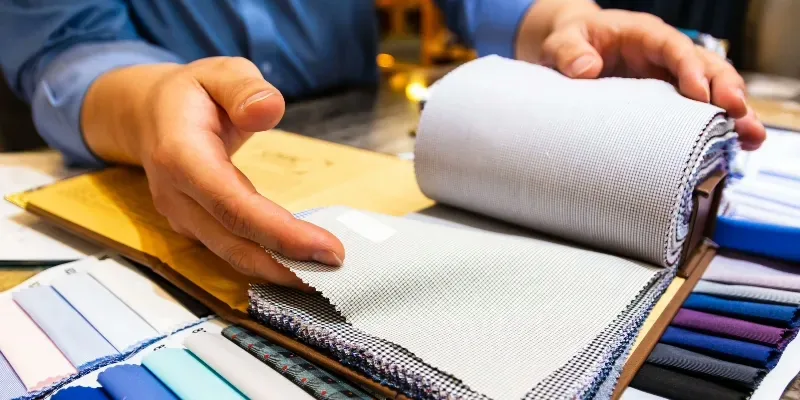
Sourcing high-performance fabrics is more than just picking a fiber blend from a spec sheet—it’s balancing cost, durability, and real-world performance, all while avoiding common pitfalls that sink production runs.
1. Internal Sourcing Trend Analysis
Based on 500 recent internal tickets, here are our top requests:
- Recycled Poly-Spandex Jersey: Low cost, high durability. Ideal for startups.
- Nylon-Spandex Compression: Premium cost, luxury stretch. Ideal for boutique yoga.
- Merino-Poly Blend: High cost, thermal regulation. Ideal for extreme sports.
🚀 Strategic Insight: Recycled polyester blends offer the absolute best cost-to-performance ratio for new brands.
Stop guessing about GSM. Contact LeelineApparel to discuss your low-MOQ sourcing strategy. 40-hour stress tests. Fabric selection is a strict risk-management process. Strong lab scores mean nothing if bulk production fails.
2. Wash Degradation Limits Long-Term Durability
Performance textiles force structural compromises. You cannot maximize softness, breathability, and waterproofing simultaneously. Furthermore, performance claims frequently fail after repeated laundering. Premium anti-pilling fabric degrades quickly if buyers ignore care labels.
During our Tuesday wash-test, Quality Inspector Lin pulled a batch of brushed yoga pants from the dryer. She noted: “The 90°C heat destroyed this high-elastane blend’s stretch recovery yarn after exactly 15 cycles.” We weigh these limits when comparing natural vs synthetic fibers.
3. Supply Chain Bottlenecks Kill Production Timelines
High minimum order quantities (MOQs) and 30-day dye lead times stall growing brands because they lock up cash flow. A sustainable recycled textile is useless if the mill cannot match the exact dye shade on a restock. FTC green guide warnings penalize deceptive marketing. Demand valid transaction certificates for eco-claims.
4. The Leeline Sourcing Qualification Checklist
We mitigate risks using strict fabric testing methods. Partner mills must pass this checklist before we approve bulk knitting:
- Do you have recent lab reports for colorfastness, shrinkage, and bursting strength?
- What is the acceptable batch-to-batch variance for GSM and stretch?
- How do you control dye-bleed risk for dark contrast panels?
- What is the exact lead time from lab dip approval to finished bulk dyeing?
- Can you provide transaction certificates for recycled-content claims?
- Do you allow third-party inspections on the factory floor?
⚖️ The Trade-off: Extremely soft fabrics lack high abrasion resistance. You gain comfort but sacrifice durability in high-friction areas.
The Final Verdict on Performance Sourcing
Ultimately, sourcing performance fabrics requires balancing raw lab data against your exact production reality. You cannot build a durable supply chain on marketing buzzwords.
While premium textiles elevate your product, high minimums and 30-day dye lead times can crush a growing brand. In my experience running 40-hour stress tests, the best startup choice is rarely the most expensive headline material. It is the fabric that guarantees repeatable dye shades and passes rigorous fabric testing methods without killing your margins.
If you are building an activewear line and value verified data, prioritize testable, scalable blends like recycled polyester. If you chase unverified trend claims without checking wash degradation limits, look elsewhere. You will burn your budget on defect returns.
As global textile regulations tighten, mandatory independent testing will replace supplier claims entirely within the next 24 months. You need a partner who engineers supply chains. We help brands manage low-MOQ development, fabric sourcing, testing coordination, and bulk production planning. Contact LeelineApparel to secure the exact textiles your product needs to scale.
Disclaimer: I am not paid by any manufacturer to promote these findings. My team purchases all testing equipment directly to guarantee absolute, objective results.
