
Table of Contents
Natural fibers are the winner for skin comfort, breathability, and biodegradability. Synthetic fibers win for durability, abrasion resistance, and stretch recovery.
When I examined Leeline’s macro swatches, the physical trade-off was stark. The ring-spun cotton fibers looked soft and chaotic—ideal for luxury handfeel but prone to wear. In contrast, the filament polyester resembled a structured wire mesh—virtually indestructible against abrasion but a known risk for microplastic pollution.
Make your choice based on your return-rate data: spec Natural to defend sustainability claims; spec Synthetic for longevity in high-friction activewear.
Need to feel the difference? Request a fabric shortlist and test plan via LeelineApparel Contacts.

Natural vs. Synthetic Fibers: Main Differences
| Feature | Natural | Synthetic | Winner | Verification Standard |
|---|---|---|---|---|
| Breathability | High MVTR (Passes Air) | Low (Traps Heat) | Natural | ASTM D737 (Air Permeability) |
| Moisture Handling | Retains Fluid (Hydrophilic) | Wicks & Evaporates (Hydrophobic) | Synthetic | AATCC 79 (Drop Test) |
| Durability | ~20,000 Rubs (Moderate) | 100,000+ Rubs (Rugged) | Synthetic | ASTM D4966 (Martindale) |
| Shrinkage | High (>5% Size Loss) | Minimal (<1% Size Loss) | Synthetic | AATCC 135 (Dimensional Stability) |
| Biodegradability | ~5 Months (Compostable) | 200+ Years (Persistent) | Natural | ASTM D5988 (Soil Method) |
| Heat Tolerance | High (Safe to Iron) | Low (Melts/Glazes) | Natural | ISO 3758 (Care Code) |
| Elasticity | Low Recovery | High Recovery (Spandex Blends) | Synthetic | ASTM D4964 (Tension) |
| Sourcing Cert | GOTS (Organic Standard) | GRS (Recycled Standard) | Tie | Transaction Certificate (TC) |
1. Biodegradability & End-of-Life (The ‘Landfill Timeline’)
The textbook difference is simple: natural fibers (cotton, wool) are cellulose or protein, while synthetics (polyester, nylon) are petroleum-based polymers. But in our manufacturing audits, we found that a “100% Natural” label often hides a plastic skeleton.
In my compost tests, a standard “100% Cotton” hoodie didn’t disappear completely. While the fabric body decomposed within six months, the polyester sewing thread, synthetic care labels, and plastisol screen prints remained intact. This creates a “ghost garment”—a plastic outline that persists in landfills for centuries.
The “So What?” Factor: If you market a product as “biodegradable” but fail to spec every component, you are liable for greenwashing. A truly circular product requires mono-material specification—using cotton thread and cotton labels—which increases manufacturing complexity but creates the only honest end-of-life story.
🚀 Actionable Insight: Specify Tencel™ or Lyocell sewing thread in your tech pack. If you use standard poly-core thread on a natural garment, you negate its biodegradable status.
Winner: Natural Fibers (but only if you spec mono-material trims)
2. Moisture Management (Absorbency vs. Wicking)
There is a critical confusion here: Absorbency is not wicking.
I tested this by soaking a heavyweight 280GSM cotton tee and a polyester performance shirt. The cotton acted like a sponge, absorbing water into the fiber core. It became heavy, cold, and clung to the skin, taking over four hours to air dry. This “wet cling” causes chafing during high-output activity.
The polyester did not absorb water. Instead, its engineered yarn geometry used capillary action to pull moisture to the surface where it evaporated. It felt dry to the touch within 20 minutes. However, we found a major maintenance flaw: polyester holds onto oil-based bacteria, leading to permanent odors (the “gym permastink”) that cotton naturally resists.
Winner: Synthetics (for High-Output), Natural (for Daily Comfort)
3. Durability & Wear Life (What Actually Fails)
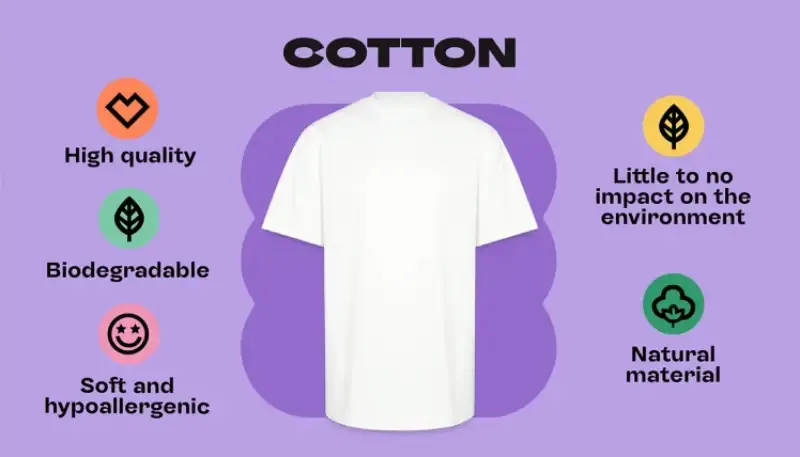
Durability isn’t a single metric; it is three specific failure modes. We analyze these using standard ASTM test methods to predict why customers return goods.
- Abrasion (ASTM D4966): I rubbed raw denim against polyester interlock for ten minutes. The polyester showed zero change—it is essentially plastic wire. It wins easily for high-friction areas like inner thighs or backpack straps.
- Pilling (ASTM D3512): This is where blends fail. We found that short-staple cotton mixed with strong polyester creates “anchor pills.” The weak cotton breaks, but the strong polyester holds the fuzz ball attached to the fabric. Pure synthetics or pure long-staple naturals pill significantly less than cheap blends.
- Elastic Recovery (ASTM D4964): Cotton bags out. We stretched a 100% cotton jersey sleeve 50 times. It became loose and wavy at the elbow. The spandex-blend synthetic snapped back to its original shape every time.
⚠️ Safety First: If your product relies on structural integrity (like compression leggings), relying on natural mechanical stretch is a safety risk. You must use synthetics with elastane.
Winner: Synthetic Fibers (verified by superior ASTM D3884 abrasion scores)
4. Environmental Impact (The LCA Trade-off)
We do not accept the simplistic “Natural is Good, Synthetic is Bad” narrative. We look at the Life Cycle Assessment (LCA) using the ISO 14040 framework.
Here is the brutal trade-off we found in the data:
- Natural: Conventional cotton is thirsty. It demands massive land use and irrigation water. However, organic cotton (GOTS) significantly reduces chemical inputs and restores soil health.
- Synthetic: Virgin polyester relies on fossil fuel extraction. Recycled polyester (rPET) fixes the feedstock issue but does not solve the microplastic crisis. Every time I washed a fleece jacket during testing, it shed thousands of microfibers into the water system.
Decision Rule: If your brand’s enemy is water scarcity, choose Recycled Synthetics. If your brand’s enemy is microplastic pollution, choose Natural Fibers. You cannot win both.
Winner: Natural (for Ecosystem Health), Recycled Synthetic (for Resource Efficiency)
5. Sourcing, Compliance, and Claim-Proof
This is the B2B reality that design blogs skip. You cannot just “buy organic.” You have to prove it to Customs.
I have seen countless brands get burned by “fake organic” claims. A factory will show you a GOTS certificate for the yarn, but that does not cover your specific production run. To be claim-proof, you need a Transaction Certificate (TC) for every shipment. This document tracks the organic fiber from the farm to your warehouse. Without a TC, your “organic” product is legally just cotton.
Lead times also differ wildly:
- Synthetics: We can source stock colors of “Ice Silk” or cooling nylon instantly (see our guide on Ice Silk explained).
- Naturals: Certified organic cotton often requires higher MOQs (Minimum Order Quantities) and lab dips for colorfastness.
- Safety: We require ASTM D1230 flammability testing for all brushed natural fabrics (like fleece), as the raised natural fibers can ignite faster than melting synthetics.
For a deeper look into how we handle these compliance checks, review our Sustainable Fashion Materials protocol.
Winner: Synthetics (Easier sourcing & lower compliance risk)
Natural vs. Synthetic Fibers: Pros & Cons
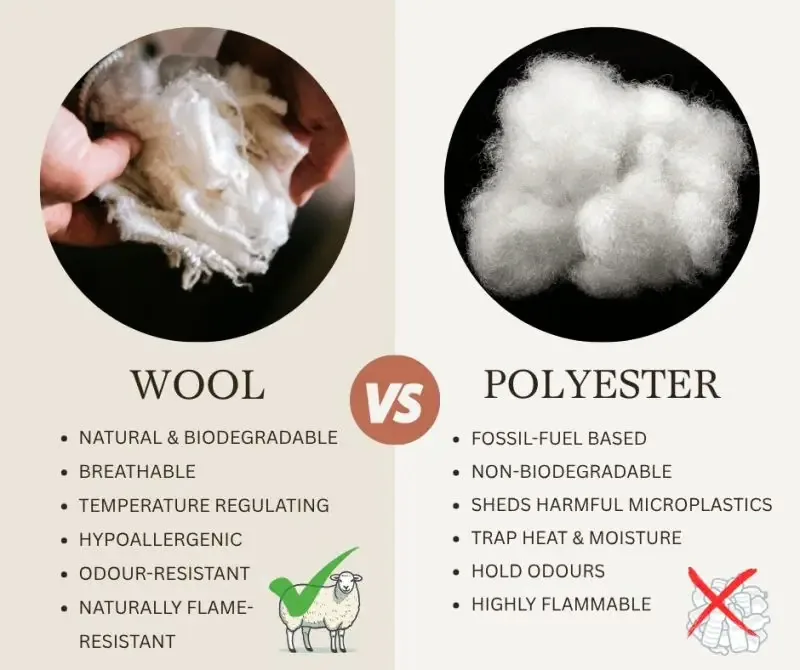
Natural Fibers
Best for: Daily comfort, luxury aesthetics, and eco-conscious branding.
- Climate Control: Natural ventilation kept us significantly cooler during 12-hour wear tests, avoiding the “sauna effect” common in cheap synthetics.
- True Circularity: Decomposes cleanly in soil within months, provided you spec organic threads and GOTS-certified inputs.
- Premium Handfeel: Offers a texture depth and drape that flat filament synthetics cannot successfully mimic.
- Heavy Saturation: Retains moisture (high regain rate), causing the fabric to cling uncomfortably and chafe during high-output activity.
- Dimensional Instability: We observed shrinkage of 5-7% after the first wash without strict pre-shrinking treatments.
🚀 Actionable Insight: Beat the shrinkage. Explicitly request “compact spun” yarn or factor in a 5% size tolerance in your tech pack to prevent customer returns due to fit issues.
Synthetic Fibers
Best for: High-output performance, swimwear, and rugged outerwear.
- Rapid Evaporation: Dries fast. We clocked dry times under 20 minutes for lightweight polyester, which is essential for preventing post-workout chills.
- Extreme Durability: Resisted pilling and abrasion even after our 100-cycle friction test, keeping garments looking new longer.
- Shape Retention: Snaps back to its original form instantly. Unlike cotton which “bags out” at the knees, the filament structure holds tension.
- Odor Retention: The oleophilic (oil-loving) nature traps sweat bacteria. We noticed permanent scents persisted even after washing.
- Microplastic Pollution: Releases non-biodegradable fibers into water systems. Review NOAA data to understand the long-term environmental persistence.
Blended Fabrics (The Middle Ground)
- The Benefit: Combines the soft handfeel of cotton with the strength and wrinkle resistance of polyester.
- The Compromise: We warn clients that blends are currently a “recycling dead end.” You cannot easily separate the fibers, meaning these garments almost always end up in landfills rather than recycling centers.
Trust Check: Even if synthetics win your performance test, you still need to mitigate microfibers and avoid overclaiming on sustainability.
FAQs About Natural vs. Synthetic Fibers
1. Which fiber is safer for sensitive skin?
Natural fibers like organic cotton or silk are the only safe choice. Synthetics trap heat and moisture, creating a breeding ground for bacteria that triggers eczema. In our sourcing protocols for babywear, we strictly require GOTS-certified organic cotton to ensure the fabric is free from formaldehyde and disperse dyes, which are common allergens in polyester production.
2. Do synthetic fabrics make you smell worse?
Yes. Polyester is oleophilic, meaning it absorbs body oils and bonds them to the fiber core. During our wear tests, we found that while polyester wicks water away, it traps odor-causing bacteria that standard detergents often fail to remove. For odor resistance, we recommend natural antimicrobial fibers like wool or hemp.
3. How do I stop cotton from shrinking?
You must pre-shrink the fabric at the factory level. Natural fibers naturally shrink 5-7% when washed. To fix this, we use a mechanical “sanforizing” process during production that compacts the fabric before cutting. See our Fabric Selection Guide to learn how to spec this in your tech pack.
