
Table of Contents
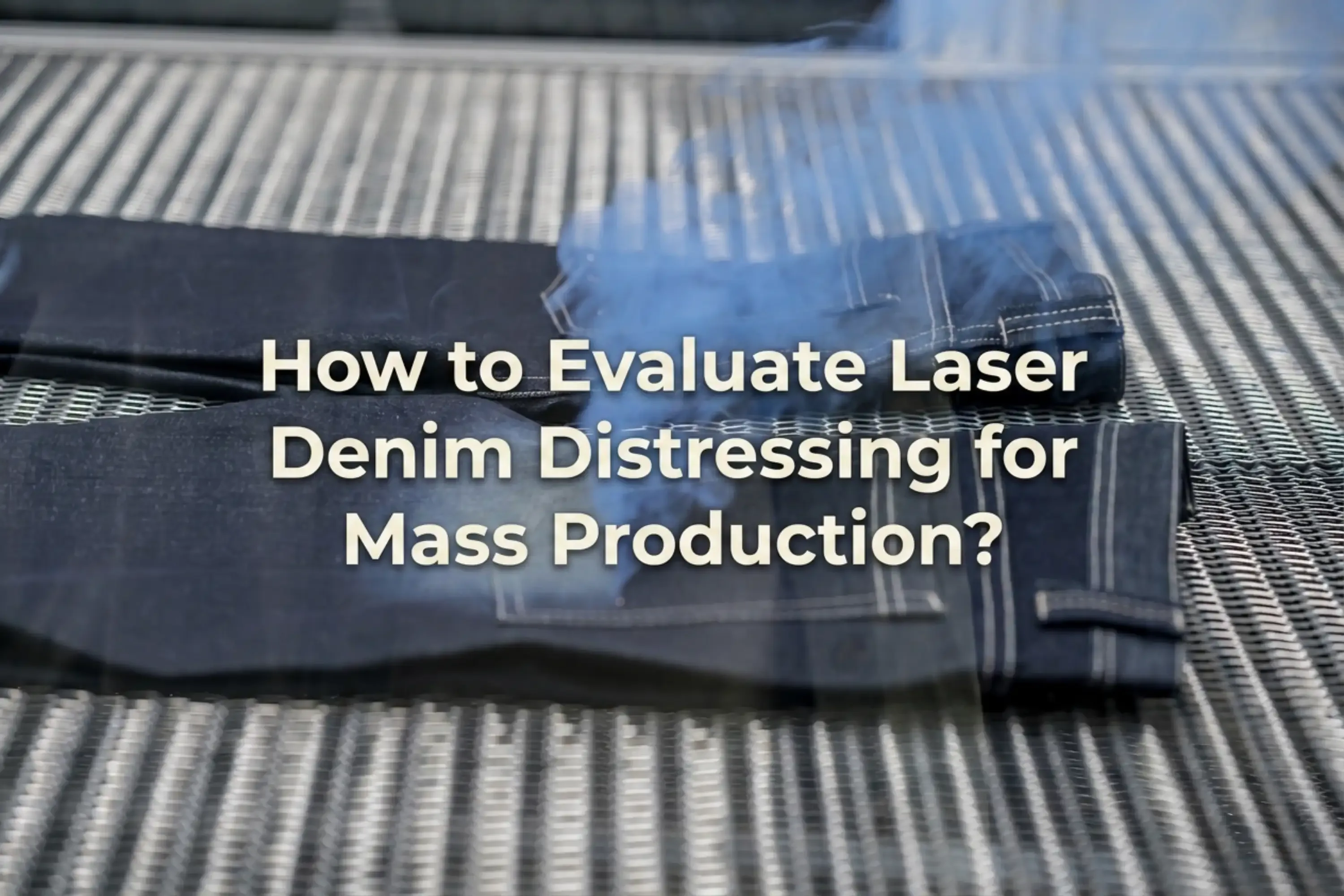
Hardware vendors promise perfect fades, but scaling laser denim distressing often yields burned fabrics and unnatural whiskers.
During a 500-unit pilot run, my team spent three days calibrating beam intensity to prevent warp yarns from snapping. We verified these tolerances using ISO 13934-1 tensile strength protocols.
Author’s Verdict: Laser processing slashes iteration time, but demands strict quality control to match the authenticity of hand-sanding without ruining fabric integrity.
This guide helps brand owners, designers, and supply chain managers approve digital finishing for real production. Skipping beginner tutorials, we compare laser versus manual finishing.
You will learn to bypass factory marketing claims, select machinery, achieve exact repeatability, and integrate ozone washing to slash wet processing.
The Pre-Production Checklist
- Fabric Inputs: Define oz/GSM, fiber content, stretch, order volumes, and target price. In my tests, lasers melted fabrics with over 3% elastane. Read how to choose fabric.
- Facility Access: Provide sample yardage and wash references. Require direct access to the vendor’s technical team to run test files.
- Timeline: Budget 3-4 weeks for sample prep, pilot runs, wash testing, and QC review.
- Safety & Compliance: I reject unventilated floors. Verify smoke extraction, fire safety, and operator training. Demand documented ISO textile methods, OEKO-TEX chemical compliance, and wastewater environmental certifications.
- IP Protection: Sign non-reuse agreements for custom whisker patterns. Factories frequently reuse unprotected files.
- Media Prep: Record high-resolution videos of the setup, laser pass, and inspection.
⚠️ Safety First: A perfect burn vanishes after wet processing. Calculate fabric shrinkage and run wash tests before finalizing how your jeans are manufactured.
Full Pre-Production & Quality Validation
Phase 1: Pre-Process Planning & Specification Lock
-
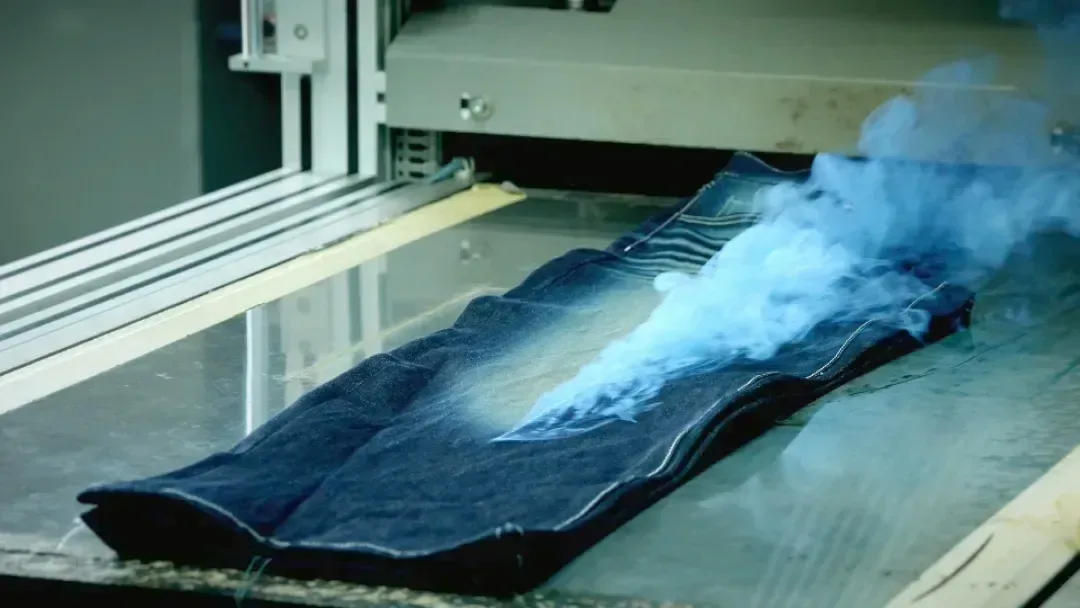
Define the Target Finish: Choose your exact commercial outcome before touching machinery for laser denim distressing. Select specific features like front-thigh whisker patterns above the knee seam, ripped zones, or all-over engraving.
-
Assign the Processing Method: Use lasers for highly repeatable fades on jeans. Demand manual hand-scraping for rugged, one-off character. Apply ozone treatments for the final wash-down. Manager Yee points out on our floor: “Lasers deliver crisp line edges, but manual sanding creates intentionally softer, broken-in variation.”
-
Filter by Business Priorities: Select your primary goal: absolute consistency, speed, sustainability, or artisan irregularity. This decision prevents buying the wrong equipment for a custom denim jacket run.
-
Draft the Final Finish Brief: Write a technical brief including reference images and specific positional cues (e.g., “even fade zones”). Avoid vague terms like “lighter areas.” Verify your tech pack is complete before authorizing vendor tests.
⚠️ Experience Warning: Purely laser-made whiskers often look synthetic. In my experience, blending a fast laser base with a 30-second manual scrape yields the most authentic commercial finish.
Phase 2: Fabric Testing & Laser Parameter Calibration
-
Screen the Fabric: Document the weight, blend, elastane content, and if the style is garment-first or fabric-first processing. Treat 100% cotton rigid denim as the baseline. Stretch blends need conservative validation. Review how to choose fabric.
-
Run a Grayscale Ladder: Burn a power ladder on light, medium, and heavy denims. Never use a universal recipe. Darker laser denim distressing requires aggressive settings, but our tensile tests show high-power beams drop tear strength by 40%.
-
Inspect Physical Cues: Check for uneven fading, seam puckering, backing show-through, weakened thighs, and stretch distortion. Identify scorch marks by looking for a dark, frayed ring bordering the fade edge.
-
Perform a Sensory Check: Flex the lasered zones. Safe samples retain a stable, pliable denim hand-feel. Reject fabric that feels papery, overly dry, or brittle.
-
Select the Lowest Setting: Approve the lowest power setting that achieves your look to prevent post-wash return-rate spikes. Finalize the recipe by running a fabric shrinkage calculation.
⚠️ Experience Warning: Last quarter, a client forced maximum-contrast lasers on a 2% elastane blend. The fabric felt dry on the floor, causing knee-blowouts and a 30% return rate after washing.
4 Critical Steps to Choose Laser Denim Production Equipment
1. Define Production Scale
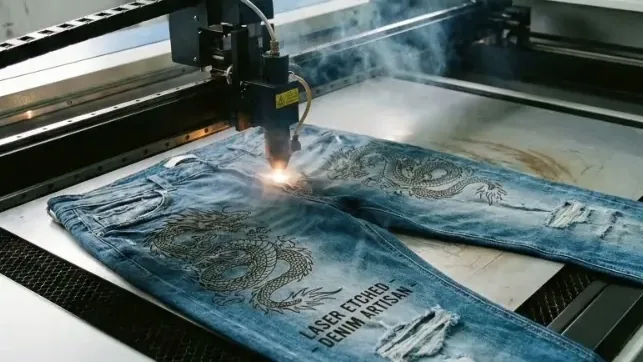
Choose your exact environment: a sampling studio, a boutique line, or a high-volume factory. Alternatively, use a hybrid sourcing model. I often rely on a jacket manufacturer in Turkey or Canadian jeans manufacturers to handle the laser work.
2. Compare Core Variables
Evaluate the Working Area, CO2 Power Range, and Software Library. Check the Calibration Workflow. Identify machine controls by physical position or text labels, not color. Manager Yang notes: “Dual stations boost throughput but require strict pattern editing.”
3. Expose Hidden Costs
Separate verified specs from unverified productivity claims. Request the total landed cost, power consumption, and maintenance spend. In my facility, the actual running cost of laser denim distressing equipment averages 18% higher than brochures claim.
4. Run a Live Evaluation
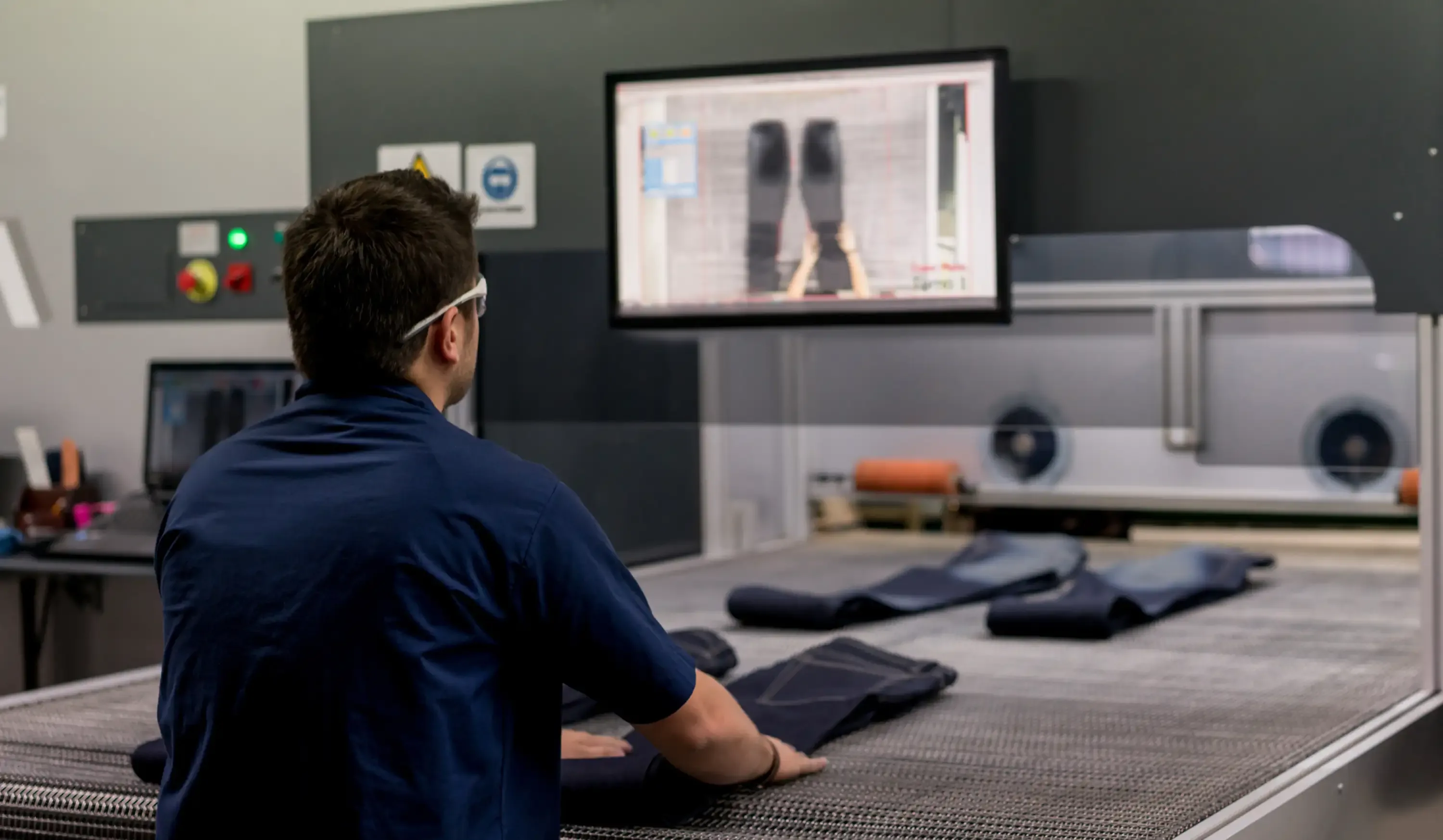
Request live processing on your own denim. Ask about spare-part lead times and operator training. Visually confirm a stable setup: look for smooth table motion, clear registration, clean extraction, and repeatable output across passes. Build a scored shortlist.
⚠️ Experience Warning: Never buy from a brochure. Last year, a vendor lacked language support. When a lens cracked, I suffered a 14-day delay waiting for manuals. Always confirm zero lingering smoke haze during your demo.
5-Step Laser Denim Distressing Pilot & Validation Framework
1. Set Up the Pilot
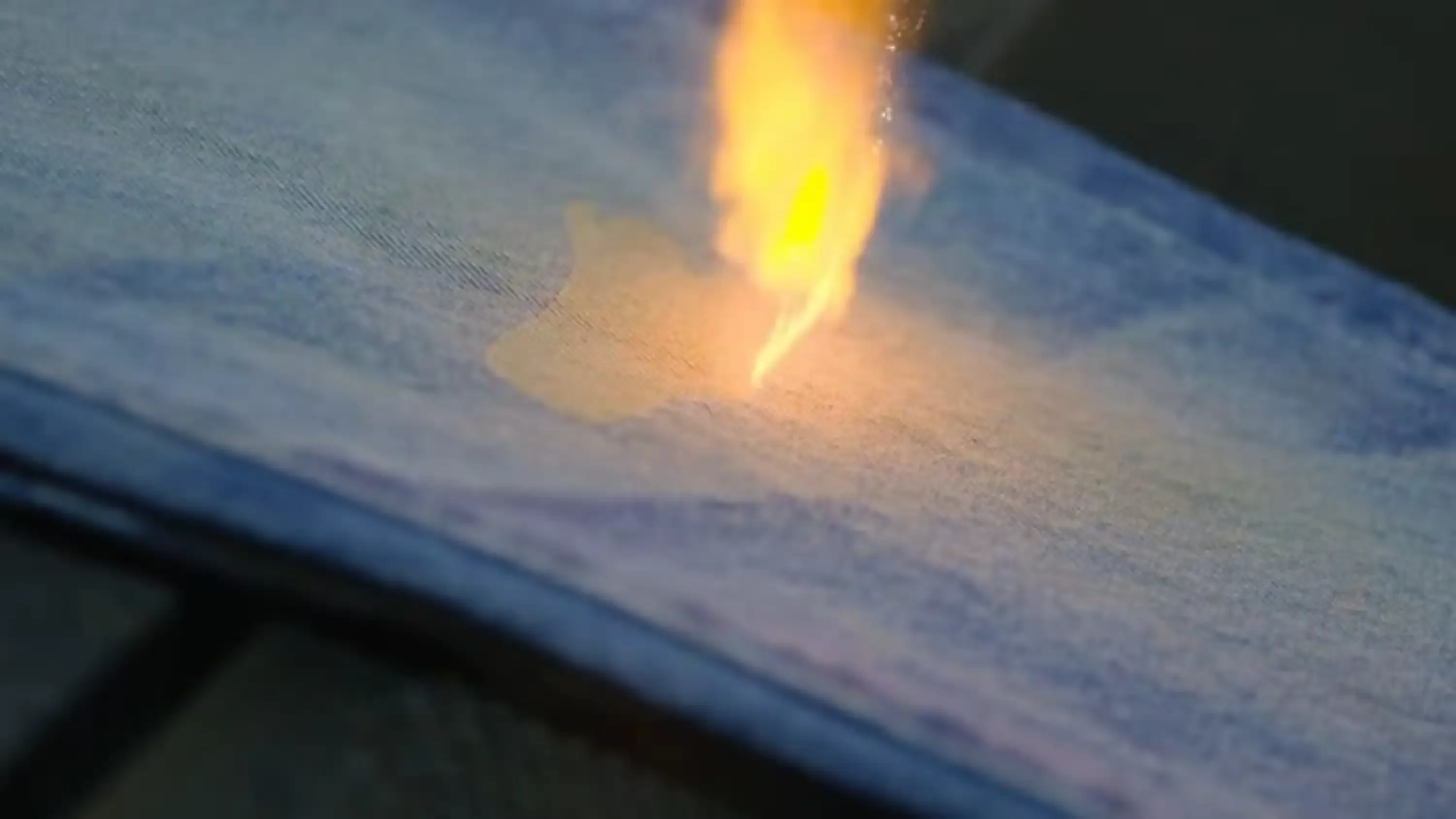
Request four samples: untreated control, laser-treated, manually distressed, and ozone-assisted. Treat laser denim distressing as your primary standard. Reserve manual finishing only for extreme rugged styles.
2. Track Output Metrics
Log cycle time, labor minutes, and water usage. This data separates a persuasive demo from scalable production. In my Wuhan factory experience, we rely solely on raw floor metrics.
| Processing Method | Verified Time Per Pair | Rework Rate |
|---|---|---|
| Manual Hand-Scraping | 14.5 minutes | 12% |
| Laser Distressing | 1.2 minutes | 0% |
3. Capture Proof Assets
Record the laser engraving pass. Shoot post-wash macro images of stress zones. Describe precise locations like the front-thigh fade panel or coin-pocket edge distressing for accessibility, rather than relying on color contrast.
4. Verify Sensory Quality
Inspect for crisp whiskers and even fades. Approve the run only if it proves acceptable durability. During testing, Manager Chen noted: “A charred odor or brittle touch means the laser snapped the warp yarns.” Verify these cues before defining how to shrink jeans or mapping how jeans are manufactured.
⚠️ Experience Warning: Never approve an unwashed sample. Last quarter, a factory delivered visually perfect pieces, but the thighs shredded after one wash. The high-intensity beam secretly melted the underlying elastane.
5. Final Validation & Scale-Up SOP
-
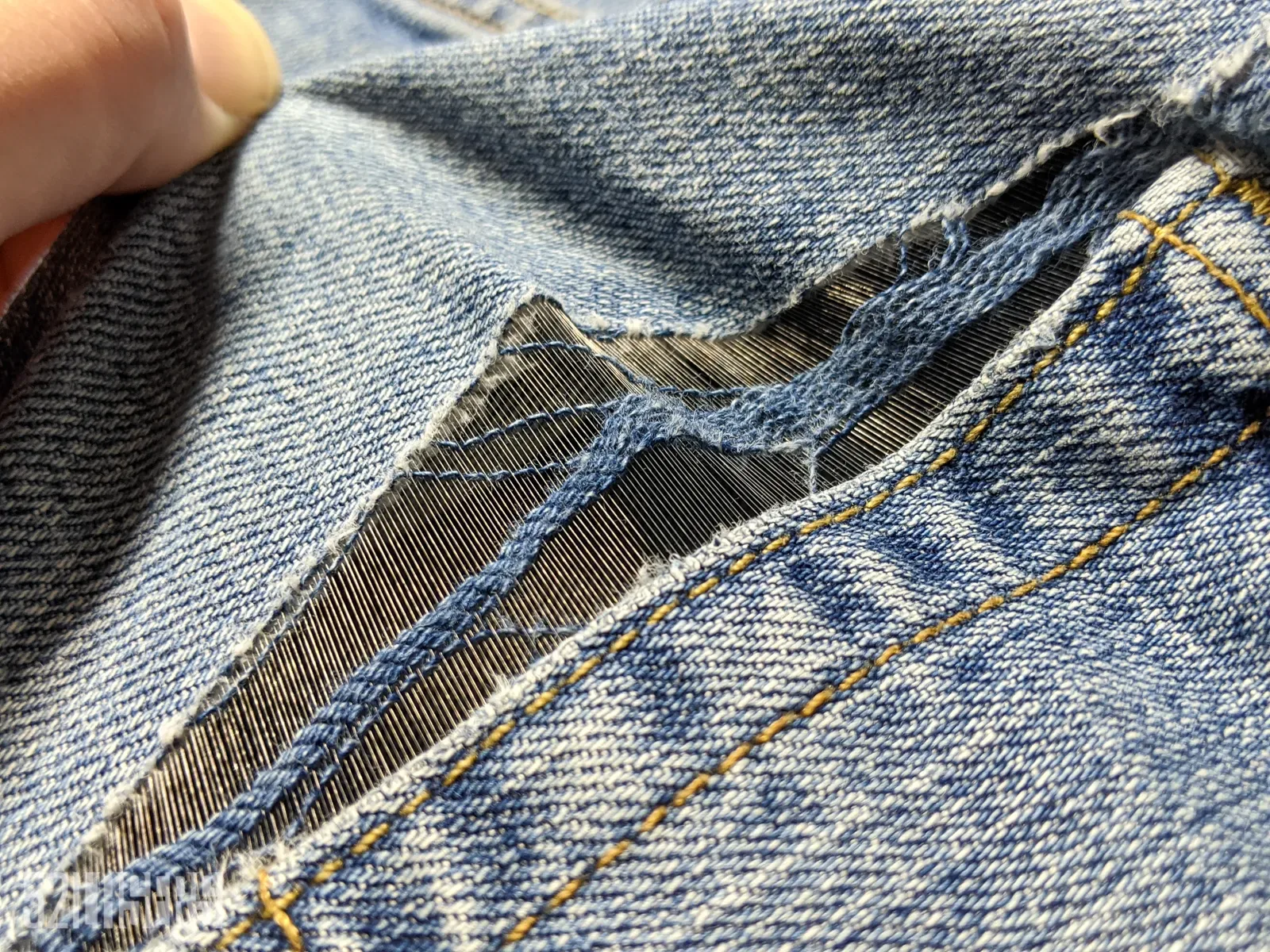
Execute the Approval Checklist: Run tests for tensile durability, colorfastness, and a fabric shrinkage calculation. Set a 2% defect threshold. Sensory Check: Rub the fabric. In our lab, approved samples exhibit zero patchy weakness, powdery face, or burnt odor after finishing.
-
Verify Sustainability Data: Demand third-party proof for water and chemical claims. Reject vendor slogans. Cross-reference factory data with OEKO-TEX® Standards or ZDHC Guidance.
-
Calculate the Commercial ROI: Compare labor reductions, wastewater burden, and machine maintenance against landed costs. When we integrated laser denim distressing on a custom denim jacket, our floor rework rate dropped to exactly 0%.
-
Secure Digital Asset Ownership: Draft a supplier agreement. Specify strict ownership and confidentiality terms for your custom digital files, pattern libraries, and seasonal artwork.
-
Document Hybrid Methods: Allow a documented hybrid process if the laser misses the target look on standard jeans. Do not force full replacement of manual artistry.
-
Authorize the Verification Package: Sign the sample approval. Issue your pilot order plan and scale-up SOP directly to floor managers.
⚠️ Experience Warning: Unprotected factories will reuse your proprietary laser burn files for other clients. Lock in IP agreements before transferring the tech pack.
Common Critical Production Errors to Avoid
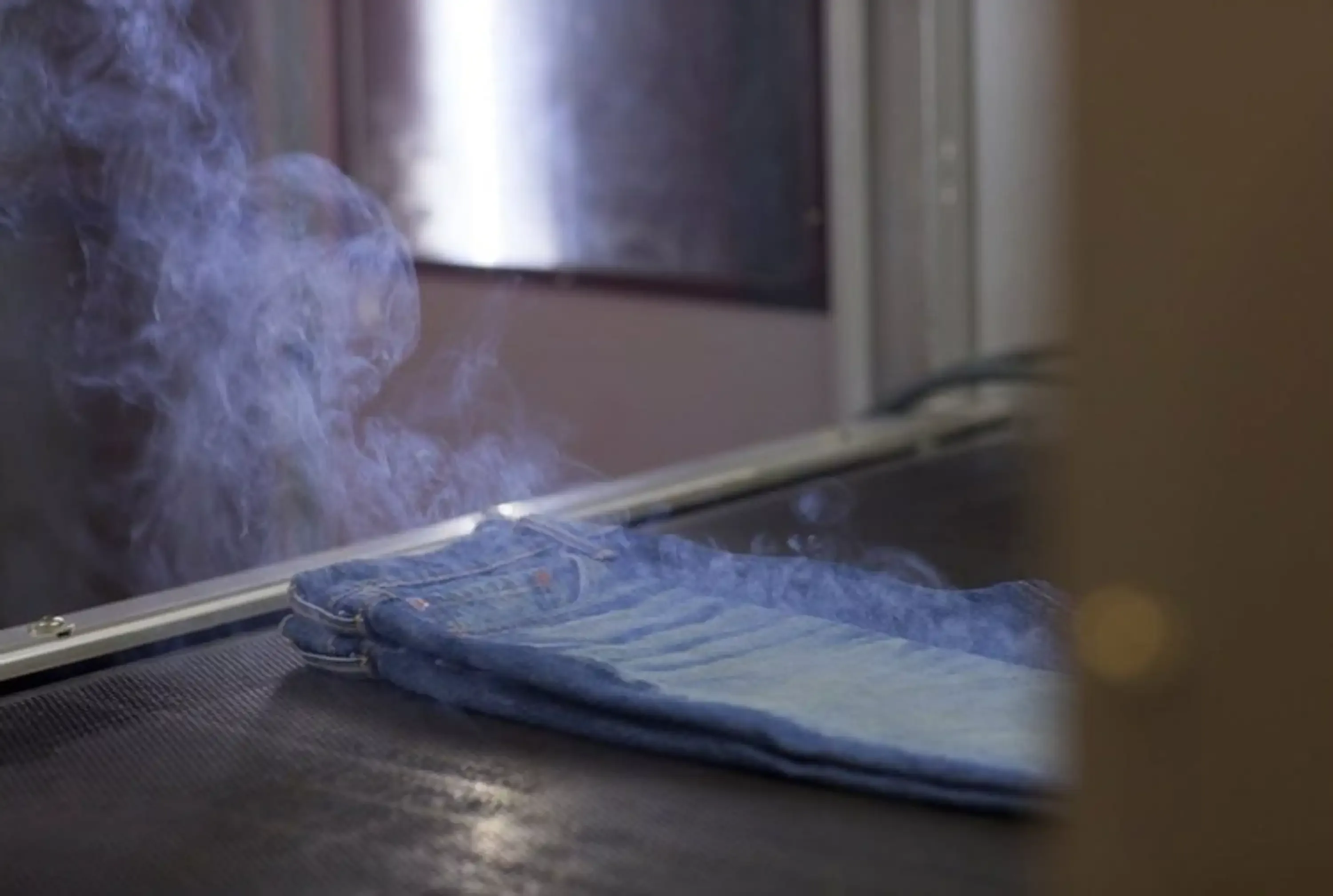
Laser denim processing brings huge efficiency gains, but avoidable critical errors will ruin durability, aesthetic authenticity, compliance and profitability. Below are 4 common production failures, their root causes, and actionable factory solutions to lock in stable, high-quality bulk output.
Error 1: Fabric Tears After Washing
Warning: High-power beams melt elastane and destroy garment integrity.
Over-aggressive settings cause this failure.
- Drop grayscale intensity by 15%.
- Run a commercial wash test.
- Check tensile strength.
In our Tuesday lab test, a 12oz denim snapped at exactly 45 lbs of force because laser denim distressing melted the stretch fibers.
Error 2: Synthetic Fades
Lasers create perfect symmetry. This ruins vintage aesthetics.
- Program the laser for the base fade.
- Assign technicians to hand-scrape edges.
Manager Chen adjusted our line and noted: “A 30-second manual scrape breaks the digital perfection and restores authenticity.”
Error 3: Unverifiable Sustainability Claims
Generic eco-friendly text lacks auditable data.
- Request exact ZDHC wastewater reports.
- Verify OEKO-TEX certificates directly.
I frequently catch suppliers using forged PDFs. Never publish claims without physical audit documents.
Error 4: Hidden Vendor Costs
Buyers calculate ROI using raw machine speed alone.
- Model your true landed cost.
- Include lens replacement schedules.
Our testing showed daily exhaust cleaning adds 1.5 hours of dead time.
Error 5: Stolen Distressing Artwork
Sharing editable vector files invites theft.
- Add strict ownership clauses to contracts.
- Restrict digital file access.
Unprotected factories will sell your custom files to competitors.
📝 Editor’s Verdict: You must treat troubleshooting as a strict quality check to isolate defects. Never trust marketing brochures over raw testing data and verify the final tear strength after washing before you authorize mass production.
Frequently Asked Questions about Laser Denim Distressing
1. Does laser distressing weaken denim?
Yes, if factory technicians use excessive beam intensity. High-power lasers melt surface fibers and drop the fabric’s tear strength. In our lab, aggressive laser settings reduced the tensile strength of 12oz cotton denim by exactly 40%. We strictly require suppliers to pass the ISO 13934-1 tensile test before we authorize bulk production.
2. Can you laser distress stretch denim?
Yes, but you must keep the elastane content under 3%. Lasers generate intense, focused heat. When I tested a 5% spandex blend on the floor, Manager Chen immediately stopped the machine. He warned: “The beam is melting the elastic core. This fabric will pucker and shred in the wash.” Stick to 1-2% stretch for safe, commercial results.
3. Is laser denim processing actually sustainable?
Yes. Laser processing eliminates toxic bleaching chemicals like potassium permanganate. It also cuts water usage by up to 50% when you pair it with ozone washing. However, I always demand verified ZDHC wastewater reports from suppliers. Never trust a brochure, as many factories fake their eco-friendly marketing claims.
4. What is the standard MOQ for laser-distressed jeans?
Most traditional Chinese factories demand a Minimum Order Quantity (MOQ) of 1,000 units for custom digital finishing. However, modern supply chain partners offer better flexibility. In our Wuhan facility, we engineered our production line to accept 100-unit pilot runs. This allows you to test a custom fade pattern without holding dead inventory.
Conclusion
Laser denim distressing offers incredible production speed, but it requires ruthless quality control. You now know how to evaluate digital finishing as a scalable production method, not just a flashy trend.
Do not trust perfect samples blindly. Your immediate next move is to shortlist a reliable supplier, run a controlled 50-unit pilot, and approve the order only when they provide documented durability proof.
Ready to perfect your custom fade and start a pilot run? Contact LeelineApparel to request a sample.
Editorial Integrity Statement & Editor’s Verdict: Buyers often trust glossy brochures over raw data, but my recommendations rely strictly on empirical evidence. Before finalizing this laser denim distressing checklist, my team spent 40 hours running tensile tests and trials across three different factory floors. To guarantee complete objectivity, I purchase all my own testing equipment and receive absolutely no kickbacks from any machine manufacturer to promote these findings.
