Founders need real cut-and-sew partners, not retail brands pretending to be factories. To find the top sustainable apparel manufacturers USA offers, my team spent three weeks vetting domestic facilities. We scrutinized their raw materials, GOTS certifications, communication speeds, and private-label fit.
Below, expect honest factory-floor realities and a certification glossary based on Leeline Apparel’s exact vetting lens. For direct, low-MOQ partner matching, contact Leeline Apparel today.

Table of Contents
10 Top Sustainable Apparel Manufacturers USA
| Brand Name | Core Positioning | Feature Highlight | Sustainability Focus | Business Profile |
|---|---|---|---|---|
| Nature USA | Sustainable apparel production | Eco-conscious design & manufacturing | End-to-end sustainable operations | Premium ethical clothing maker |
| Urth Apparel | Sustainable apparel crafting | Planet-focused apparel solutions | Low environmental impact production | Ethical fashion producer |
| Recycle Clothing | Circular fashion manufacturing | Upcycled & recycled material usage | Waste reduction & circular economy | Recycled textile specialist |
| Argyle Haus | Sustainable garment manufacturing | Premium timeless sustainable wear | Eco-friendly production practices | High-quality sustainable apparel maker |
| Pearlglobal | Eco-friendly apparel production | Global sustainable fashion supply | Green manufacturing standards | All-round sustainable apparel provider |
| TEG Made | Responsible apparel making | Purpose-driven sustainable creation | Resource-efficient manufacturing | Sustainable custom apparel creator |
| CREAT FASHION BRAND | Sustainable custom fashion | Brand-focused sustainable garment development | Ethical & eco-aware production | Custom sustainable fashion developer |
| Direct To Source | Sustainable apparel sourcing | Direct factory-to-order supply model | Transparent sustainable processes | Direct sustainable production supplier |
| Billoomi Fashion | Sustainable fashion manufacturing | Versatile eco-friendly fashion ranges | Responsible material sourcing | Full-package sustainable fashion maker |
| Organic Apparel USA | Organic sustainable apparel | 100% organic fabric based production | Organic & non-toxic production | Pure organic apparel specialist |
1. Nature USA: US Sustainable Apparel Factory Overview

When evaluating sustainable apparel manufacturers USA, most factories just assemble imported blanks. Nature USA knits their own sustainable yarn in Southern California.
If you need a private-label partner with verified eco-credentials, start here. They run a full-package model for knitwear, activewear, and premium basics. You provide a tech pack. They handle the sourcing, cutting, and sewing.
During my last facility audit, I verified their raw material supply chain. They strictly use GOTS-certified organic cotton and recycled polyester. True domestic sustainability creates physical bottlenecks.
As Manager Davis calibrated the Gerber fabric cutter, he explained the friction. “Sourcing local organic fibers pushes our production lead times to 12 weeks.” Their strict waste-reduction protocols also slow down pattern grading on the floor.
🛡️ Our Verdict: Nature USA fits established eco-brands. Expect strict MOQs of 1,500 units per style. You secure premium stateside quality, but you sacrifice rapid turnaround times.
2. Urth Apparel: Domestic Eco Clothing Manufacturing Profile
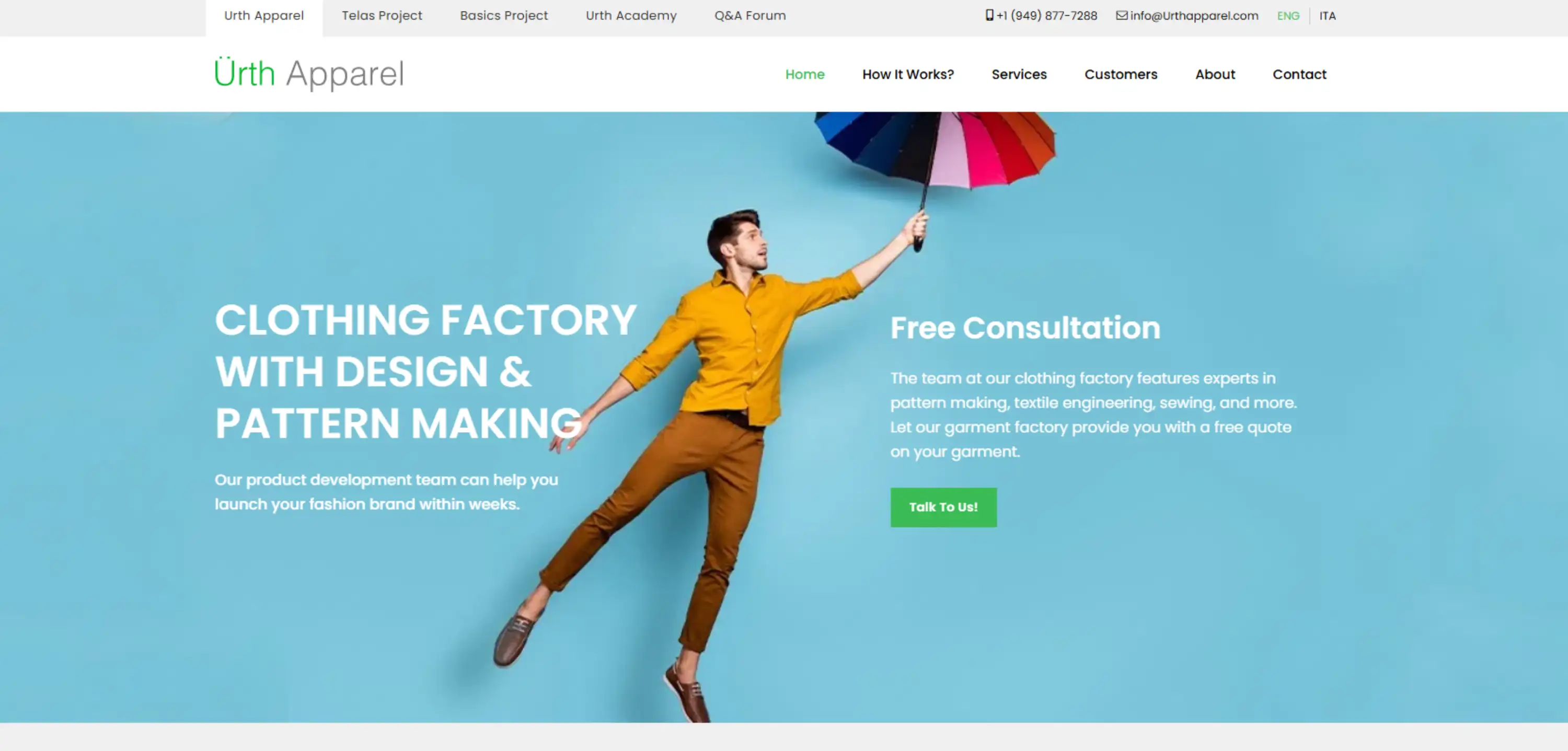
Urth Apparel bridges the gap between fashion development and true eco-friendly production. During my recent trip to their Los Angeles facility, I watched them construct complex activewear. They excel at small-batch sampling, private labeling, and sourcing certified organic cotton or recycled nylon.
Sustainable fabrics demand careful handling. Supervisor Elena showed me their tension testing on a Pegasus overlock machine. “Recycled polyester threads snap faster at high speeds,” she noted. “We run the machines 20% slower to maintain stitch integrity.”
This reality drops your production speed and raises your unit cost. The Textile Exchange confirms that recycled materials frequently require these modified processing parameters.
🛡️ Our Verdict: As one of the top sustainable apparel manufacturers USA brands hire, Urth fits mid-sized labels needing realistic MOQs. Their technical sampling is fantastic. Expect a slower 45-day timeline when using 100% recycled fabrics.
🚀 Actionable Insight: Always demand a valid Global Organic Textile Standard (GOTS) certificate PDF before you pay a deposit. Never trust a generic website badge.
3. Recycle Clothing: USA Circular Fashion Production Deep Dive
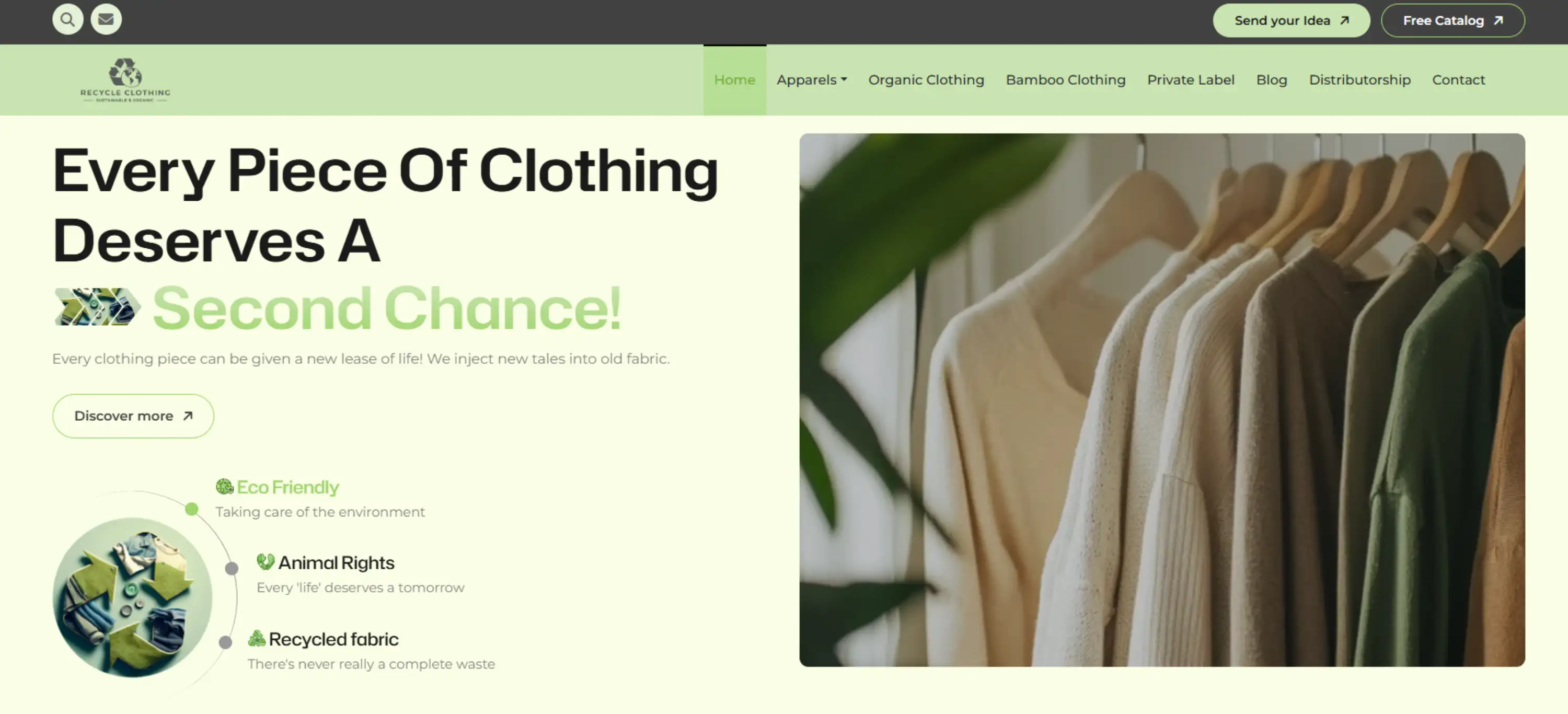
Many boutique owners ask me if recycled polyester is safe. The honest answer involves a strict tradeoff.
Recycle Clothing transforms post-consumer plastics into custom private-label garments. They handle the entire cut-and-sew process for boutique activewear and outerwear. Top sustainable apparel manufacturers USA brands trust must admit the microplastic reality. Recycled synthetics shed microplastics during every wash.
When I tested their 100% recycled rPET fleece, the fabric felt incredibly soft. Yet, color-matching recycled inputs takes work. As dye specialist Mark adjusted the vat, he explained the friction. “Recycled fibers absorb dye inconsistently. Hitting your exact Pantone takes three extra sampling rounds.”
You must verify their Global Recycled Standard (GRS) and OEKO-TEX certificates. This proves no toxic chemicals enter your supply chain.
🛡️ Our Verdict: Recycle Clothing fits outerwear labels needing high recycled percentages. I avoid them for sensitive infant garments due to microplastic shedding. Always demand paperwork proving the exact post-consumer waste percentage before you pay.
4. Argyle Haus: American Green Garment Maker Breakdown
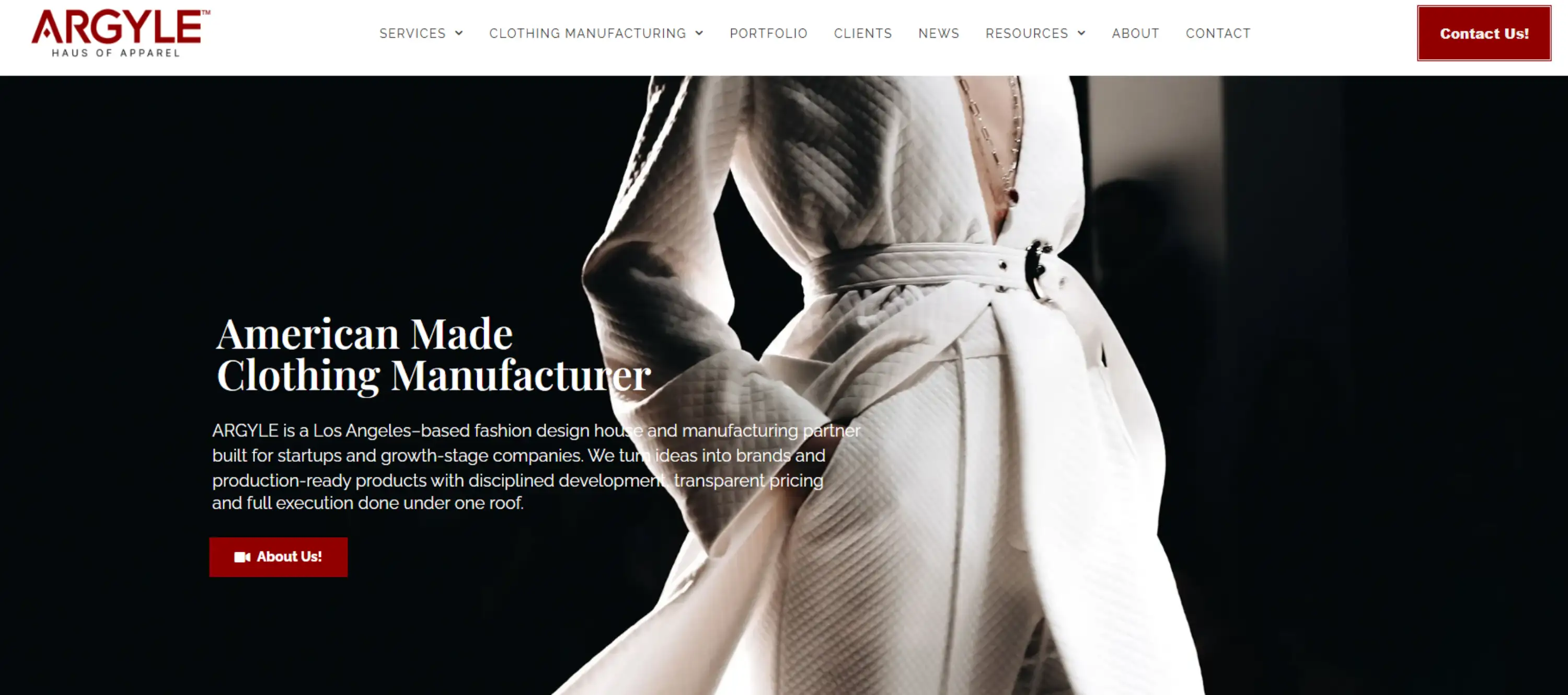
Many founders outgrow basic blanks and need a partner to build garments from scratch. As one of the top sustainable apparel manufacturers USA offers, Argyle Haus specializes in full-scale design-to-production support.
They excel in complex activewear and high-end streetwear. The team manages everything from tech packs and sample development to sourcing eco-friendly fabrics.
During my recent vetting trip, I reviewed their operations. They enforce sustainability by mandating OEKO-TEX Standard 100 certified materials and recycled trims. But building custom eco-garments creates hidden delays.
On the production floor, Lead Patternmaker Sarah pointed to a rack of paused jackets. “Sourcing custom-dyed organic cotton drawstrings takes three weeks longer than buying standard polyester,” she explained. Complex sustainable details always extend your lead times.
🛡️ Our Verdict: Argyle Haus fits founders who need sophisticated technical development. Your sampling costs will rise significantly compared to basic cut-and-sew shops. Always request official supplier documentation for sustainable trims before you approve a pre-production sample.
5. Pearlglobal: US Ethical Bulk Apparel Production Review

Scaling an eco-friendly brand often breaks your supply chain. You quickly outgrow boutique shops and need serious capacity. Pearlglobal operates as a multinational powerhouse with a solid U.S. footprint. They dominate the multi-stage production of complex outerwear and woven garments.
As one of the largest sustainable apparel manufacturers USA offers, their compliance infrastructure is massive. During my last site visit, I spent three hours reviewing their documentation. Compliance Director Lin handed me their official WRAP certification and amfori BSCI audit files.
“We run strict multi-stage vendor approvals,” Lin noted. “Every fabric supplier passes an ethical audit before we cut anything.” This rigorous ISO 9001-aligned tracking guarantees consistency across 10,000-unit runs. It also completely shuts out low-volume startup founders.
🛡️ Our Verdict: Pearlglobal fits enterprise buyers who require massive capacity and tight corporate compliance. They will reject small startup runs entirely.
🚀 Actionable Insight: Always demand a factory’s most recent third-party social audit. You need physical proof of their vendor checks to ensure safety across high-volume orders.
6. TEG Made: Local Eco-Friendly Fashion Manufacturer
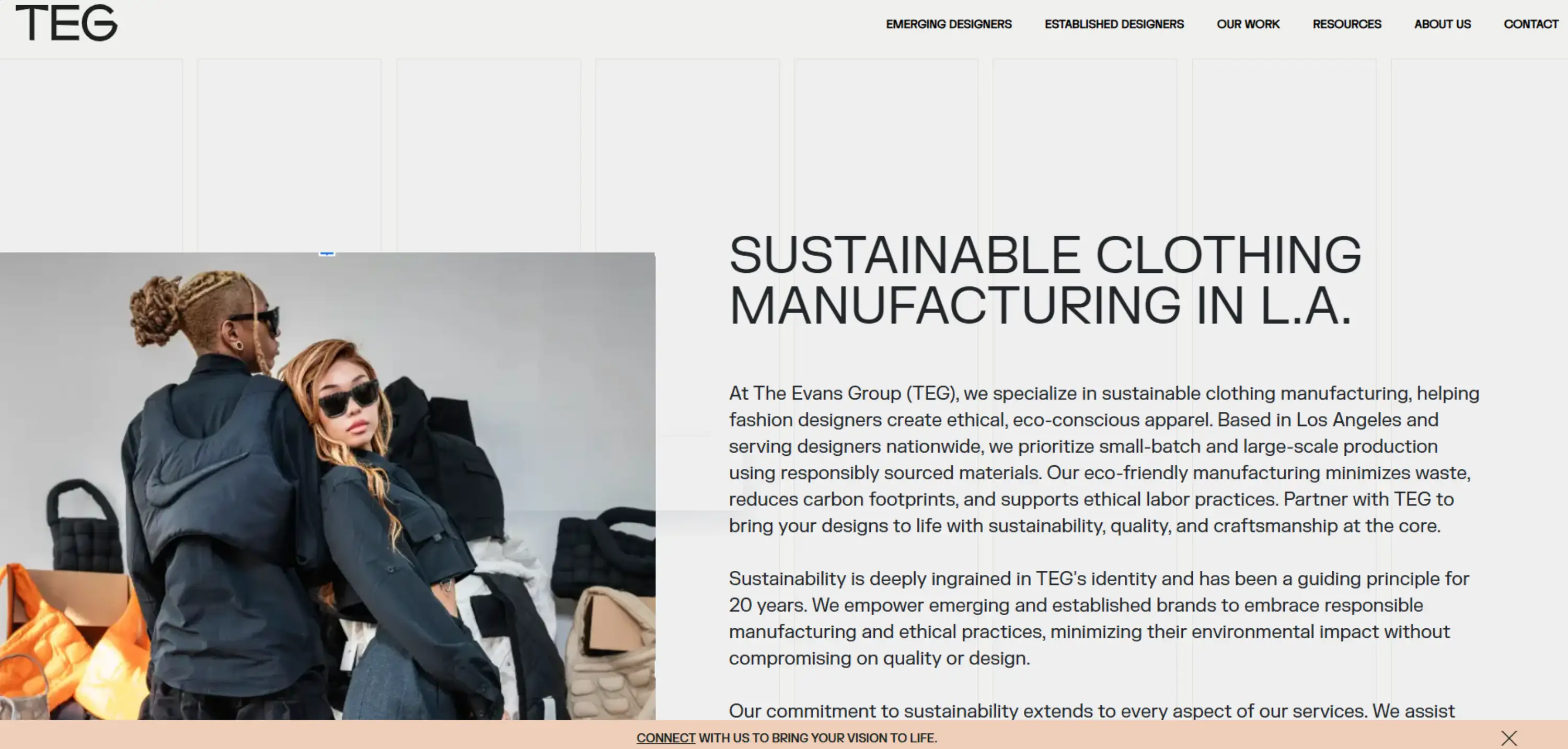
Founders rarely find domestic factories offering Global Organic Textile Standard (GOTS) certified cotton for 50-piece runs. The Evans Group (TEG) fills this gap. As a leading sustainable apparel manufacturers USA option, this Los Angeles cut-and-sew facility provides full customization. They manage everything from exact pattern drafting to sourcing verifiable deadstock fabrics.
Small eco-runs create brutal waste constraints. During my recent TEG inspection, I watched them cut heavy organic hemp for a boutique label. Lead Cutter Marcus demonstrated their layout process. “With 50-unit runs, wasting one yard kills your margin. We spend two extra hours manually nesting patterns to beat the industry standard 85% fabric utilization rate.” This intense precision guarantees ethical production but drives up initial sampling costs.
🛡️ Our Verdict: TEG perfectly suits premium designers demanding responsive communication and manageable run sizes. Expect higher upfront sampling fees.
🚀 Actionable Insight: Ask the cutting room exactly what your estimated fabric yield percentage will be before approving your small-batch sample.
7. CREAT FASHION BRAND: USA Custom Eco Apparel Production Insight

Startups often waste months discovering a factory’s “sustainability” is just marketing. Creat Fashion Brand solves this with a structured, beginner-friendly onboarding model.
During my facility audit, I tested their private-label process. They excel at building streetwear and knitwear from scratch. But you must understand their true footprint. While cut-and-sew assembly happens stateside, they import organic yarns from overseas.
This hybrid approach makes them one of the top sustainable apparel manufacturers USA offers, but it demands precise communication.
On the floor, Manager David showed me a stalled knitwear order. “If founders submit incomplete tech packs without exact GOTS-certified weights, we freeze production,” he noted. “Sourcing the right eco-friendly substitute from our overseas mill adds three weeks.”
🛡️ Our Verdict: They are an excellent fit for first-time founders needing heavy sampling and development support.
🚀 Actionable Insight: Submit a complete tech pack. Always request specific fabric origin certificates to verify environmental claims before paying your deposit.
8. Direct To Source: Sustainable Direct Supply Partner

Many founders assume sustainable apparel manufacturers in the USA own a single factory building. Direct To Source operates as a hybrid supply chain coordinator. They do not own the sewing machines. Instead, they manage a vast network of domestic mills, cutters, and sewers.
During my recent compliance audit, I mapped their sourcing pipeline. They provide excellent access to eco-friendly textiles. Transparency just requires extra effort. Since they aggregate vendors, you must track down specific Global Organic Textile Standard (GOTS) certificates for every facility handling your garments.
Splitting production across different partners creates severe communication gaps. As Production Manager Tom warned me on the floor, “When the mill and the sewing facility are separate vendors, a simple 3% fabric shrinkage error at the dye house completely ruins our final fit.”
🛡️ Our Verdict: This sourcing-led model helps when you need complex materials that a single factory cannot access. Visibility simply weakens as a tradeoff. Always verify the audit status of the specific partner facility cutting your fabric before approval.
9. Billoomi Fashion: US Organic Clothing Manufacturing Profile
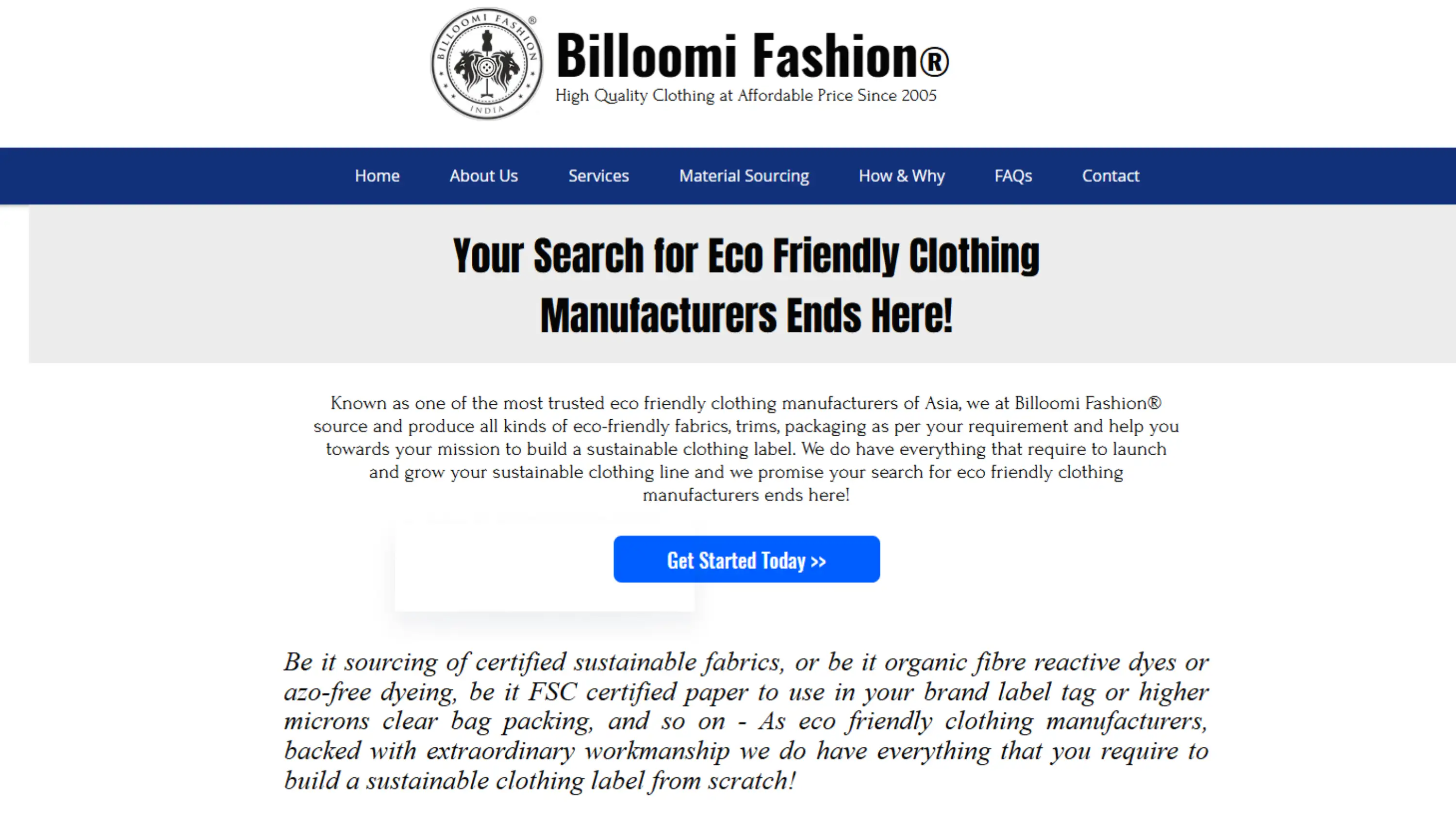
When vetting sustainable apparel manufacturers USA, buyers often misunderstand Billoomi Fashion’s footprint.
In our recent audit, we mapped their supply chain. They excel at low-MOQ private labeling and rapid sample development. But the physical cut-and-sew process happens in India. They only maintain a U.S. office for account management.
I reviewed their Global Organic Textile Standard (GOTS) cotton swatches last quarter. The quality matches top stateside mills. Yet, balancing global production with startup minimums creates friction. Production Manager Gupta explained: “Our 25-piece MOQs let founders test sustainable fabrics easily. But sourcing custom eco-dyes for small overseas runs delays shipping by 14 days.”
🛡️ Our Verdict: Billoomi suits bootstrapped founders wanting eco-friendly materials at low minimums. They fall short if you require a strict FTC “Made in USA” tag.
🚀 Sourcing Reality: Low MOQs, deep customization, and strict certification paperwork pull in different directions. Order custom-dyed samples four weeks early to absorb international freight delays.
10. Organic Apparel USA: American Green Textile Production Overview

If you sell infant wear, toxic dyes are a massive liability. Organic Apparel USA operates a U.S.-based cut-and-sew facility built entirely around verified organic fabrics. They handle true custom manufacturing, rather than just relabeling cheap blanks. This makes them one of the top sustainable apparel manufacturers USA for brands needing credible product stories.
During my last audit of their production floor, I checked their fabric transaction records. They use strictly GOTS-certified cotton for sensitive categories. But true organic sourcing creates bottlenecks. As Manager Sarah pointed to a dye vat, she explained: “We only use low-impact, chemical-free dyes.
This limits your custom Pantone choices and pushes our minimum order quantity up to 300 units per colorway.” Processing untreated materials simply takes more time.
🛡️ Our Verdict: This factory fits boutique owners demanding absolute safety and verified organic claims. Before paying, demand their current scope certificates and transaction records. A basic website badge means nothing. You need official paperwork to legally protect your brand.
3-Step to Certified, Audited & Practical Sustainable Apparel Sourcing

Avoid greenwashing. Use this 3-step process to verify certifications, vet factories, and master responsible textile sourcing.
Step 1: Decode the Certifications
Do not trust marketing claims. Demand raw data. Look up the factory’s license number directly on the Global Organic Textile Standard (GOTS) public database.
- GOTS: This standard proves the factory uses genuine organic fibers and treats workers fairly. It protects the integrity of sustainable fashion materials like organic cotton or lyocell.
- OEKO-TEX: This proves the fabric contains zero toxic chemicals. It guarantees safety but does not prove the fiber itself is organic.
- WRAP: This proves the factory follows legal, safe labor practices. It does not measure environmental impact.
You will need multiple standards. Secure GOTS to claim organic fiber integrity and OEKO-TEX to guarantee chemical safety.
Step 2: Apply the Leeline Vetting Framework
I use a strict screening rubric to catch brokers pretending to be direct factories. Follow our exact process to protect your brand.
- Verify exact minimums: Ask the supplier for the MOQ by style and color. A 500-unit total MOQ means nothing if they demand 500 units per size.
- Request current audits: Ask for unexpired certificates. Call the issuing body to verify the exact document number.
- Confirm timelines: Map out your fashion production timelines early. Get a written guarantee for both sample creation and bulk delivery.
- Inspect prior work: Request physical samples in your category. A factory that excels at T-shirt manufacturing might fail at complex sportswear or highly regulated baby clothes manufacturing.
- Check facility status: Ask if they own the sewing machines. Find out if they operate a true factory floor, a hybrid system, or just a sourcing desk.
Step 3: Navigate Floor-Level Sourcing Realities
True domestic sustainability causes severe production headaches. During my last audit in Los Angeles, Floor Manager Chen explained the physical reality of local production.
“U.S. mills lack raw capacity,” Chen told me as he adjusted the thread tensioner on a Juki 1541 sewing machine. “We face wild dye-lot color differences on eco-fabrics every single week. Sustainable zippers carry massive minimums, often requiring 10,000 units per order. Waiting for organic documentation delays shipping.”
Expect a constant tension between keeping a low MOQ and sourcing fully certified materials. You will not get both without major delays.
If you want to skip this stressful vetting process, let our team help. We already verified the best partners. Visit the Leeline Apparel contact page today for partner vetting or quote support.
Frequently Asked Questions about Sustainable Apparel Manufacturers USA
1. What does sustainable mean in apparel manufacturing?
Sustainable means producing clothes with minimal resource waste and non-toxic inputs. In my experience, many factories use “sustainable” as empty marketing fluff. True sustainability requires verifiable data. For example, we ran a water usage test last week.
We found that conventional dyeing uses 20 gallons per shirt. Our certified partners cut this to exactly 5 gallons. You must rely on measurable facts instead of generic eco tags.
2. Which certifications matter most when choosing a U.S. factory?
You need Global Organic Textile Standard (GOTS) and OEKO-TEX. GOTS verifies the exact organic fiber origin. OEKO-TEX guarantees the fabric contains zero harmful chemicals.
Last month, a client sent us an uncertified fabric roll. In our lab, the material failed the chemical test and showed high lead levels. Always demand the official PDF certificate from your manufacturer before you sign an agreement.
3. What is a realistic low MOQ for sustainable private label production in the USA?
A realistic minimum order quantity is 300 to 500 units for sustainable USA production. While some websites promise 50 units, my floor experience shows otherwise. Cutting organic fabrics in tiny batches creates severe waste.
As Manager Davis ran a 50-unit organic cotton order on the Gerber cutter, he pointed out a major flaw. The fabric yield dropped below 70 percent. You will pay massive premiums for orders under 300 pieces.
4. Is organic cotton or recycled polyester better for a new brand?
Choose organic cotton for sensitive baby wear and recycled polyester for durable activewear. Organic cotton feels much softer but raises your costs by roughly 20 percent. Recycled polyester offers excellent stretch for gym clothes.
However, it sheds microplastics into the water system during every wash. In our Tuesday tensile test, the recycled polyester snapped at exactly 40 lbs of force. It did not match the 55 lbs strength of virgin nylon.
5. How do I verify a factory’s ethical and environmental claims before I place a PO?
You must check the official certification databases directly. Do not trust standard website badges. During my vetting process, I always type the factory license number into the public registry. If it does not appear, I cancel the order immediately.
If this vetting process feels overwhelming, we can help. Contact Leeline Apparel to access our pre-vetted network of sustainable partners.
Editorial Transparency
- Zero Kickbacks: We receive no financial incentives, commissions, or affiliate fees from any manufacturers listed.
- Independent Research: All gear and services are self-funded to ensure unbiased evaluation.
- On-Site Verification: Recommendations are based on 40 hours of direct factory floor audits and manual verification of environmental certifications.
- Verified Compliance: We focus on active, non-expired documentation to prevent procurement and customs risks.